

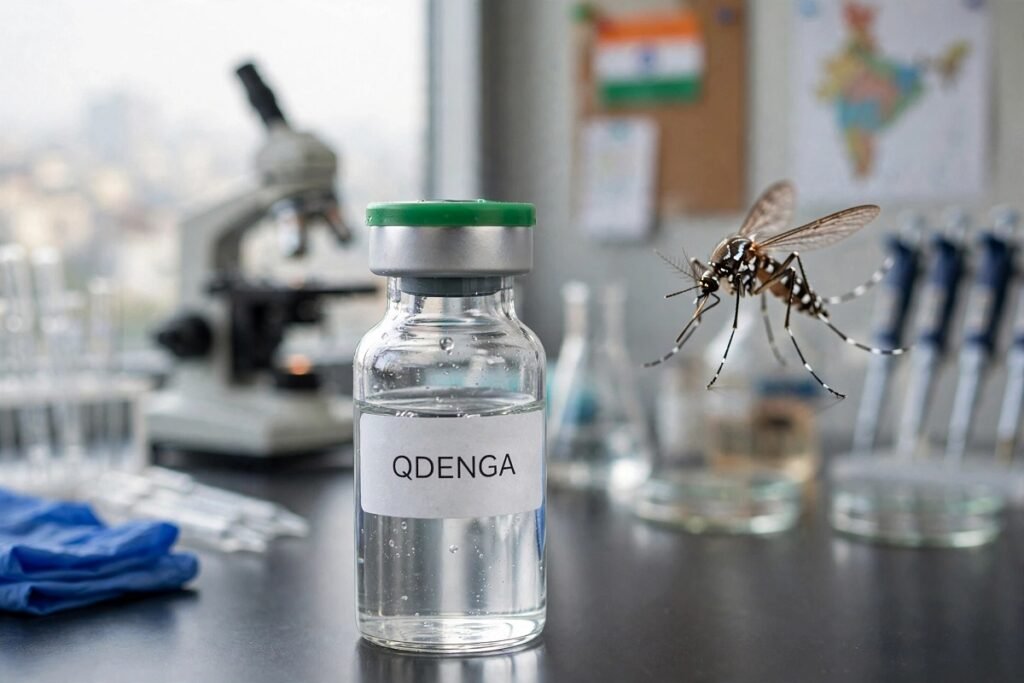
India’s first approved dengue vaccine, Qdenga, is expected to become available in the private market in the first half of 2027. Here’s what to know about eligibility, dosage, effectiveness and safety.
India is preparing to introduce its first dengue vaccine, Qdenga, in 2027, offering a new tool to help protect people against the mosquito-borne disease that continues to affect millions worldwide.
Developed by Japanese pharmaceutical company Takeda, Qdenga received marketing authorisation from India’s Central Drugs Standard Control Organisation (CDSCO) in July 2026 for individuals aged 4 to 60 years.
Takeda has partnered with Dr Reddy’s Laboratories to promote and distribute the vaccine in India’s private healthcare market. Its availability is expected in the first half of 2027, subject to the completion of applicable regulatory and commercial processes.
The development comes amid growing concerns about dengue transmission across India, where all four dengue virus serotypes circulate in different regions.
However, experts say the vaccine’s long-term protection, effectiveness against different dengue strains and safety in diverse populations require continued attention.
What Is Qdenga, India’s First Dengue Vaccine?
Qdenga, also known as TAK-003, is a live-attenuated tetravalent dengue vaccine developed by Takeda.
It is designed to stimulate the immune system against all four dengue virus serotypes:
- DENV-1
- DENV-2
- DENV-3
- DENV-4
The vaccine uses weakened versions of dengue viruses to help the body develop an immune response without causing the disease in healthy individuals.
Unlike some earlier dengue vaccines, Qdenga can be administered regardless of whether a person has previously been infected with dengue. Pre-vaccination testing for previous dengue infection is not required under its approved Indian indication.
The vaccine has received approval in multiple countries and WHO prequalification.
Who Can Get the Qdenga Dengue Vaccine in India?
According to India’s CDSCO approval, Qdenga is indicated for individuals aged 4 to 60 years for the prevention of dengue disease.
The vaccine is intended for both children and adults within the approved age range.
However, eligibility for vaccination should be assessed by a qualified healthcare professional, taking into account the individual’s age, medical history and relevant precautions.
The vaccine is expected to initially be available through India’s private healthcare market. Its inclusion in the public immunisation programme remains a separate policy decision.
Important: India’s approved age range is 4–60 years. WHO’s recommendation for Qdenga is narrower, focusing on children aged 6–16 years in settings with high dengue transmission. These are different regulatory and public health recommendations.
ALSO READ: Dengue in India: Early Symptoms and Prevention Strategies
How Many Doses of Qdenga Are Needed?
Qdenga is administered as a two-dose vaccination course.
The recommended schedule is:
- First dose: At the initial vaccination visit.
- Second dose: Three months after the first dose.
- Dose amount: 0.5 ml per injection.
- Administration: Subcutaneous injection, given under the skin.
Completing the recommended two-dose schedule is important for developing the intended immune response.
People considering vaccination should consult their healthcare provider regarding the appropriate timing and any individual precautions.
How Effective Is the Qdenga Dengue Vaccine?
Clinical trial data have shown that Qdenga can reduce the risk of symptomatic dengue and dengue-related hospitalisation.
In the pivotal TIDES clinical trial, the vaccine demonstrated:
- 80.2% efficacy against virologically confirmed dengue one year after the second dose.
- 90.4% efficacy against dengue-related hospitalisation at 18 months.
Longer-term follow-up has also shown continued protection, although vaccine effectiveness varies by dengue serotype and other factors.
Importantly, these figures represent results observed in clinical studies. They do not mean that every vaccinated person will be completely protected against dengue.
The vaccine’s effectiveness against individual serotypes and its long-term protection remain important areas of continued evaluation.
ALSO READ: Dengue Cases Hit Record Daily High in Bangladesh; Deaths Reach Second-Highest Level This Year
Why Is Dengue Vaccination Important in India?
Dengue is transmitted mainly through the bite of infected Aedes mosquitoes, particularly Aedes aegypti.
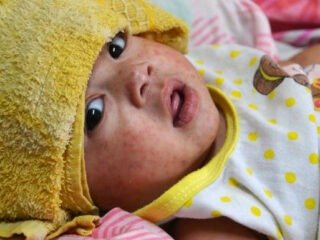
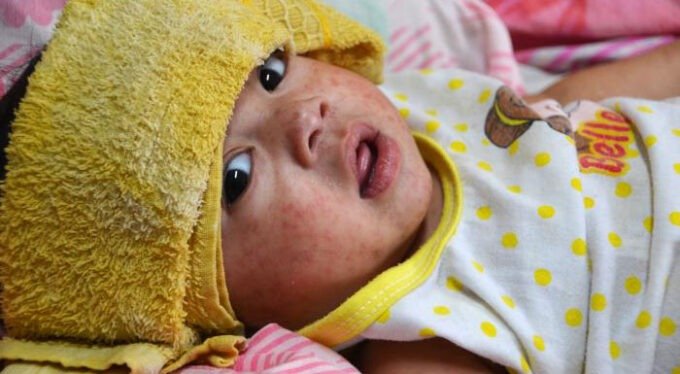
The disease can cause high fever, severe headache, pain behind the eyes, muscle and joint pain, nausea, vomiting and skin rash.
In severe cases, dengue can lead to bleeding, shock, organ complications and death.
India faces additional challenges because all four dengue virus serotypes circulate in the country. Infection with one serotype does not provide reliable protection against the others, and subsequent infections with a different serotype can increase the risk of severe disease.
The introduction of a dengue vaccine could provide an additional layer of protection alongside mosquito control, early diagnosis and appropriate medical care.
Are There Any Safety Concerns?
Although Qdenga has received regulatory approval, some clinicians have called for continued monitoring of its effectiveness and safety in India’s diverse population.
Key questions include:
- How long does vaccine-induced protection last?
- How effectively does it protect against all four dengue serotypes circulating in India?
- Could changes in circulating strains affect vaccine performance?
- How should vaccination be managed in people with specific medical conditions?
One concern in dengue research is antibody-dependent enhancement (ADE), a phenomenon in which certain immune responses may contribute to more severe disease during a later infection.
WHO advises that Qdenga should not be administered to pregnant or breastfeeding individuals, people with significant immune deficiencies, or certain people receiving immunosuppressive treatments.
The vaccine should therefore be administered under appropriate medical guidance, with eligibility and precautions reviewed before vaccination.
Will Qdenga Be Available for Free in India?
Qdenga is expected to enter India’s private healthcare market in the first half of 2027 through the collaboration between Takeda and Dr Reddy’s Laboratories.
The companies have not announced a confirmed retail price in the reports available.
Its availability through government vaccination programmes would depend on future public health and policy decisions.
People should consult healthcare professionals or authorised vaccination centres for updated information about availability, cost and eligibility once the vaccine enters the market.
Can the Dengue Vaccine Replace Mosquito Prevention?
No. Vaccination does not replace mosquito control or other preventive measures.
Even after Qdenga becomes available, people should continue to:
- Remove stagnant water from containers, coolers and flowerpots.
- Use mosquito repellents and protective clothing.
- Install window screens and use mosquito nets when appropriate.
- Keep surroundings clean to prevent mosquito breeding.
- Seek medical attention promptly if dengue symptoms develop.
The vaccine is expected to complement existing dengue prevention strategies rather than serve as a complete solution.
ALSO READ: Dengue Hemorrhagic Fever: Doctor Warns of Deadly Symptoms and Shares Top Prevention Tips
What Does Qdenga’s 2027 Launch Mean for India?
The planned introduction of Qdenga marks an important development in India’s fight against dengue.
For the first time, eligible children and adults in India will have access to an approved dengue vaccine through the private healthcare market.
While the vaccine offers hope for reducing dengue-related illness and hospitalisation, experts emphasise the importance of informed vaccination, continued safety monitoring and sustained mosquito-control efforts.
As India prepares for the expected 2027 launch, public health authorities and healthcare professionals will play a key role in ensuring that people receive accurate information about the vaccine’s benefits, limitations and eligibility.
Disclaimer: This article is for informational purposes only and is not a substitute for medical advice. Consult a qualified healthcare professional before making vaccination decisions.









Leave a comment