

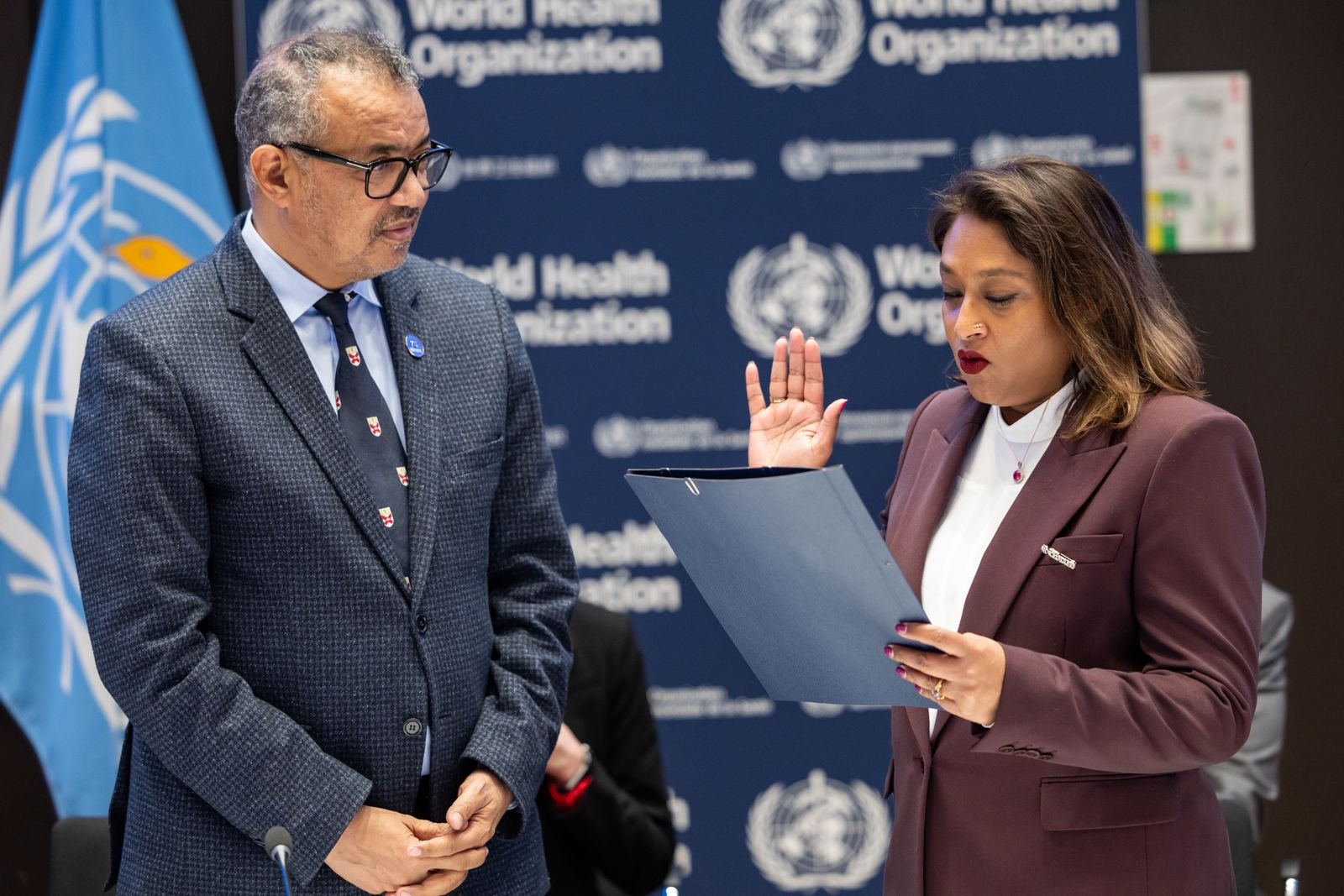
Geneva/New Delhi | January 23, 2024: Ms Saima Wazed was confirmed today as the World Health Organization (WHO) Regional Director for the South-East Asia by the WHO Executive Board in Geneva, Switzerland.
After taking oath as the new Regional Director, Ms Wazed in her acceptance speech at the WHO Executive Board said, ”I would like to thank the Member States for the trust they have placed in me. There is a lot of work to be done, and I am extremely pleased to be starting this journey at this moment with all of you. I am excited for all that we can, and will, do together in the coming years.”
Ms Wazed begins a five-year term on 1 February 2024. She is the first from Bangladesh and the second woman Regional Director of WHO South-East Asia Region. She was nominated as the next Regional Director in a vote by the Regional Committee for the South-East Asia on 1 November 2023 in New Delhi, India.
Emphasizing on her priorities, the new Regional Director said, “The first of these is a strong focus on mental health….a long-neglected area. It is time to turn the tide against the silent illness of mental health which impacts every aspect of the lives affected. I will work towards ensuring relative parity between physical and mental health in our healthcare systems.”
“Second, I look forward to devising and implementing specific interventions for women and children, including pregnant women. This will be created with education, empowerment, and prevention in mind. Structured with a life-course approach, this will include comprehensive well-being and health screenings, vaccination and nutrition programs, promotion of both physical and mental well-being, and resilience,” she said.
Any success we achieve in this area will have multi-generational impacts and benefits which will potentially outlive us all. Successes in this area cascade through societies, even improving the social and economic health of communities, the new Regional Director said.
The third is the use of technology. This great enabler in our lives over the last few decades allows untold possibilities of innovation across many different spheres of public health. The impact of the digital revolution on healthcare holds immense promise, ranging from telemedicine and remote patient monitoring to data-driven diagnostics and personalized treatment plans, she said.
Ms Wazed emphasized on partnerships, collaboration and financing that’s transparent, sustainable, and provides adequate return on investment.
Her other priority areas include –
Universal health coverage – strengthening health systems based on a Primary Health Care approach; monitoring health inequalities to identify and track disadvantaged populations; focusing on evidence & data to formulate equity-oriented approaches and addressing the needs of all groups to ensure all have access to quality services on an equal basis with others.
Emergency response and pandemic preparedness – encouraging countries to engage whole-of-society for effective pandemic preparedness and response, particularly multi-level planning for pandemic preparedness which is also linked to health system strengthening.
Collaboration and partnerships: regional and multi-sectoral – promoting active involvement of education, economic, social, poverty alleviation and development and different regulatory sectors within overall health planning of member countries. Partnering with multiple sectors to address all determinants of health.
Monitoring and progress reporting – for building innovative and context specific data and reporting systems to measure implementation of strategies and improve decision-making. Establishing data collection on gender inequalities, socioeconomic disadvantages, and specific issues faced by indigenous peoples, refugees & migrant populations displaced by conflict, economic & environmental crisis.
Climate change – developing preventive and mitigative action mechanisms by integrating climate change measures into national policies, strategies and planning. Monitoring health impacts of climate & environmental change and prioritizing health sector resilience to climate and environmental change.
Focus on marginalized and vulnerable groups – by prioritizing their unique needs in health infrastructure planning for providing both preventive and curative services, to truly ensure that no one is left behind.
About the new Regional Director –
Ms Saima Wazed has a Bachelor’s degree from Barry University in Florida, USA, and holds a master’s degree in clinical psychology. She is a candidate for a doctorate in Organizational Leadership from the same university.
Since 2019 she has been an Advisor to the WHO Director-General on Mental Health and Autism and has been a member of WHO’s Expert Advisory Panel on Mental Health since 2014.
Ms Wazed was designated Goodwill Ambassador for Autism in WHO South-East Asia in 2017. She co-authored WHO South-East Asia Regional Strategy on Autism Spectrum Disorder the same year.
She is an Associate Fellow at the Global Health Program Chatham House, UK, Chairperson of the National Advisory Committee on Autism and NDDs, Dhaka Bangladesh, and Chairperson of the Shuchona Foundation, Dhaka, Bangladesh.
Ms Wazed was conferred ‘Excellence in Public Health’ award by WHO South-East Asia Regional Office in 2014, and Ibrahim Memorial Gold Medal in 2016 by the Dr Ibrahim Memorial Council, Bangladesh, for her work on autism and neurodevelopment disorders.
In 2017, Ms Wazed received International Champion Award from US organization Shema Kolainu for her work on autism in South-East Asia. In 2019 she was conferred Innovative Women Leaders in Global Mental Health award by the Global Mental Health Programs, Columbia University, USA.















Leave a comment