

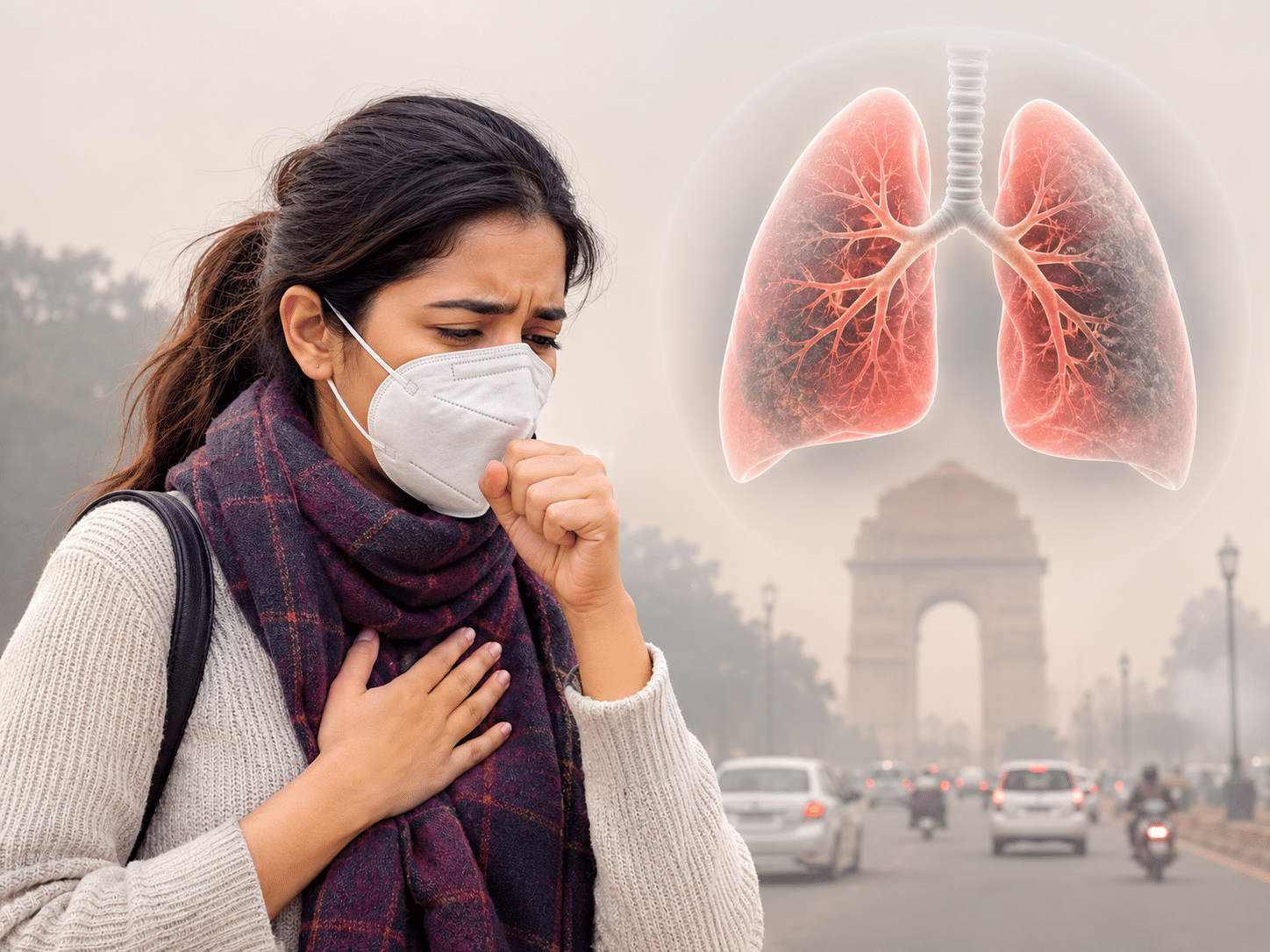
It’s that time of the year again when stepping outside in Delhi can feel like walking into a cloud of smoke. The familiar morning walk, the daily commute, or even a short trip to the neighbourhood market can leave you coughing, sneezing or struggling with throat irritation.
For many people living in Delhi-NCR, poor air quality has become an unfortunate part of everyday life. We check the AQI, wear masks when pollution levels rise and try to avoid going outdoors. But in the middle of all this, there’s one important question we often forget to ask: What is all this polluted air doing to our lungs?
The worrying part is that the effects of air pollution are not always immediately noticeable. While some people experience coughing or breathing difficulties, others may not recognise the early signs of respiratory irritation. Over time, repeated exposure to fine pollutants such as PM2.5 can contribute to inflammation, worsen existing lung conditions and affect overall respiratory health.
And it’s not just people with asthma or other respiratory problems who need to be concerned. Children, older adults, outdoor workers and even otherwise healthy individuals can be affected by prolonged exposure to polluted air.
ALSO READ: Delhi Air Pollution: How AQI Affects Your Lungs and Heart
7 Warning Signs Your Lungs May Be Affected by Air Pollution
As Delhi battles another challenging pollution season in 2026, it’s important to pay attention to what your body may be telling you. Here are 7 warning signs that your lungs may be affected by air pollution:
1. Persistent Cough That Does Not Go Away
A frequent or persistent cough is one of the common signs that polluted air may be irritating your respiratory system. You may experience a dry cough or cough up mucus, particularly after spending time outdoors or travelling through busy traffic areas. Pollution particles can irritate the airways and make you cough more often. If your cough continues for several days or keeps returning, consult a doctor instead of ignoring it.
2. Shortness of Breath During Everyday Activities
Do you feel breathless while walking, climbing stairs or doing simple household activities? This could be another warning sign. Polluted air can irritate the airways and make breathing uncomfortable. You may also feel that you are unable to take a deep breath. If you regularly experience breathlessness, even after light physical activity, it is important to get your lungs checked.
3. Wheezing or a Whistling Sound While Breathing
Wheezing is a whistling sound that may occur when you breathe, especially while breathing out. It can happen when the airways become narrow or irritated. Exposure to air pollution may trigger wheezing, particularly in people who have asthma or other respiratory conditions. If you notice repeated wheezing, especially at night or after physical activity, seek medical advice.
4. Chest Tightness or Discomfort
Some people experience tightness or discomfort in their chest after spending time in highly polluted areas. It may feel as though something is pressing against your chest or that you cannot breathe comfortably. Air pollution can contribute to respiratory irritation, but chest discomfort should never automatically be blamed on pollution. Sudden or severe chest pain, especially with sweating, dizziness or breathlessness, requires urgent medical attention.
ALSO READ: How Air Pollution in Delhi-NCR Impacts Your Lungs — Effective Tips to Stay Protected
5. Increased Mucus or Phlegm Production
Your respiratory system naturally produces mucus to trap dust and other unwanted particles. When you breathe polluted air, your body may produce more mucus as a protective response. You may notice frequent throat clearing, coughing up phlegm or a feeling of congestion in your chest. If excess mucus continues for a long time or is accompanied by fever or breathing difficulties, consult a healthcare professional.
6. Unusual Tiredness and Reduced Stamina
If you feel tired after walking a short distance or performing everyday activities, it may be worth paying attention to your respiratory health. Breathing discomfort can make physical activity more difficult and reduce your stamina. You may notice that you get exhausted more quickly than before. However, fatigue can have several causes, so persistent or unexplained tiredness should be discussed with a doctor.
7. Worsening Asthma or Existing Lung Problems
People who already have asthma, COPD or other respiratory conditions may be more sensitive to polluted air. During periods of poor air quality, they may experience more frequent coughing, wheezing, breathlessness or chest tightness. Some may also need their prescribed inhaler more often. If your symptoms are becoming worse, contact your doctor. Do not change your medication or inhaler dose without medical advice.
Who Is Most at Risk from Delhi Air Pollution?
Although air pollution can affect anyone, some people may be more vulnerable to its harmful effects. Children, older adults, pregnant women and people with asthma, COPD or heart disease need to take extra precautions. Children are particularly vulnerable because their lungs are still developing. People who work outdoors, including traffic police officers, construction workers and delivery personnel, may also face greater exposure because they spend long hours in polluted surroundings.
How Can You Protect Your Lungs from Air Pollution?
Reducing exposure to polluted air is one of the most important steps you can take to protect your respiratory health. Check the daily Air Quality Index (AQI) before going outdoors, particularly during winter. When pollution levels are high, avoid unnecessary outdoor activities and postpone outdoor exercise. If you need to go outside, wear a properly fitted N95 mask to reduce exposure to fine particles.
At home, keep your surroundings clean, avoid smoking and stay away from burning wood, leaves or waste. You can also consider using a suitable air purifier indoors. Keep windows and doors closed when outdoor pollution levels are very high, while ensuring adequate ventilation when outdoor air quality improves.
READ ALSO: Smog to Strands: How Air Pollution Is Silently Triggering Hair Fall and Scalp Damage
FAQs About Air Pollution In Delhi
1. Can Delhi air pollution damage your lungs?
Yes. Prolonged exposure to air pollution, particularly fine particulate matter such as PM2.5, can cause airway inflammation, worsen existing respiratory conditions and contribute to reduced lung function and chronic respiratory disease.
The health effects depend on the level and duration of exposure, as well as individual susceptibility.
2. What are the early symptoms of lung problems caused by air pollution?
Common symptoms include persistent coughing, wheezing, throat irritation, chest tightness and shortness of breath. Some people may also experience reduced exercise tolerance.
However, these symptoms can have several other causes and do not automatically indicate pollution-related lung damage.
3. Can healthy people also be affected by Delhi pollution?
Yes. Even people without a previous history of respiratory disease can experience coughing, airway irritation and breathing discomfort during periods of high pollution.
Long-term exposure can also increase the risk of developing certain health problems.
4. Does wearing an N95 mask protect against Delhi pollution?
A properly fitted N95 respirator can reduce exposure to airborne particles, including PM2.5. However, it does not eliminate exposure to every air pollutant, particularly gases.
5. How can I check whether my lungs are healthy?
If you experience persistent breathing problems, consult a pulmonologist or qualified healthcare professional.
Depending on your symptoms, your doctor may recommend spirometry, pulse oximetry or other investigations to assess your respiratory health.
6. Can lung health improve after reducing pollution exposure?
Some pollution-related irritation and respiratory symptoms may improve when exposure decreases.
However, recovery depends on the underlying condition and the extent of any damage. Chronic respiratory conditions may require ongoing treatment and medical monitoring.
7. Is morning walking safe during Delhi’s pollution season?
It depends on the air quality at that time. If pollution levels are high, outdoor exercise can increase your exposure to harmful particles.
Check the AQI before heading out. On heavily polluted days, consider exercising indoors instead.
Reference
- World Health Organization: Ambient (Outdoor) Air Pollution and Health
- WHO: Health Effects of Air Pollution – Evidence and Implications (2026)
- Central Pollution Control Board: National Air Quality Monitoring
Follow HealthWireMedia.com for all the latest health news and developments from around the world.













Leave a comment