

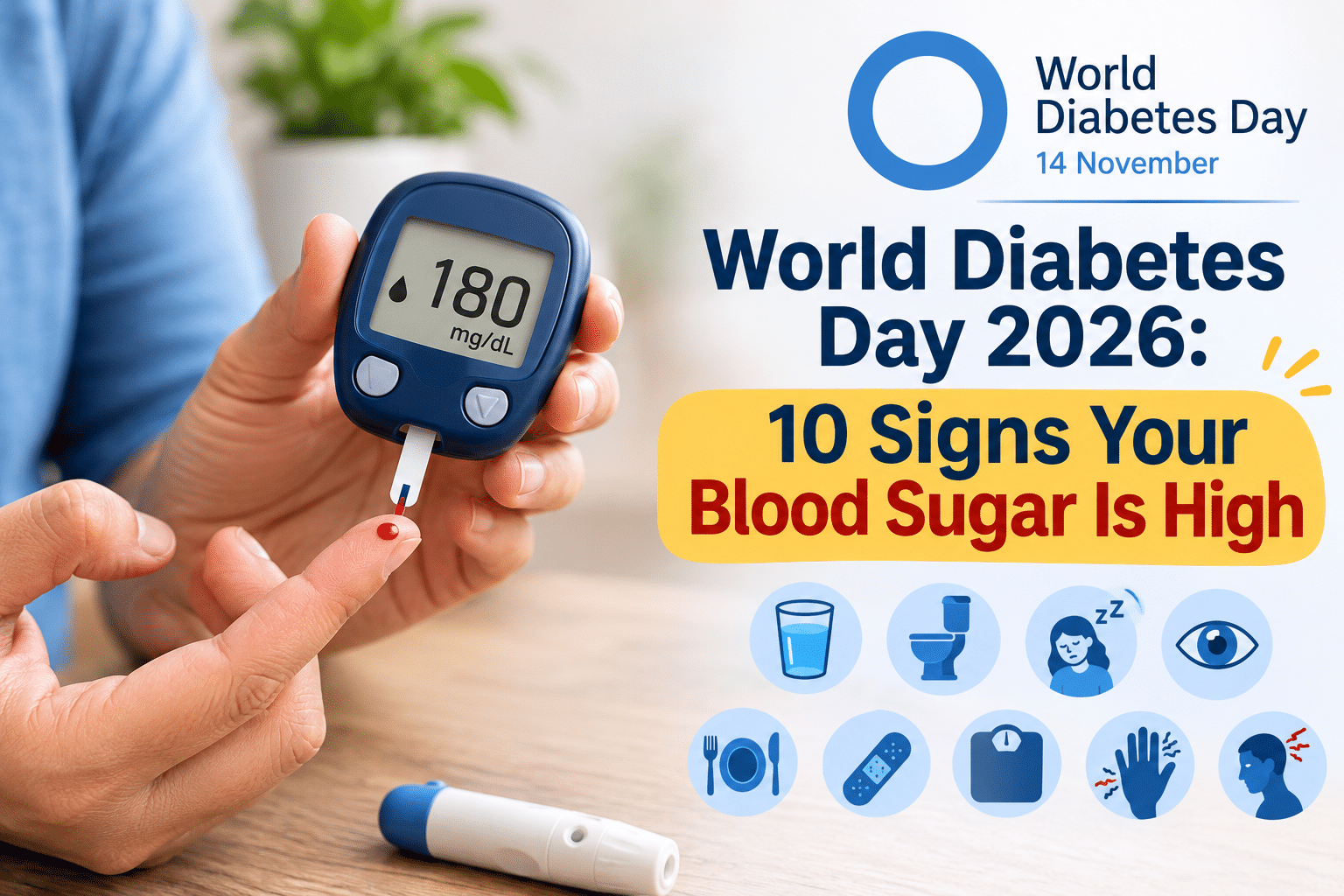
Diabetes is a disease that occurs when your blood glucose, also called blood sugar, is too high. Glucose is your body’s main source of energy. Your body can make glucose, but glucose also comes from the food you eat.
Insulin is a hormone made by the pancreas that helps glucose get into your cells to be used for energy. If you have diabetes, your body doesn’t make enough – or any- insulin, or doesn’t use insulin properly. Glucose then stays in your blood and doesn’t reach your cells.
Diabetes raises the risk for damage to the eyes, kidneys, nerves, and heart. Diabetes is also linked to some types of cancer. Taking steps to prevent or manage diabetes may lower your risk of developing diabetes health problems.
While there are many things that you can do to reduce your risk of developing this irreversible health condition, the primary one is to understand and track the symptoms.
With World Diabetes Day 2026 approaching, in this article, we will discuss the top signs that your body may show when the blood glucose level is higher.
Symptoms of High Blood Sugar Level
Sometimes, we ignore small changes in our body, thinking they are caused by tiredness, stress or a busy routine. But these changes could also be signs of high blood sugar and should not be overlooked.
Here are 10 common signs to watch out for:
1. Always Feeling Thirsty
If you feel thirsty all the time, even after drinking enough water, it could be a sign of high blood sugar. When the body tries to remove extra sugar through urine, it also loses water, making you feel thirsty more often.
2. Frequent Trips to the Washroom
Going to the washroom again and again, especially at night, can be a sign of high blood sugar. This happens because the kidneys work harder to remove extra glucose from the body.
3. Feeling Tired All the Time
Feeling exhausted even after getting enough sleep could be another sign. When the body cannot use sugar properly for energy, you may feel tired or weak throughout the day.
4. Blurred Vision
High blood sugar can affect your eyes and make your vision blurry. You may find it difficult to focus on things or read clearly.
5. Feeling Hungry Often
If you feel hungry soon after eating, your blood sugar levels may need attention. This can happen when the body is unable to use glucose properly for energy.
6. Wounds Take Longer to Heal
If a small cut or wound takes longer than usual to heal, do not ignore it. High blood sugar can affect the body’s healing process and make it harder to fight infections.
7. Frequent Skin Infections
People with high blood sugar may experience repeated skin or fungal infections. If these problems keep coming back, it is important to get them checked.
8. Sudden Weight Loss
Losing weight without making any changes to your diet or exercise routine can sometimes be linked to high blood sugar. This happens when the body starts using stored fat and muscle for energy.
9. Numbness in Hands and Feet
A feeling of pins and needles, tingling or numbness in your hands and feet can sometimes be linked to high blood sugar. If sugar levels remain high for a long time, they can damage the nerves.
10. Frequent Headaches
Frequent headaches and difficulty focusing on everyday tasks may also be linked to high blood sugar. If you experience these problems regularly, consider getting your blood sugar levels checked.
Its important to note that over time, high blood glucose can damage your heart, kidneys, feet, and eyes. If you have diabetes, you can take steps to lower your chances of developing diabetes health problems by taking steps to improve your health and learning how to manage the disease. Managing your blood glucose, blood pressure, and cholesterol levels can help prevent future health problems.














Leave a comment