

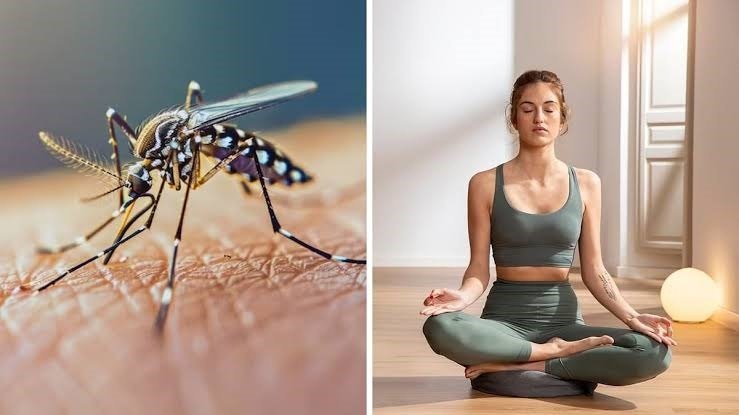
A strong immune system plays an important role in protecting overall health. Along with proper medical care and good hygiene, yoga can support the body’s natural defence mechanisms. Through gentle movements, controlled breathing and relaxation, yoga may help improve circulation, ease stress and support overall well-being.
The body can be kept dynamic, balanced and better equipped to face seasonal challenges with a simple daily routine of yoga. These rituals can be accompanied by physical and mental relaxation, with regularity and consciousness.
Tadasana (Mountain Pose)
The practitioner is erect with his feet together and arms at the side. As one inhales the arms are lifted over the head, and the body stretches upwards. The back is straight and the eyes are in front.
Benefits: Tadasana enhances balance and posture, as well as, improves blood flow. It promotes lung expansion and makes the body feel more stable and energetic, which helps to generate the overall immunity.
Do’s and Don’ts: The body must not be stretched. Continuous breathing without locking of knees. Novices may use a wall to support them.
Vrikshasana (Tree Pose)
The practitioner is in one leg and in the other leg is on the inner thigh or calf. The hands are held together before the chest or lifted up high. The body is stable and with a fixed direction.
Benefits: Vrikshasana enhances stability, balance, and focus. It makes the legs stronger and calms down the mind making it less stressed enabling it to fight immunity.
Do’s and Don’ts: Do not put the foot on the knee joint. Keep a balanced pose without pushing. Approach to support when necessary.
Bhujangasana (Cobra Pose)
Formation
The practitioner is lying on the stomach with palms around the chest. When inhaling, the chest is raised up, but the lower body remains on the ground. Shoulders are loose, and the look is forward.
Benefits
This position opens the chest and enhances lung capacity which is significant during seasonal infections. It activates the inner organs and increases the circulation and general energy.
Do’s and Don’ts
Do not strain the lower back. Elbows should be bent in a slight manner and breathing should be smooth. Do not strain the pose.
Setu Bandhasana ( Bridge Pose )
The practitioner is lying on back with knees drawn up and feet brought close to hips. During the inhaling, the hips are lifted in an upward direction creating a bridge shape. Kneeling hands may be placed on the floor.
Benefits: Setu Bandhasana enhances the blood circulation, back strengthens and activates the internal organs. It is also useful in alleviating stress and fatigue and promoting immune functions.
Do’s and Don’ts: Bring up the hips without difficulty. Do not rotate the head in the pose. Individuals who have problems with their necks ought to practice.
Alternate Nostril Breathing (Anulom Vilom Pranayama).
The practitioner is sitting in a comfortable position with a straight spine. One nostril is closed and inhaled using the other and vice versa in a slow rhythm.
Benefits: This breathing method harmonises the nervous system and enhances oxygen circulation. It also fights off stress and boosts the general immunity through relaxing the mind and aiding the body to perform.
Do’s and Don’ts: Breathing is to be natural and smooth. Do not work in a hurry. Keep your mind straight and be in a stress-free place.
Yoga offers easy but powerful remedies to boost immunity in malaria season. The body gets stronger, more balanced and better prepared to maintain health with practice.
People can make a good step toward their own health and inner balance by spending a few conscious minutes a day to save their health, and stay balanced during the seasonal change.
Follow HealthWireMeda.com for all the latest health news and developments from around the world.












Leave a comment