Home Latest News Accelerate tobacco and e-cigarette control measures: WHO
Latest News

Accelerate tobacco and e-cigarette control measures: WHO

Share
Share

New Delhi | February 20, 2024: The World Health Organization is calling on countries in South-East Asia Region to intensify efforts to control tobacco and e-cigarette use, as despite steep decline over the years tobacco consumption in the Region continues to be the highest globally, and vaping is on the rise.

“The Region still has the highest number of people using tobacco which puts them at risk of life-threatening diseases such as cancer, respiratory and heart disease. Urgent measures are also needed to control e-cigarettes, which have not been proven to be effective for smoking cessation. We must do all we can to control tobacco and e-cigarette use to protect health and save lives,” said Ms Saima Wazed, Regional Director, WHO South-East Asia.

While tobacco use in the WHO South-East Asia Region decreased from 68.9% in 2000 to around 43.7% in 2022, an estimated 411 million people in the Region still consume tobacco, as per the latest trends released this year.

The Region has 280 million smokeless tobacco users, nearly 77% of the global smokeless tobacco users, and around 11 million adolescent tobacco users in the age group of 13-15 years, accounting for nearly 30% of the global total.

The use of e-cigarettes, particularly among young people, is increasing in many countries, with co-use of e-cigarettes and conventional cigarettes being common. Thailand, which has been tracking e-cigarette use, reported a steep rise in e-cigarette use among school-aged children of 13 to 15 years, from 3.3% in 2015 to 17.6% in 2022.

WHO is committed to support policies aimed at countering tobacco and e-cigarette industries’ interference for safeguarding health of the over 2 billion people in the Region, the Regional Director said.

While DPR Korea, India, Nepal, Sri Lanka, Thailand, and Timor-Leste have banned e-cigarettes, Maldives regulates e-cigarettes as tobacco products.

Over the years, countries in the Region have made significant progress in combating tobacco. Tobacco use among men declined from 68.9% in 2000 to 43.7% in 2022, and among women from 33.5% in 2000 to 9.4% in 2022, the steepest decline among all WHO Regions.

The Region, alongside the WHO African Region, is on track to achieve the NCD 2025 target of a 30% reduction in tobacco use by 2025.

India and Nepal are expected to achieve the NCD target of at least 30% reduction in tobacco use by 2025 while eight other countries are projected to record declines, though less than 30%.

While Bangladesh has announced “Tobacco Free Bangladesh by 2024, India has initiated ‘Tobacco Endgame’.

Countries in the Region are implementing demand reduction strategies as advocated by WHO MPOWER package and other initiatives for tobacco control. Given the high interference of tobacco industry, more assertive actions are needed to enforce tobacco control laws and policies.


Share
Written by
Satata Karmakar

Satata Karmakar is a health journalist and Editor of HealthWireMedia.com, with over 12 years of experience in journalism, investigative reporting, newsroom editing and healthcare news. As Editor of HealthWire Media, Satata focuses on delivering accurate, evidence-based and accessible health journalism that helps readers make sense of complex medical and healthcare developments. She specialises in translating medical research, clinical findings, public-health updates and healthcare regulations into clear, engaging stories for healthcare professionals and the wider public. Her areas of coverage include public health, medical research, disease prevention, healthcare policy, health technology, medical education and regulatory developments. She places particular emphasis on verifying health claims through peer-reviewed research, official government notifications, expert interviews and credible institutional sources, including the National Medical Commission (NMC). She is committed to responsible health reporting that prioritises accuracy, context and transparency—especially when covering emerging research, medical breakthroughs, health risks and treatment-related information. Her editorial approach aims to make reliable health information understandable without oversimplifying science or overstating medical claims. Through her work, she seeks to strengthen public understanding of healthcare issues and contribute to informed conversations around health, medicine and policy. Outside the newsroom, Satata enjoys reading and painting, pursuits that continue to inspire her curiosity, creativity and storytelling.

Leave a comment

Leave a Reply

Your email address will not be published. Required fields are marked *

Don't Miss

Bundibugyo Ebola virus
International NewsVirus & DiseaseWHO

From Fever To Organ Failure: How The Bundibugyo Ebola Virus Affects The Body

The Bundibugyo Ebola virus outbreak has raised fresh global health concerns as infections continue to spread across parts of Central and East Africa....

WHO
Health TipsInternational NewsLatest NewsLifestyle & WellnessWHO

WHO Issues First Type 1 Diabetes Guidelines for Adults: 7 Things Patients Need to Know

More than 100 years after the discovery of insulin, millions of people living with type 1 diabetes continue to face challenges in accessing...

Breast Cancer
Health NewsOncology

Mammogram vs Ultrasound vs MRI: Which Breast Cancer Screening Test Is Right for You?

Breast cancer is one of the most common cancers affecting women worldwide, and early detection plays an important role in improving treatment outcomes....

Always Tired? It Could Be Anaemia!
Diet & NutritionHealth NewsHealth TipsLifestyleLifestyle & WellnessWellness

Anaemia in India: Why Iron Deficiency Remains a Concern and 7 Signs You Should Not Ignore

Feeling tired all the time, experiencing frequent dizziness or getting breathless after climbing a few stairs? While these symptoms are often dismissed as...

N95 Mask
Health TipsLatest NewsLifestyle & WellnessWellness

Does Wearing an N95 Mask Protect You From PM2.5 Pollution? Doctors Explain How To Choose And Wear It Correctly

As air pollution continues to affect several Indian cities during winter, wearing a mask has become an important precaution for people stepping outdoors....

Section title

Related Articles
Latest NewsWHO

WHO Releases First-Ever Guidelines For Type 1 Diabetes In Adults: 5 Key Recommendations Explained

The World Health Organization (WHO) has issued its first-ever guidelines for the...

Health NewsLatest NewsLifestyle

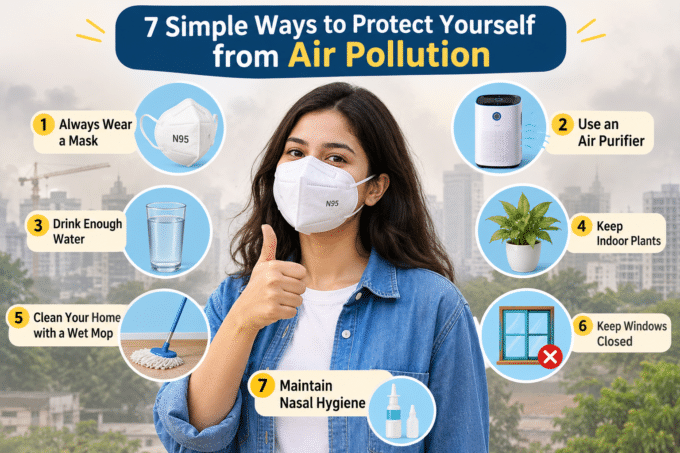
7 Simple Ways to Protect Yourself from Air Pollution

Air pollution has become a major health concern today. Dust from construction...