

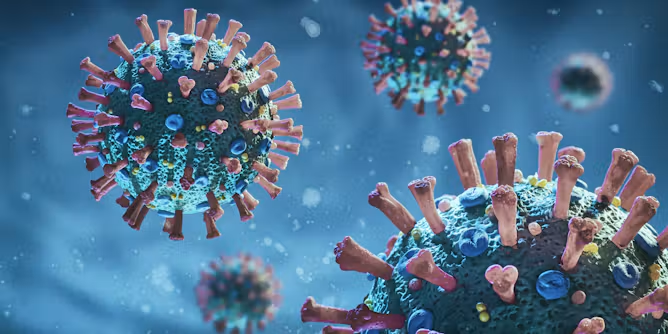
A new Covid-19 variant, PJ.2.1, is spreading across several countries, raising concerns about whether the world could face another major wave of infections. First identified in Canada in May 2026, the variant has since been detected in the United States, parts of Europe, Australia, New Zealand and Asia.
Researchers have found that PJ.2.1 carries several changes in its spike protein, the part of the virus that helps it enter human cells. Laboratory experiments also suggest that it can interact more efficiently with the ACE2 receptor, which the coronavirus uses to enter cells.
But does this mean another pandemic is approaching?
Current evidence does not suggest that PJ.2.1 is about to trigger a pandemic like the one seen in 2020. Although its spread deserves attention, there is no established evidence that it causes more severe illness, increases hospitalisations or significantly escapes vaccine-induced antibodies. Scientists will need more real-world data to understand its public health impact.
PJ.2.1 COVID-19 Variant: All You Need To Know
PJ.2.1 is a lineage of SARS-CoV-2, the virus responsible for Covid-19. It was first detected in Ontario, Canada, on May 2, 2026. The variant was subsequently reported in other Canadian provinces and detected in the United States on June 30.
Researchers have also reported sequences from Singapore, Australia, New Zealand, Israel, France and Spain. In the United States, wastewater surveillance indicated that PJ.2.1 was growing rapidly at the time of the study.
A study published in the Journal of Infection in October 2026 describes PJ.2.1 as a “saltation variant”. This term refers to a virus that appears with a relatively large number of genetic changes rather than acquiring mutations only gradually.
The researchers traced its origin to MC.10.1.7, a descendant of the JN.1 lineage.
The emergence of a variant with several genetic changes is important because some mutations can affect how efficiently a virus enters human cells or how well antibodies recognise it. However, genetic changes alone cannot tell scientists whether a variant will cause more severe disease or lead to a major public health emergency.
Why Is PJ.2.1 Spreading So Fast?
The October 2026 study examined how PJ.2.1 interacts with human cells and how effectively antibodies generated after vaccination can neutralise it.
The researchers found that its spike protein showed increased interaction with the ACE2 receptor. In laboratory experiments, virus-like particles carrying the PJ.2.1 spike protein also entered several cell lines more efficiently than the LP.8.1 reference variant.
This finding may help explain why the variant is spreading in some regions. However, laboratory cell-entry experiments are not the same as measuring how easily the virus spreads between people.
The study also examined antibody neutralisation. This is an important measure because antibodies help the immune system recognise and block viruses.
Interestingly, PJ.2.1 did not show substantial resistance to the vaccine-induced antibodies examined in the study. Its neutralisation was approximately 1.8 times lower than that of the LP.8.1 reference variant.
This suggests that increased ACE2 binding, rather than a dramatic ability to escape existing antibodies, may be contributing to its spread.
The findings are encouraging but preliminary. Laboratory results cannot establish how well vaccines prevent infection, hospitalisation or severe disease in the wider population.
Can PJ.2.1 Trigger Another Pandemic?
At present, there is no scientific evidence to conclude that PJ.2.1 will trigger another pandemic.
A fast-growing variant and a pandemic-causing virus are not the same thing. A variant may spread more rapidly than other circulating strains without necessarily causing more serious illness.
To understand the potential public health threat, scientists need to examine several factors:
- Transmissibility: Does the variant spread more easily from one person to another in real-world conditions?
- Immune escape: Can it infect people despite immunity from previous infections or vaccination?
- Disease severity: Does it increase the risk of pneumonia, hospitalisation, intensive care or death?
- Population impact: Is it causing a sustained increase in infections and placing significant pressure on healthcare systems?
The available PJ.2.1 study provides early information about its genetic characteristics, cell entry and antibody sensitivity. It does not establish that the variant causes more severe Covid-19 or is responsible for a major increase in hospitalisations.
The World Health Organization’s Covid-19 dashboard also provides important context. Its latest available variant summary, covering September 6 to October 4, 2026, listed JN.1 as a variant of interest and XFG, NB.1.8.1, PQ.16.1.1 and BA.3.2 as variants under monitoring. PJ.2.1 was not included in that list.
This does not mean the variant can be ignored. It means that its emergence should not be confused with a formal WHO designation of a variant of concern.
The WHO dashboard reported that global Covid-19 activity remained generally low and stable during October 12–18, 2026, although some regions experienced increases. Surveillance data, however, are incomplete because several countries have reduced testing and reporting.
In other words, the current evidence supports continued monitoring, not a prediction of another pandemic.
Is PJ.2.1 More Dangerous Than Previous Variants?
There is currently insufficient clinical evidence to establish that PJ.2.1 causes more severe disease than earlier variants.
The distinction between faster spread and greater severity is particularly important. A virus can infect more people without necessarily making each infection more dangerous.
The October study examined laboratory characteristics and antibody responses. It was not a clinical study comparing hospitalisation or death rates among people infected with PJ.2.1 and those infected with other variants.
Researchers also observed that PJ.2.1 and some other variants were detected more frequently among older age groups, particularly people aged 70 and above. This observation does not establish that the variant specifically targets older people or causes more severe illness in them.
Older adults, people with diabetes, heart or lung disease, and individuals with weakened immune systems remain at greater risk of complications from Covid-19 and other respiratory infections.
What Are the Symptoms of PJ.2.1?
There is no established symptom pattern that is unique to PJ.2.1. Its symptoms appear similar to those associated with other Covid-19 infections and can overlap with seasonal flu and the common cold.
Possible symptoms include:
- Fever or chills
- Sore throat
- Runny or blocked nose
- Cough
- Headache
- Muscle and body aches
- Fatigue and weakness
- Shortness of breath in some cases
Because these symptoms overlap with other respiratory infections, it is not possible to identify PJ.2.1 from symptoms alone.
Testing can help establish whether an illness is caused by SARS-CoV-2. Genomic sequencing is then required to identify the particular variant or lineage.
People experiencing breathing difficulty, chest pain, confusion, low oxygen levels or rapidly worsening symptoms should seek prompt medical attention. Older adults and people with underlying health conditions should be particularly careful about delaying medical advice.
Can Existing Covid Vaccines Protect Against PJ.2.1?
The early laboratory findings offer some reassurance about antibody recognition.
In the Journal of Infection study, antibodies from people who had received an LP.8.1-adapted Covid-19 vaccine were able to neutralise PJ.2.1. The reduction in neutralisation was relatively limited compared with the reference variant.
The researchers also referred to findings suggesting that an XFG-adapted vaccine used for the 2026–27 season generated antibodies that could neutralise PJ.2.1.
However, laboratory neutralisation results should not be interpreted as proof that a vaccine will prevent every infection. Protection against severe disease, hospitalisation and death is a separate question that requires real-world evidence.
People at higher risk should discuss their vaccination status and the need for any recommended updated dose with their healthcare provider.
Is India at Risk?
India cannot be considered completely insulated from the spread of a variant detected in several countries. International travel and the continued circulation of SARS-CoV-2 mean that new lineages can cross borders.
However, the available reports do not establish whether PJ.2.1 has been detected in India. Its detection in other countries should not automatically be treated as confirmation of its presence here.
India’s genomic surveillance network, including the Indian SARS-CoV-2 Genomics Consortium (INSACOG), plays an important role in identifying changes in circulating variants. Continued sequencing and transparent reporting will be necessary to understand whether PJ.2.1 is entering India and whether it is gaining ground.
The country should also continue monitoring hospitalisations and severe respiratory infections rather than relying only on reported case numbers. Testing and reporting have declined in many parts of the world, making genomic and clinical surveillance especially important.
How To Stay Safe From The New COVID Variant?
The emergence of PJ.2.1 is a reminder that Covid-19 has not disappeared. It is still important to take sensible precautions, particularly when respiratory infections are circulating.
People can reduce their risk by:
- Wearing a well-fitting mask in crowded indoor spaces and poorly ventilated areas.
- Improving ventilation by opening windows or using appropriate air filtration.
- Practising hand hygiene and avoiding close contact with others when unwell.
- Seeking medical advice if symptoms persist or worsen.
- Testing when advised by a healthcare professional, particularly when the result could affect treatment or precautions around vulnerable people.
- Discussing recommended vaccination and booster doses with a doctor, especially for older adults and people with underlying conditions.
People should avoid self-medicating with antibiotics or taking medicines without medical advice. Antibiotics do not treat viral infections such as Covid-19.
Follow HealthWireMedia.com for all the latest health news and developments from around the world.












Leave a comment