Home Health News Neurology World Parkinson’s Day 2026: Early signs of Parkinson’s disease often ignored and how timely diagnosis can change lives
Neurology

World Parkinson’s Day 2026: Early signs of Parkinson’s disease often ignored and how timely diagnosis can change lives

Share
Parkinson's Disease
Parkinson's Disease
Share

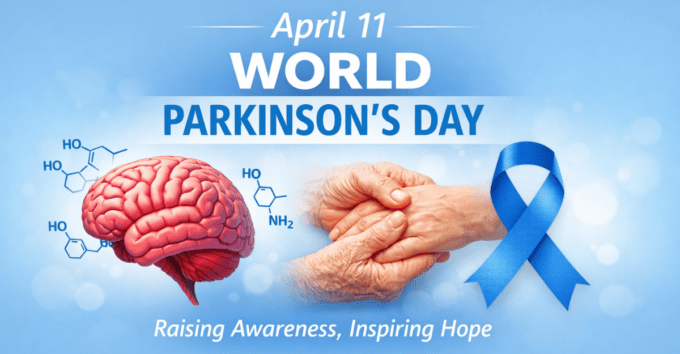
Parkinson’s disease is a progressive neurological condition that worsens over time, with symptoms varying depending on its severity. According to the National Institutes of Health, it is typically diagnosed in people over the age of 60. However, about five per cent of patients develop the disease before the age of 50.
Parkinson’s is primarily caused by the degeneration of brain cells responsible for producing dopamine. Several factors may contribute to its development, including genetic predisposition, exposure to pesticides, and head injuries.

First symptoms of Parkinson’s

Dr Aravind Badiger, Technical Director at BDR Pharmaceuticals, said, “It is normally believed that Parkinson’s causes motor problems to individuals, but the truth is that the early symptoms of the disease are non-motor and they are usually experienced before a diagnosis is made.”

Such early warning signals include the following:

  1. Loss of smell (anosmia)
  2. REM sleep behaviour disorder
  3. Constipation is caused by a lack of dopamine in the gut
  4. Depression, anxiety, and exhaustion
  5. Facial immobility
  6. Verbal impairment and difficulty writing

Since the symptoms are usually not obvious, most of them are ignored and attributed to stress or ageing.

Signs of Parkinson’s disease

Here are the signs of Parkinson’s disease:

  • As the disease advances, motor symptoms emerge. Some of the symptoms include:
  • Tremors or ‘pill-rolling’ movement of the hands
  • Slowed movements (bradykinesia)
  • Muscle stiffness
  • Balance problems, making patients likely to fall forward

All the symptoms could eventually make patients unable to do daily tasks. In that way, recognising the symptoms is necessary.

Is Parkinson’s just ageing?

Another assumption is that the disease is simply the effects of ageing. While it is true that age plays a crucial role, Parkinson’s is really a medical condition that requires care and attention. Stigma or fears of being discriminated could influence people not to speak out about their condition, medical intervention could actually help them live a normal life.

Importance of diagnostics and early treatment

Although there is no cure available yet, accurate diagnosis plays a crucial role in treating the disease. Doctors could recommend that a person undergo a DaTScan diagnostic. That procedure allows them to identify abnormality related to dopamine activity. In this case, a person can:

  1. Take medication that boosts the production of dopamine
  2. Participate in physical therapy to avoid mobility impairments
  3. Work with a therapist and enhance verbal communication
  4. Regularly exercise by cycling or dancing
  5. According to The Lancet, exercise plays a major role in controlling Parkinson’s progression.
  6. Recommendations related to lifestyle

You shouldn’t feel any embarrassment about this disease and hide the fact that you suffer from it. On the contrary, discussing the problem will be highly beneficial to you. This disorder doesn’t occur because of ageing processes only; it is actually quite complicated neurological disease that deserves attention.

Disclaimer: Dear readers, this article provides general information and advice only. It is not at all professional medical advice. Therefore, always consult your doctor or a healthcare specialist for more information.


Share
Written by
Swapna Karmakar

Swapna Karmakar is an experienced Health Journalist and the Editorial Lead at Healthwire Media. She has a background in investigative reporting and a deep interest in community health and regulatory updates within the medical sector. Swapna focuses on bridging the gap between healthcare providers and patients by crafting narratives that simplify medical terminology without losing clinical depth. Her research process involves analyzing peer-reviewed journals and official regulatory notifications from bodies like the National Medical Commission (NMC) to provide timely news to both healthcare professionals and the general public. Swapna’s work is characterized by a commitment to transparency and evidence-based reporting. Outside of health reporting, she is an avid traveler and explorer of cultural landscapes. 

Leave a comment

Leave a Reply

Your email address will not be published. Required fields are marked *

Don't Miss

Non-Alcoholic Fatty Liver Disease (NAFLD)
Latest News

Fatty liver symptoms: Gastroenterologist explains hidden causes of excessive fat accumulation inside the liver at young age

Fatty Liver Symptoms: Fatty liver disease, once considered a condition affecting middle-aged or overweight individuals, is increasingly being diagnosed in people in their...

Snacks are small, quick bites of food consumed between regular meals.
Latest News

World Earth Day 2026: India’s Food Waste Problem Is Fueling Malnutrition—Here’s How It Impacts Health

World Earth Day 2026, themed “Our Power, Our Planet,” is a powerful reminder to protect the environment. But beyond plastic and other kinds...

Latest News

Heatwave Health Risk: How Dehydration and Extreme Heat Can Damage Your Liver and Kidneys

Rise in temperature during summer months not only makes it uncomfortable but also causes significant physiological pressure on our vital organs. According to...

Rapid Heart Beat
Latest News

Irregular Heartbeat Warning Signs: When a Fast, Slow, or Skipped Beat Signals a Serious Heart Problem

Does your heartbeat feel out of the pump now, too fast or too slow, or irregular? This is something that is experienced by...

Cancer
Latest News

90% of Cancers Are Lifestyle-Linked, Not Genetic: Expert Shares 7 Simple Ways to Reduce Your Risk

Most individuals would agree that cancer is largely genetic, something you are born with, and have no control over. However, doctors believe that...

Section title

Related Articles
Neurology

World Parkinson’s Day 2026: How deep brain stimulation is transforming life for patients with advanced parkinson’s disease

Parkinson’s disease is a neurological disorder that gradually affects individuals’ independence, mobility...

Neurology

Slip Disc vs Sciatica: How to Identify the Real Cause of Nerve Pain and When Surgery Is Needed

In a clinical setting, doctors often see patients describing a remarkably consistent...

Neurology

Sleep Deprivation And Brain Health: What Happens When You Sleep Less Than 6 Hours

Sleep is one of the most essential biological functions for maintaining overall...