


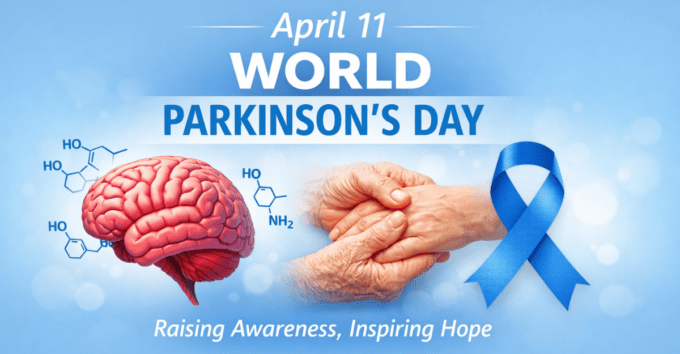
World Parkinson’s Day is celebrated on April 11 every year to raise awareness about Parkinson’s disease. Although majority of individuals consider Parkinson as a brain disorder and issues related to movement, the disease may involve other body organs- other organs which are mostly the heart.
Parkinson’s is a slow progressive type of neurological disease, which impairs the ability to move the body of those brain sections that control movement. At the initial stages, the symptoms can be mild and are not always detectable. But as the disease progresses, the person can find it hard to walk, have stiffness in their body, shaking hands, and balance. These symptoms may over time disrupt life and independence.
How Parkinson’s disease affects the heart?
Another aspect of Parkinson’s disease, which is not well-known, is the effect it produces on the autonomic nervous system. The system regulates some of the most vital activities like heart rate, blood pressure, and digestion. In case Parkinson’s attacks this system, it may cause several heart-related symptoms.
Patients can also feel dizzy when standing up all of a sudden, which is usually brought about by a sudden decrease in blood pressure. Abnormal heartbeating, constant tiredness, and highs and lows in heart rate also occur. The symptoms can be overlooked or confused with typical manifestations of ageing or frailty but can be caused by heart problems. And this is why regular monitoring is important to individuals with Parkinson’s.
This reduced mobility and cardiovascular load combination in the long term can have a serious impact on the heart performance, so it is even more essential to exercise within ones possibilities.
Parkinson’s-related heart conditions
Certain conditions may develop due to Parkinson’s disease like neurogenic orthostatic hypotension. This happens when blood pressure is not adequately regulated by the nervous system and results in dizziness or fainting when one stands up. The heart rhythm and heart functioning can also be impacted by the disease in certain cases.
Moreover, some of the drugs that are taken to manage symptoms of Parkinsonism may affect blood pressure, additionally complicating heart conditions. This necessitates routine medical care.
What can patients do?
The treatment of Parkinson’s disease does not only involve the use of medication but also lifestyle changes. Modifications in lifestyle and diet are crucial in enhancing the quality of life and avoiding complications. The patient should consume a balanced diet and stay hydrated throughout. Simple body exercises like walking and stretching can ensure fluidity and heart disease. Health checkups are also important at regular intervals.
Parkinson’s could be genetically inclined and, therefore, a person with a family history of the disease should be on the alert and recognise the initial symptoms.
Highlights
- Another aspect of Parkinson’s disease, which is not well-known, is the effect it produces on the autonomic nervous system.
- Patients can also feel dizzy when standing up all of a sudden, which is usually brought about by a sudden decrease in blood pressure.
- Individuals with Parkinson’s disease are more vulnerable to heart-related issues.
The importance of regular checkups
Individuals having Parkinson’s disease are more vulnerable to heart-related issues. Thus, doctors should be consulted in case of the appearance of any odd symptoms. Checkups with a cardiologist and a neurologist can be made regularly and help pay attention to the condition and recognise complications promptly.
Disclaimer: Dear readers, this article provides general information and advice only. It is not at all professional medical advice. Therefore, always consult your doctor or a healthcare specialist for more information.














Leave a comment