

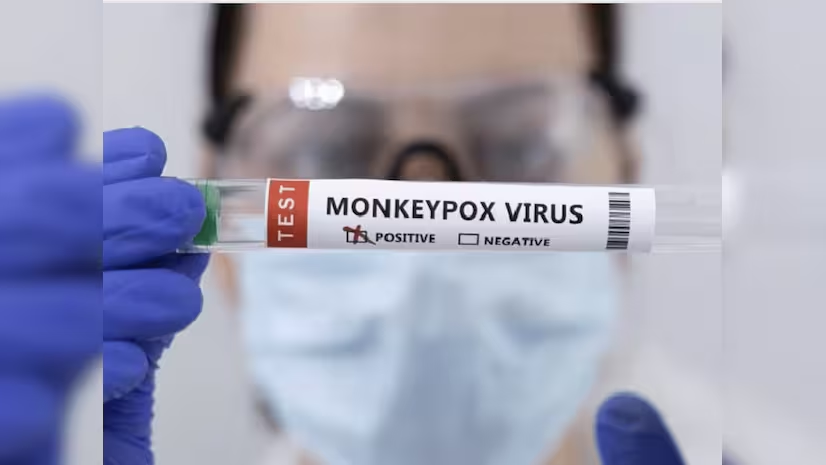
New Delhi, 24 November 2024: As Mpox becomes a major public health issue, scientists are racing to develop new tools for its quick detection. This article delves into an innovative optical biosensor crafted to identify Mpox swiftly and accurately. The push for such technology arises from the rising cases of monkeypox and the pressing need for effective diagnostic solutions. This progress not only tackles the current health crisis but also sheds light on the critical role of rapid testing in managing infectious diseases.
Why is Rapid Detection Important For Mpox?
Quick detection of Mpox is vital for several reasons. First, it allows for prompt treatment of those infected, which can significantly lower transmission rates. Second, early diagnosis supports public health surveillance efforts, empowering health authorities to act quickly in response to outbreaks. Third, since monkeypox can be confused with other illnesses, it’s essential to have accurate and fast tests to prevent misdiagnosis. Additionally, our global interconnectedness underscores the need for speed in detection to prevent the disease from spreading internationally. Ultimately, developing these technologies boosts our preparedness for future outbreaks of similar zoonotic diseases.
What Are Optical Biosensors?
Optical biosensors are devices that use light to identify biological substances. They operate by observing changes in light properties, such as intensity or wavelength, when a targeted substance interacts with a specific receptor. This interaction generates a detectable signal that can be measured and analyzed. The beauty of optical biosensors lies in their capability to provide real-time results with high accuracy and sensitivity, making them perfect for diagnosing infectious diseases.
Researchers are utilizing cutting-edge nanotechnology and optical engineering to develop a biosensor capable of detecting monkeypox viral particles. This sensor features a specific receptor that binds to monkeypox antigens, leading to a measurable optical signal. This groundbreaking approach allows the biosensor to provide results in just minutes, a stark contrast to traditional lab methods which can take several days.
The creation of this optical biosensor marks a crucial step forward in the battle against monkeypox. Its fast testing capabilities can lead to quicker diagnoses and treatments, ultimately saving lives. Plus, the device’s portability enables its use in various locations, even in remote areas where laboratory access is scarce. This accessibility is essential for managing outbreaks, particularly in regions where monkeypox is prevalent.
The launch of an optical biosensor for monkeypox detection carries significant implications for public health strategies. It enhances the capability of health authorities to effectively monitor and manage outbreaks. With rapid testing, contact tracing can be carried out more efficiently, helping to curtail the virus’s spread. Moreover, the data gathered from extensive testing can guide vaccination efforts and resource distribution during outbreaks.
Looking to the future, researchers are hopeful about the potential of optical biosensor technology extending beyond monkeypox. The techniques applied in this development could be adapted for other infectious diseases, such as COVID-19 and Ebola. Ongoing advancements in nanotechnology and biosensor design are likely to pave the way for even more sophisticated detection methods, further bolstering public health responses.

















Leave a comment