

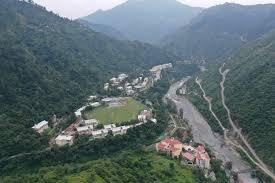
Researchers from IIT Mandi recently reported that there are cancer-causing agents in the groundwater in the Baddi Barotiwala area of Himachal Pradesh. According to the report, between 2013 and 2018, the groundwater was linked to numerous cases of cancer and kidney disorders. Researchers emphasized keeping an eye out for zinc, lead, nickel, and chromium in industrial effluents.
Dr. Deepak Swami, an associate professor at IIT Mandi, along with his research assistant Utsav Rajput, and Dr. Nitin Joshi, an assistant professor at IIT Jammu, conducted a study published in the journal Science of the Total Environment. According to their research, rapid industrialization and urbanization in the area, along with extensive groundwater usage for domestic and agricultural needs, have severely impacted the water quality in Northern India, especially in the BB industrial area.
Dr. Swami highlighted that groundwater contamination must be addressed immediately because oral ingestion carries serious health risks. In order to reduce these risks, he emphasized the significance of keeping an eye out for contaminants like zinc, lead, nickel, and chromium in industrial effluents. In order to ensure sustainable growth, Dr. Swami also emphasized the necessity of policies that strike a balance between public health concerns and industrial development.
The study’s conclusions showed that the majority of the groundwater in the area is made up of calcium carbonate and is dominated by rocks. The majority of other harmful metals were linked to industrial sources, although uranium and molybdenum were discovered to be naturally occurring. Using the human health risk assessment model created by the United States Environmental Protection Agency (USEPA) for the study, high non-carcinogenic risks were discovered for both adults and children, mostly from natural uranium. Industrial sources of zinc, lead, cobalt, and barium also had an impact on these risks; adult exposure to nickel and chromium is particularly high for carcinogenic risks.
“Our research group conducted a field study to map the pollution status in the industrial region of Baddi-Barotiwala,” Dr. Joshi emphasized the gravity of the situation. According to the analysis, if unchecked, the lower Himalayan region will suffer the same fate as southwest Punjab.
The study underlined that better effluent treatment is required to lower these health risks. The development of geospatial maps that showed metal contamination and health risks gave residents a clear picture of the situation and served as a guide for future policies and remediation efforts.
Every year, 1.5 million people die as a result of poor water quality and hygiene, and waterborne illnesses account for more than 80% of health issues in developing countries.
















Leave a comment