

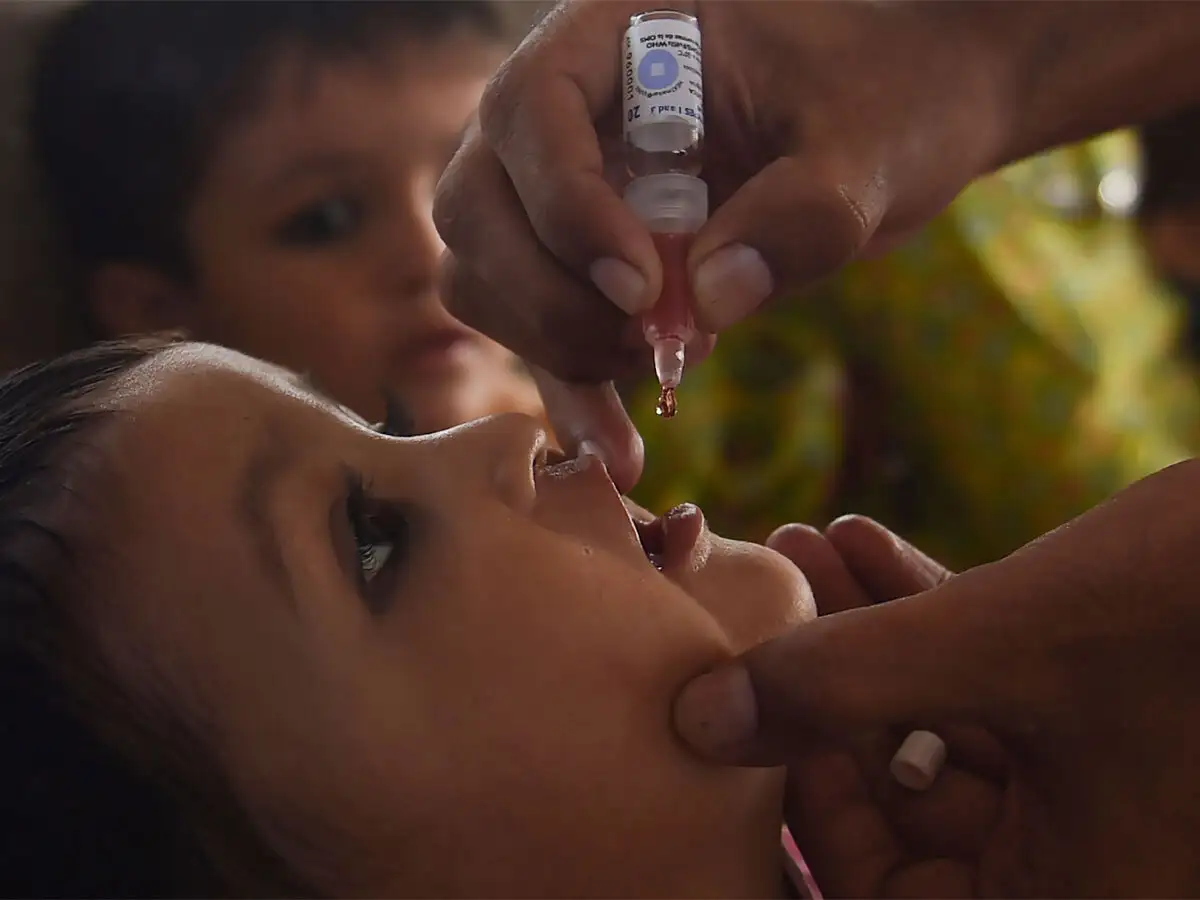
New Delhi, 25 October, 2025: Every year on October 24, the world comes together to observe World Polio Day — a day dedicated to raising awareness about one of humanity’s most relentless diseases and the tireless global effort to end it. As the world edges closer to achieving the dream of a polio-free planet, 2025 marks a crucial turning point in this decades-long fight.
Polio, or poliomyelitis, is a highly infectious viral disease that primarily affects young children. Though vaccines have made it nearly extinct in most parts of the world, isolated outbreaks continue to threaten the fragile progress made over the last century. World Polio Day 2025 serves as both a celebration of progress and a reminder that the fight is not yet over.
What Is Polio and Why Is It So Dangerous?
Polio is caused by the poliovirus, which spreads mainly through contaminated water or food and attacks the nervous system. In severe cases, it can cause permanent paralysis or even death.
There are three strains of wild poliovirus — Type 1, Type 2, and Type 3 — but thanks to global vaccination campaigns, Type 2 and Type 3 have been eradicated. Only wild poliovirus Type 1 (WPV1) remains in circulation, primarily in a few countries.
The disease mostly affects children under the age of five. Once the virus enters the body, it multiplies in the intestines and can invade the spinal cord, leading to irreversible paralysis within hours.
For those who survive, lifelong disability, muscle weakness, and social stigma can follow — making prevention through vaccination the only effective defense.
A Century of Battle: How the World United Against Polio
The history of polio is a story of both tragedy and triumph.
In the early 20th century, polio outbreaks crippled thousands of children every year across Europe and North America. Families lived in fear as no cure existed. That changed in the 1950s when Dr. Jonas Salk developed the first inactivated polio vaccine (IPV), followed by Dr. Albert Sabin’s oral polio vaccine (OPV) in the 1960s.
The vaccines revolutionized global health, and by the late 1980s, the Global Polio Eradication Initiative (GPEI) — spearheaded by the World Health Organization, UNICEF, Rotary International, and other partners — launched an ambitious mission: to eradicate polio worldwide.
At that time, polio paralyzed more than 350,000 children every year across 125 countries. Since then, cases have dropped by over 99% — a monumental achievement in modern medicine.
Polio in 2025: Where Does the World Stand Now?
As of 2025, the world has made remarkable progress. The virus remains endemic in just two countries — Afghanistan and Pakistan. However, vaccine-derived strains — weakened versions of the virus that mutate in under-immunized populations — have emerged in parts of Africa, the Middle East, and Southeast Asia.
These circulating vaccine-derived polioviruses (cVDPVs) now represent the biggest obstacle to eradication. They arise when the oral polio vaccine’s live virus mutates and spreads in communities where vaccination coverage is low.
Health experts emphasize that this isn’t a failure of the vaccine itself, but rather a failure to vaccinate enough people. The virus needs unprotected hosts to survive — and when coverage drops, it finds ways to persist.
Despite these setbacks, global surveillance and vaccination campaigns have contained most outbreaks quickly, preventing large-scale resurgence.
Global Efforts and Innovations in 2025
The campaign to eradicate polio has evolved into one of the largest coordinated public health efforts in history. In 2025, several major developments are shaping the next phase of the mission:
1. Next-Generation Vaccines
Scientists have introduced a new type of oral polio vaccine (nOPV2) designed to be genetically more stable and less likely to revert to a dangerous form. This innovation is being rolled out in dozens of countries to combat vaccine-derived strains.
2. Digital Disease Surveillance
Advanced digital tracking systems now allow real-time monitoring of outbreaks and vaccination coverage. Drones, mobile data tools, and artificial intelligence are helping map hard-to-reach populations in remote regions.
3. Strengthened Community Engagement
Public health teams are working closely with community and religious leaders in regions where misinformation or distrust has hindered vaccination drives. Grassroots communication is proving crucial in building public confidence.
4. Integration with Other Health Campaigns
Polio vaccination programs are increasingly combined with other health initiatives — such as measles immunization, nutrition drives, and maternal health services — ensuring broader healthcare access while maintaining efficiency.
The Remaining Challenges
Despite incredible progress, several hurdles still threaten to delay full eradication:
1. Conflict and Inaccessibility
War zones and politically unstable regions, especially in parts of Afghanistan, Pakistan, and Africa, make it extremely difficult for health workers to reach children. Vaccination teams often face threats or violence, limiting coverage.
2. Misinformation and Vaccine Hesitancy
In some communities, rumors about vaccine safety persist. Conspiracy theories and misinformation spread quickly through social media, undermining years of trust-building efforts.
3. Funding and Global Fatigue
With polio cases now rare, donor attention sometimes shifts elsewhere. Sustained funding is essential to keep surveillance systems and immunization campaigns running until the very last case is eradicated.
4. Post-Eradication Preparedness
Even after the last wild poliovirus disappears, maintaining vaccine infrastructure and laboratory surveillance will remain critical. A single lapse could allow the virus to re-emerge — undoing decades of progress.
The Human Impact: Stories Behind the Numbers
Behind every statistic are real people whose lives have been forever changed by polio. Many survivors, now adults, are advocates and ambassadors for vaccination.
Their message is powerful: Polio is preventable — but only if every child is vaccinated.
In countries that have eliminated polio, such as India and Nigeria, the achievement represents not just a public health victory but a story of resilience, innovation, and cooperation across borders and communities. These success stories offer hope — and lessons — for regions still fighting the virus today.
World Polio Day 2025: Why It Matters
World Polio Day is more than a symbolic observance — it is a rallying cry for the final push toward eradication. The theme for 2025 focuses on “Commitment, Continuity, and Community”, highlighting the need for sustained effort until no child is left unprotected.
Governments, health organizations, and local partners are using the day to:
- Reaffirm their commitment to global eradication goals
- Celebrate healthcare workers on the frontlines of vaccination campaigns
- Raise awareness about the importance of immunization in preventing disease resurgence
The day also serves as a reminder that polio eradication is achievable — but only through global unity, funding, and vigilance.
Looking Ahead: The Last Mile
Experts agree that the final stages of eradication are the hardest. But history has proven that persistence works. Smallpox, once a global killer, was wiped out through coordinated global vaccination — and polio could soon follow.
The next few years will determine whether the world can cross the finish line. Continued support from governments, international donors, and communities will be essential to ensure that no child, anywhere, remains vulnerable.
As we mark World Polio Day 2025, the message is clear:
The tools exist, the knowledge is there, and success is within reach. All that’s needed now is unwavering commitment.
Polio eradication stands as one of humanity’s greatest public health challenges — and potentially its greatest triumph. The journey has been long, costly, and often difficult, but it has also united people across countries, cultures, and generations in pursuit of a single goal: a world free from paralysis and preventable suffering.
As 2025 unfolds, the world is closer than ever to making that dream a reality. Every vaccination, every surveillance report, and every act of global cooperation brings us one step closer to ending polio for good.
The finish line is in sight — and with determination and unity, it can be crossed within this decade.

















Leave a comment