

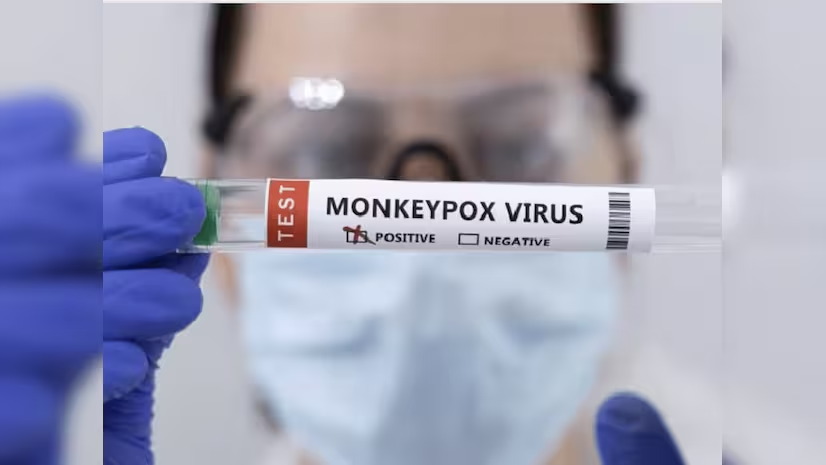
New Delhi, 23 November 2024: Indian scientists have made a groundbreaking discovery in the field of virology by developing a method to decode the monkeypox virus, a significant step forward in combating the disease. This innovation promises to improve diagnostic capabilities, aiding in the early detection and management of monkeypox infections. With the virus causing global concern after recent outbreaks, this breakthrough from India could play a crucial role in controlling its spread and enhancing public health measures.
Understanding Monkeypox and Its Challenges
Monkeypox is a zoonotic viral disease caused by the monkeypox virus, a member of the Orthopoxvirus genus, which also includes the smallpox virus. First identified in 1958 in monkeys and later in humans in 1970, monkeypox predominantly occurs in Central and West Africa but has emerged as a global health issue with recent outbreaks in non-endemic regions.
The symptoms of monkeypox include fever, headache, muscle aches, swollen lymph nodes, and a distinctive rash that progresses through various stages before scabbing over. Although generally less severe than smallpox, the disease can lead to complications, particularly in immunocompromised individuals.
One of the major challenges in controlling monkeypox has been its diagnosis. Traditional diagnostic methods, such as polymerase chain reaction (PCR) tests, often require sophisticated laboratory infrastructure and specialized reagents. Delays in diagnosis can exacerbate outbreaks, as early detection is critical for containment.
The Indian Breakthrough: A Game-Changer in Monkeypox Diagnostics
Indian researchers have developed an innovative technique that decodes the monkeypox virus, making it easier to detect and analyze. This method involves sequencing the viral genome with high precision, enabling scientists to study the genetic makeup of the virus. By identifying unique genetic markers, researchers can distinguish monkeypox from other similar infections, ensuring accurate diagnosis.
The decoding of the monkeypox virus genome is particularly significant because it allows scientists to track mutations and variations in the virus. These insights can help predict how the virus might evolve, providing critical data for developing vaccines and treatments.
How This Discovery Aids Diagnostics
Enhanced Accuracy: The new method improves the precision of diagnostic tests, reducing the likelihood of false positives or negatives.
Faster Results: By streamlining the genome sequencing process, this innovation shortens the time required for diagnosis.
Cost-Effective: The technique is designed to be more affordable than conventional methods, making it accessible for widespread use in resource-limited settings.
Global Relevance: While the discovery is rooted in Indian research, its application extends globally, addressing the challenges posed by the ongoing monkeypox outbreaks.
Collaboration and Innovation
The breakthrough is the result of collaboration between Indian research institutes, public health organizations, and global virology networks. By leveraging advanced technology and expertise, the team was able to overcome significant hurdles in understanding the virus. This discovery underscores the importance of international cooperation in addressing emerging infectious diseases.
Indian scientists have also shared their findings with global health authorities, including the World Health Organization (WHO), to contribute to the global fight against monkeypox. The shared data is expected to assist other nations in refining their diagnostic protocols and outbreak management strategies.
The decoding of the monkeypox virus has far-reaching implications for public health:
Early Detection: Improved diagnostics allow for quicker identification of monkeypox cases, enabling timely isolation and treatment to prevent further spread.
Better Surveillance: Genomic data from the virus can enhance surveillance efforts, particularly in regions at risk of outbreaks.
Vaccine Development: Understanding the genetic makeup of the virus aids in the development of more effective vaccines and therapeutic strategies.
Outbreak Management: The ability to quickly and accurately identify monkeypox cases can strengthen global efforts to contain outbreaks.
Monkeypox: A Global Concern
Recent outbreaks of monkeypox in countries outside Africa have raised alarms about the potential for the virus to become endemic in new regions. Factors such as increased global travel, urbanization, and climate change may contribute to the spread of zoonotic diseases like monkeypox.
India’s contribution to decoding the virus comes at a critical time when the world is grappling with overlapping health crises, including COVID-19. The lessons learned from managing a global pandemic have emphasized the importance of early detection, robust surveillance, and international collaboration in tackling infectious diseases.
What Lies Ahead?
While the Indian breakthrough is a significant step forward, much work remains to be done. Researchers are now focused on:
Field Testing: Ensuring the new diagnostic method is effective in real-world settings.
Scaling Up: Expanding the availability of this technology to underserved regions.
Monitoring Mutations: Keeping track of genetic changes in the virus to stay ahead of potential new variants.
Governments and health organizations must also invest in awareness campaigns to educate the public about monkeypox, its symptoms, and prevention measures. Strengthening healthcare systems and ensuring equitable access to diagnostic tools and vaccines are essential to mitigate the impact of future outbreaks.
The decoding of the monkeypox virus by Indian researchers marks a pivotal moment in the global fight against this emerging threat. By improving diagnostic accuracy, reducing costs, and enhancing outbreak management, this innovation promises to save lives and limit the spread of the virus.
As the world faces an increasing number of zoonotic diseases, advancements like these highlight the critical role of research and collaboration in safeguarding public health. With continued efforts, the global community can better address current challenges and prepare for future health crises, ensuring a safer and healthier world for all.

















Leave a comment