

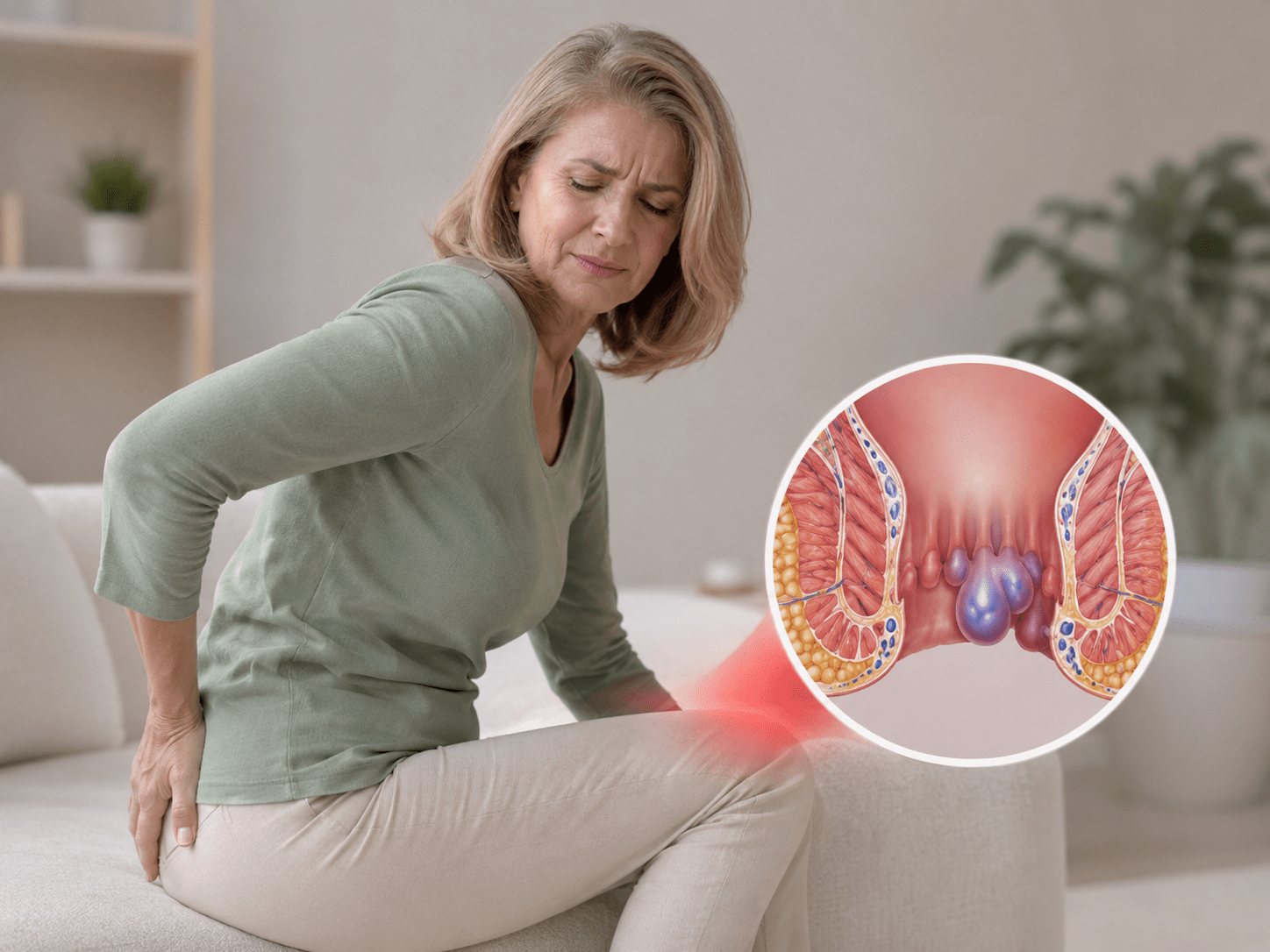
Menopause is a crucial time in a woman’s life when there are a lot of changes making their way through the body. Typically menopausal symptoms such as hot flashes, mood swings, weight gain and trouble sleeping are noticed during this period but many women also complain about piles. A lot of times women disregard this issue believing that it could be an ordinary effect of ageing but it is crucial to pay attention at the correct time. As women get to the age of menopause their bodies begin to produce less estrogen hormone impacting the digestive system which could lead to constipation causing piles.
Why do haemorrhoids occur during menopause?
You should understand that at menopause a woman’s body goes through many hormonal changes causing metabolism to slow down. This alteration can cause constipation, gas and indigestion ultimately resulting in being unable to get rid of stool properly. The veins surrounding the anus become stretched when they have to exert pressure during bowel movements leading to haemorrhoids. Additionally if the bowel becomes constipated for a prolonged period then the veins in the anus swell.
Symptoms associated with haemorrhoids at menopause
During the menopause people might experience some common symptoms of haemorrhoids such as:
- Pain or burning while passing stool
- Blood in stool from the back passage
- An itching or swelling sensation in and around the anus
- Poor ability to sit for extended periods of time
- Failure to properly empty the stomach

Causes of haemorrhoids at menopause
Haemorrhoids are very treatable when they first appear but people tend to put off treatment because they are embarrassed or intimidated. You should not ignore this medical condition because it may result in a serious issue which could actually be treated in time. Here are some of the key factors that cause haemorrhoids at menopause:
- Long-term constipation may cause a risk of haemorrhoids for women
- Drinking less water can also increase the risk for women
- A lack of fibre in the diet also puts a person at risk of developing piles
- Haemorrhoids can be caused by obesity and a sedentary lifestyle
- Women who work sitting for long periods of time are also at risk for haemorrhoids
Note: Staying physically active during menopause is crucial as it can help prevent many health problems.
Is it possible to prevent piles?
The risk of haemorrhoids is increased during the period of menopause but it can be prevented. Here are some tricks that can be used to help you navigate this crucial time:
- Consume green vegetables, fruit, salads, pulses and whole grains as fibre can relieve constipation
- Drink a minimum of 8 to 10 glasses of water daily to improve the digestive system
- Keep your body active by going on light walks, yoga and stretching
Don’t take for granted making minor changes in your lifestyle as it can go a long way toward preventing haemorrhoids. Women should always watch out for their diet and lifestyle particularly during menopause.
Disclaimer: This content is for informational purposes only and does not replace professional medical advice, diagnosis or treatment. Consult a qualified healthcare provider for persistent symptoms.













Leave a comment