

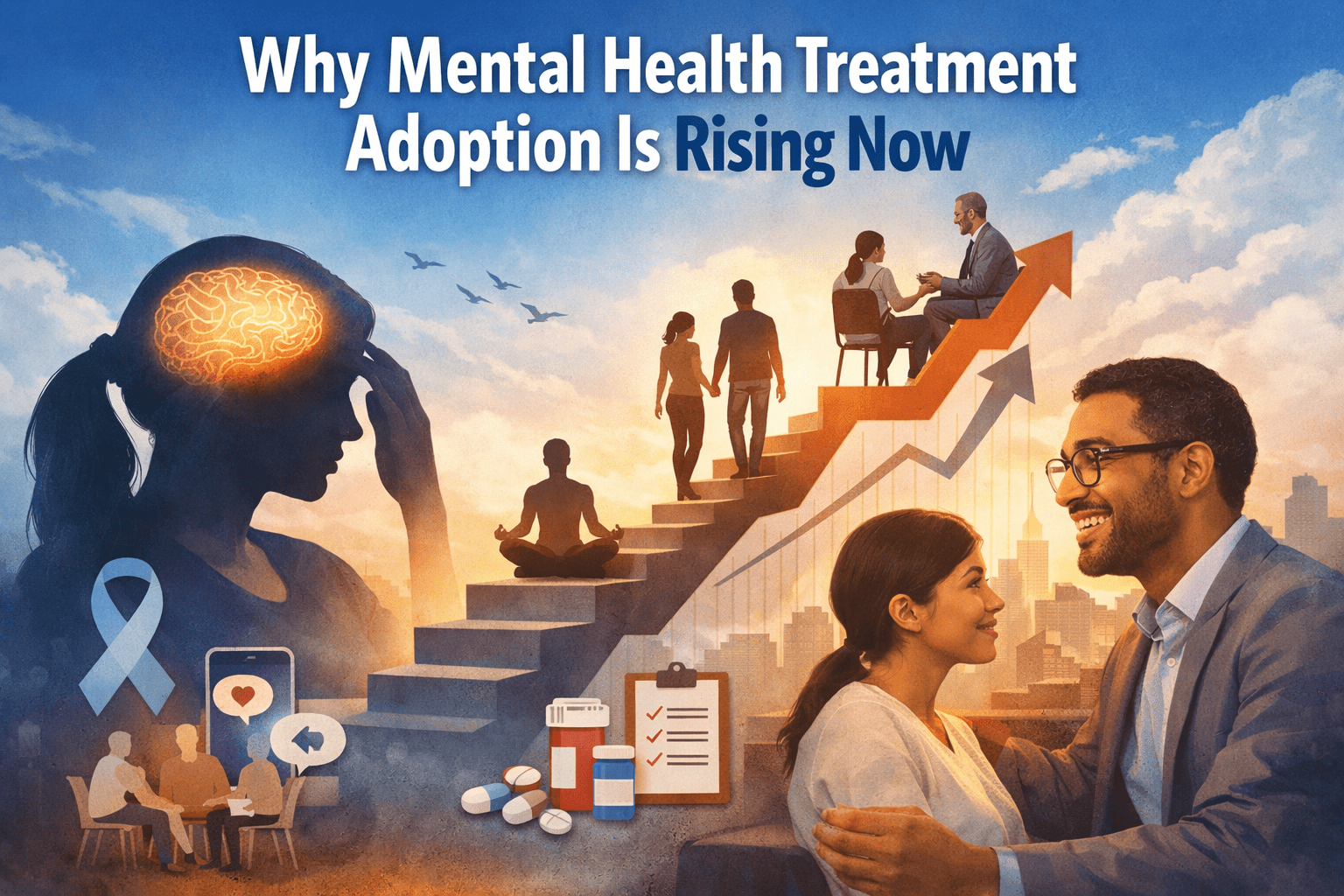
There is a dramatic transition that has taken place recently from the awareness of mental health (i.e., breaking the stigma) to people seeking treatment for their mental health. The number of people who actively pursue mental health care vs. those who know about it greatly affects how society functions. There are many people (in the entertainment industry, business leaders, and large social media influencers) who are creating awareness for mental health, encouraging conversations about vulnerability and hope, thereby eliminating the stigma surrounding mental illness and increasing the exposure of mental health. By Supreet Singh, Founder & CEO – Psychocare Health Private Limited.
For example, in many cultures (e.g., India), discussing mental health was considered to be highly taboo; however, thanks to the fact that so many well-known people are now publicly sharing their stories about their issues with mental health, there has been an increase in the number of individuals who are now willing to seek treatment for mental health issues via therapy/counseling.
Technology has had a major impact on broadening access to treatment options: through digital platforms that provide mental health support. Through teletherapy, and through augmentation with artificial intelligence (AI) providing wellness tools, the availability of services is greater now than it has ever been. Licensed professionals are able to connect to patients through digital means regardless of where either party is located in the world. And there are no geographical barriers or time restrictions to take into account when searching for treatment. Digital platforms frequently offer anonymity, making it less embarrassing for most individuals, and especially for young adults, to reach out for assistance.
Furthermore, many businesses are providing employees with mental health support through the use of Employee Assistance Programs (EAPs), mental health days, and free or low-cost counseling services made available by many organizations. Many businesses are aware that providing a healthy work environment increases both employee productivity and retention, and thus, many companies are making a major investment to give their employees access to these types of resources. Also, educational institutions are extending their services to include counseling and wellness programs to help provide students with the opportunity to access mental health support at an earlier age, reducing the risk of future mental health problems. By providing workers with greater access to mental health support, many companies provide an additional form of validation that individuals are not alone in their search for support, as these resources are offered by reputable sources.
The COVID-19 pandemic served as a driving force for forward movement on this topic. The common experiences of isolation, insecurity, and loss have made people directly aware of their mental health issues. Instead of being an abstract idea, mental health is now a reality for a great many people. This led to an increase in the demand for mental health services and therapy worldwide. Perhaps most significantly, the pandemic has contributed to the reduction of stigma surrounding mental health issues, such as: Who suffers from them (anyone). The type of place in which someone may suffer from them (anyone), and the type of work someone does who would suffer from them (anyone).
As our knowledge of mental health (anxiety, depression & stress) increases. We predict that more individuals will seek professional assistance and find qualified care for these problems. Many individuals do not pursue professional assistance when unwell because they do not know how to recognize signs of illness and or symptoms as being significant (i.e., that they need to seek healthcare). There are many new tools available (internet, social media, and community resources) to assist people in recognizing that they may have a mental health disorder and to encourage them to act sooner than their “old” thought processes would have allowed. Furthermore, as the ability to understand the efficacy of early intervention increases. The duration of suffering before receiving effective treatment will decrease.

















Leave a comment