

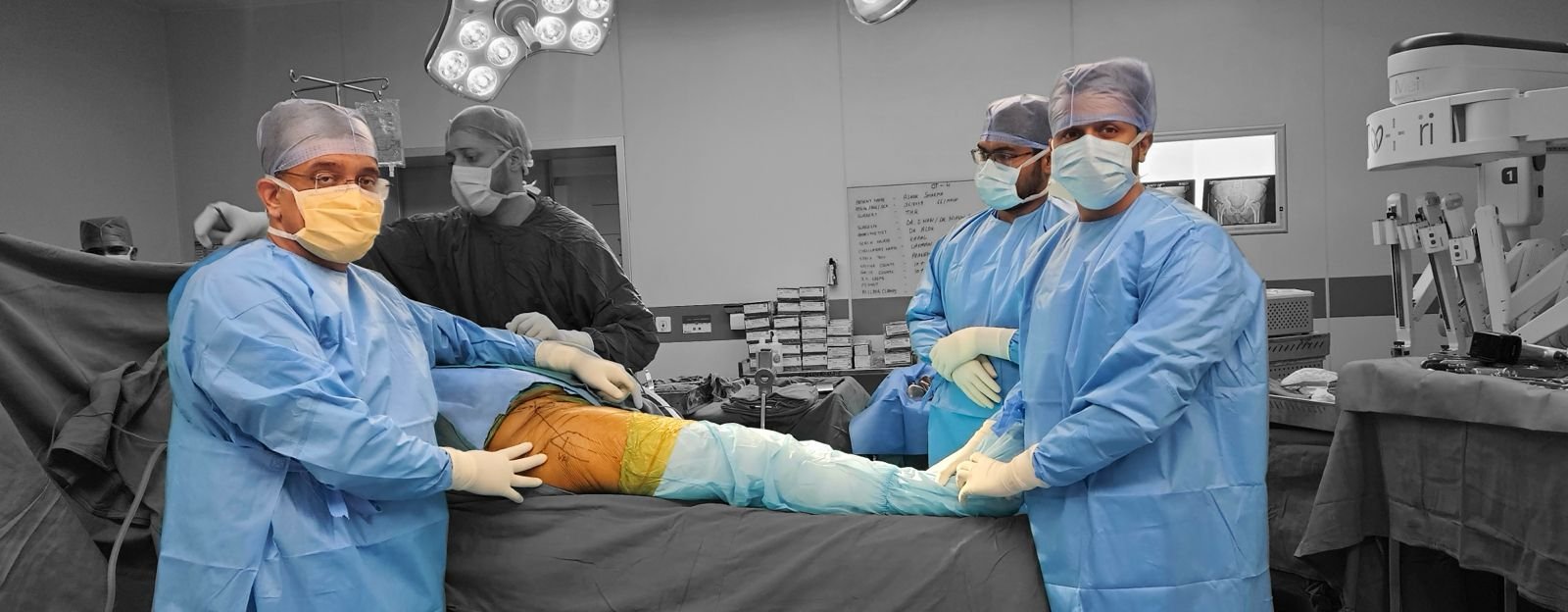
New Delhi: In a landmark medical achievement, Sir Ganga Ram Hospital has successfully performed a highly complex revision total hip replacement using a patient-specific 3D-printed acetabular implant (PSI) in a young patient suffering from chronic infection and massive bone loss. This marks the first time such an advanced procedure has carried out at the hospital in an infected revision setting.
The procedure was led by Dr. Nipun Rana, Consultant, Joint Replacement (Unit I), along with a multidisciplinary team including Dr. O.N. Nagi, Dr. Atul Gogia, Dr. Ambarish Satwik, Dr. Rashmi Jain, and Dr. Salil Bhargava.
The patient, a 28-year-old male, had sustained a severe pelvic injury following a road traffic accident nearly 22 months earlier and had undergone ten prior surgeries. Including fixation procedures, debridement surgeries, and implant removals. Despite prolonged antibiotic treatment, he continued to suffer from chronic infection, persistent sinus discharge with pus, and extensive bone loss, leaving the hip joint severely damaged and making reconstruction extremely challenging.
Given the complexity of the case, the orthopaedic and infectious disease teams adopted a carefully planned staged approach. This included initial identification of the infection using the rapid diagnostic BioFire Joint Infection Panel. A multiplex polymerase chain reaction (PCR)-based test available in the hospital’s state-of-the-art microbiology laboratory. The test enables identification of multiple pathogens from a single pus sample by detecting microbial genetic material (RNA/DNA).
Subsequently, the infection controlled through targeted antibiotic therapy and surgical debridement. Followed by CT-based 3D reconstruction of the pelvis using a patient-specific 3D-printed titanium acetabular implant. The implant designed and fabricated using specialized CT-based planning software and 3D-printing technology. This was the patient’s 11th surgery and involved a revision total hip replacement procedure lasting 6 hours.
The use of a patient-specific implant allowed surgeons to tailor the reconstruction to the patient’s unique anatomy. Ensuring accurate implant fit, precise screw placement, and restoration of hip biomechanics, particularly in the setting of severe bone loss and deformation where conventional implants often fail.
The surgery was successful, with early recovery observed within a week. The patient currently has a stable hip joint, no signs of active infection, and improved functional mobility. Clinical outcomes have demonstrated secure implant fixation and complete resolution of sinus discharge.
Commenting on the case, Dr. Nipun Rana said, “In complex cases like this, success lies not in rushing to replace the joint. But in respecting the infection, planning reconstruction meticulously, and executing it with precision. Patient-specific implants allow us to rebuild what conventional methods cannot. Bone grafting also plays an important role in enhancing implant stability.”
This case underscores Sir Ganga Ram Hospital’s expertise in managing end-stage hip destruction through advanced technology and a multidisciplinary approach. Marking a significant step forward in orthopaedic innovation and complex joint reconstruction in India.














Leave a comment