

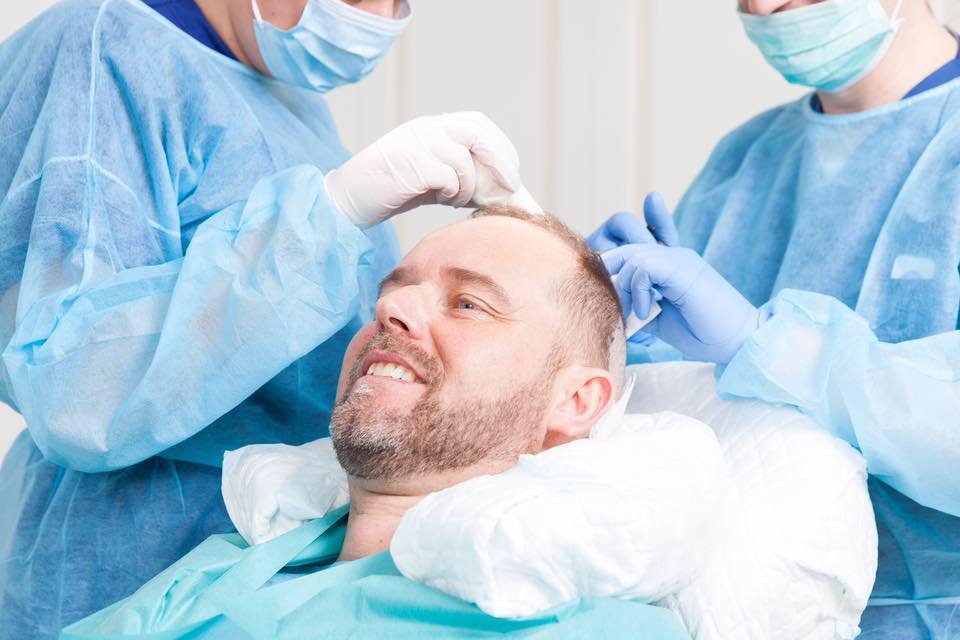
New Delhi, 05 August 2025: Hair transplants have often been viewed through the glossy, filtered lens of celebrity culture. Whispers about receding hairlines that mysteriously reappear, or aging stars who seem to defy genetics, continue to swirl through social media and gossip columns. But behind the curtain of mystery and speculation lies a reality shaped by scientific advancement, individualized care, and growing accessibility.
Today, hair transplants are no longer just for the elite. They’ve become a viable, safe, and effective option for anyone looking to restore not just hair, but also confidence and self-esteem.
Why Choose Such Alternatives Over Traditional Treatments?
For decades, the world has watched Hollywood’s biggest stars with admiration—and curiosity. How does someone age 20 years yet maintain the same youthful hairline? From movie stars to athletes and politicians, hair restoration has become a subtle yet powerful tool of transformation. While many celebrities remain tight-lipped, others, like Elon Musk, Wayne Rooney, and even Bollywood personalities, have been more open or obvious about their journey.
This trend has naturally sparked public interest, but with it comes a mix of unrealistic expectations and misinformation. Many assume hair transplants are only for the rich and famous, or that they require going completely bald first. Others worry about unnatural results or long, painful recovery times.
Dr. Deepak Choudhary, Senior Master Surgeon and Trainer at DHI International, offers clarity on these myths.
“Celebrity hair transplants have long been shrouded in mystery for the public, who keep guessing what is real and what is not. Many people don’t realize that with modern and latest Direct Hair Implantation (DHI) technique, they can also achieve excellent and dense, natural-looking results with minimal downtime. Each patient’s scalp is mapped using advanced diagnostics. The hairline is designed based on facial proportions and donor density with long-term sustainability in mind. Rather than merely copying celebrity styles, it is aimed to restore a style that’s uniquely yours. And no, you don’t necessarily need to go bald to get a transplant and you can get back to work the next day.”
The Evolution of Hair Transplants
Hair restoration has come a long way from the “pluggy” results of the past. Techniques like Follicular Unit Transplantation (FUT) and Follicular Unit Extraction (FUE) revolutionized the field by enabling more natural hair placement. Today, the most advanced technique is Direct Hair Implantation (DHI)—a refinement of FUE that improves precision, density, and healing.
How DHI Works:
- No scalpels, no stitches: Hair follicles are extracted one by one and implanted directly using a patented implanter tool.
- High survival rate: The direct implantation method ensures that up to 90% of the implanted hairs survive.
- Natural results: The surgeon designs the hairline to match facial aesthetics and age-appropriate density.
This minimally invasive approach ensures a shorter recovery time, often allowing patients to return to work or social events in just a day or two.
Who Can Get a Hair Transplant?
A major misconception is that only completely bald individuals are suitable candidates. In truth, anyone experiencing thinning hair, receding hairlines, or patchy hair loss could benefit from a consultation.
The suitability depends on:
- Donor area density: Usually from the back of the scalp.
- Age and progression of hair loss: It’s ideal to address hair loss before it becomes too advanced.
- Health conditions: The patient should be in good general health.
Thanks to diagnostic tools and scalp mapping, surgeons can tailor a restoration plan that factors in current loss, future progression, and long-term appearance. This personalization is what makes modern procedures so successful.
The Psychological Impact
Hair loss can deeply affect self-image, leading to issues like low self-esteem, anxiety, and even depression. In today’s image-driven society, people often associate a full head of hair with youth, vitality, and attractiveness.
That’s why hair restoration is more than just cosmetic—it’s emotional. Studies have shown that patients who undergo transplants often report:
- Improved confidence in social and professional settings.
- Better performance at work.
- Reduced anxiety about their appearance.
Dr. Choudhary highlights this holistic benefit: “Restoring hair isn’t just about looking better, it’s about feeling better. When we create a hairline that suits your face and personality, it becomes part of your identity.”
Myths vs. Reality
Let’s debunk a few persistent myths:
Myth 1: Hair transplants are painful.
Reality: With local anesthesia and modern techniques like DHI, discomfort is minimal. Most patients report only mild soreness post-procedure.
Myth 2: You need to go bald before considering a transplant.
Reality: It’s best to act early. Treating mild to moderate hair loss can lead to better outcomes.
Myth 3: Results look fake.
Reality: When performed by skilled surgeons, transplanted hair grows naturally and is indistinguishable from original hair.
Myth 4: It’s only for men.
Reality: Women with thinning hair or alopecia can also benefit from hair restoration techniques tailored to female patterns of loss.
The Future of Hair Transplants
The global hair restoration market is booming, projected to surpass $30 billion by 2030. As technology evolves, so does precision and accessibility. AI-based scalp analysis, robotic assistance, and regenerative medicine (like PRP therapy) are becoming integrated into treatment plans.
Clinics like DHI International lead this evolution by combining expertise, safety, and innovation. Their scientific approach ensures that each transplant isn’t just a cosmetic fix—it’s a lasting, sustainable transformation.
While celebrities may have brought hair transplants into the spotlight, the modern reality is far more inclusive and empowering. You no longer need to be famous—or fabulously wealthy—to reclaim your confidence.
Hair transplants today are:
- Safe and virtually painless.
- Customizable to your unique facial features.
- Designed for lasting, natural-looking results.
Whether you’re noticing the first signs of thinning or considering a more dramatic restoration, a consultation with a trained expert can help chart the best course for you.
Because ultimately, the best hairline isn’t the one you saw on TV. It’s the one that feels like you.
















Leave a comment