

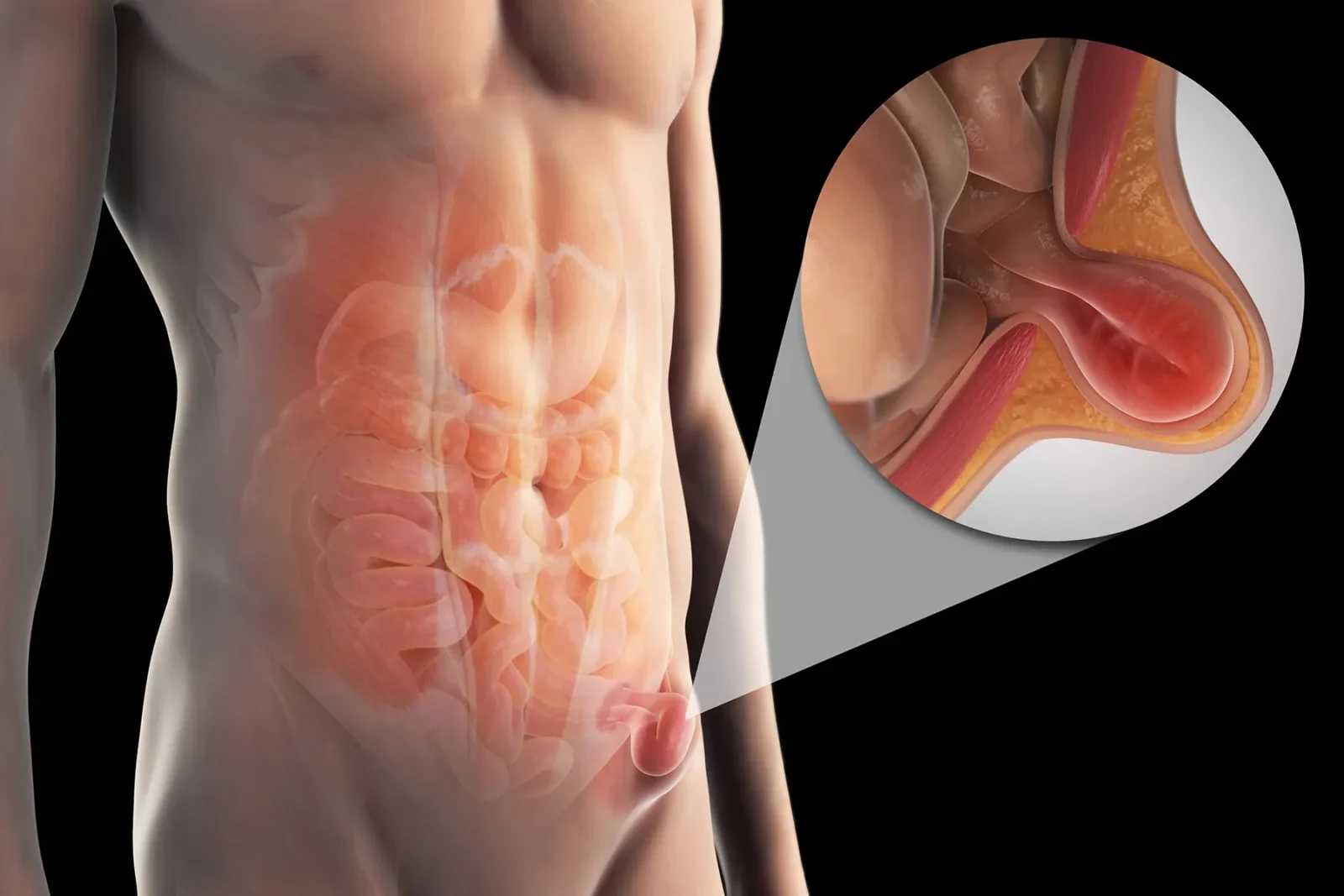
Hernia is a widespread but not well-understood medical condition that has a tendency to affect individuals of all ages. Although some people tend to neglect it at the beginning because of a slight inconvenience, it should be noted that a hernia cannot be self-limiting. Actually, when not treated it can increase in size and cause more severe complications over time.
In an exclusive interaction,Dr Rajesh Sharma, the Director of General Surgery, Minimal Access and Bariatric Surgery, CK Birla Hospitals, Jaipur, says that surgery is the only sure cure for a hernia. However, the manner in which hernias are operated has changed a lot today, providing patients with safer operations and a quick healing process.
Understanding Hernia: What really happens?
A hernia is a protrusion of an internal organ or tissue through a point of weakness in the muscle or connective tissue surrounding the organ or tissue. This usually causes a protrusion, which is usually observed in the abdomen or in the groin area. Although at the beginning the bulge might seem to be small, it tends to increase with time, particularly when the person is coughing, lifting heavy objects or even when standing long.
It is a common belief that a hernia can be cured by rest, lifestyle changes, or medications. Regrettably, this is a myth. A hernia does not self-resolve. Rather, it is more likely to grow slowly and cause complications, such as pain, blockage, or strangulation of the respective tissue. This is the reason why medical intervention is very essential.
Why is surgery the only effective treatment?
Dr Rajesh Sharma said,“Hernia has to be repaired through surgery unlike other diseases which can be managed by medication or therapy. It is done by pushing the protruding tissue back where it belongs and reinforcing the muscle wall that is weakened, with the added support of a surgical mesh.”
“Conventionally, hernia repair has been done using open procedures, which required bigger cuts and extended periods of healing. These procedures were effective but usually were associated with more postoperative pain, increased risk of infection, and visible scarring,” he added.
However, in recent years, with the development of medical technology, the approach to hernia surgeries has changed. Minimally invasive techniques have been the technique of choice which has better results and is less painful to the patient.
Rise of minimally invasive surgery
Laparoscopic surgery or minimally invasive surgery was a major change in the care of surgery. Surgeons do not have to make huge cuts; instead, they make small incisions through which they insert specialised tools, and a camera through which they can see inside the body. This method will minimise tissue injury, pain, and accelerate the healing process.
Riding on the advancement, robotic-assisted surgery has advanced minimally invasive surgery to a new level. Among the innovations that have made a splash in this area is the da Vinci Surgical System.
What is robotic-assisted hernia surgery?
Robotic-assisted surgery is a new technique which involves the surgeon operating a robot system to execute a surgery with greater accuracy and control. The robot is not an independent entity as many people may believe. Rather it is fully operated by the surgeon who sits at a console where he can view the surgical site in high definition, three-dimensional images.
The robotic system interprets the hand movements of the surgeon and converts them into very precise movements that are executed with small instruments which are manipulated using small cuts. A major benefit of this technology is that it can screen out natural hand tremors and give it a wider range of motion than the human wrist.
This degree of accuracy is especially useful in hernia repair, where subtle procedures like sealing the defect and inserting the mesh in the right position are critical to the success in the long run.
How robotic surgery improve hernia repair?
Hernia repair involves proper management of tissues and proper reconstruction of the abdominal wall. The slightest mistake in the positioning of the mesh or in the formation of sutures may result in a higher possibility of recurrence. Robotic-assisted surgery helps the surgeon to do these tasks with more accuracy. The 3D magnified image is easier to visualise the anatomy and the flexible instruments are able to make accurate movements in small areas.
This is a combination of high-quality visualisation and dexterity that contributes to a more sustainable repair that can minimise the likelihood of future complications or recurrence.
Benefits of robotic hernia surgery for patients
The enhanced patient experience is one of the greatest benefits of robotic-assisted hernia surgery. This method has several significant advantages over a traditional open surgery:
1. Reduced incisions and scarring
It has tiny incisions resulting in less visible scarring, particularly significant to patients interested in cosmetic results.
2. Reduced postoperative pain
Since tissue damage is less, patients are less likely to have pain following surgery. This also eliminates the use of potent painkillers.
3. Reduced risk of complications.
Minimally invasive surgery minimises the risks of wound infection and other postoperative complications.
4. Shorter hospital stay
Patients can leave the hospital in a day or two, depending on their health status and recovery.
5. Rapid recovery of normal life.
The patients can get on with their day-to-day activities much earlier than those who have open surgery.
Robotic surgery offers these advantages; hence, it is an appealing alternative to many people with a hernia.
Who can benefit the most?
Although robotic-assisted surgery is quite innovative, it is not required in all hernia cases. Simple hernias may be easily treated with the help of common minimally invasive methods. However, robotic surgery is more applicable in more complicated cases, e.g.
- Large ventral hernias
- Recurring hernias (those that recur after prior surgery)
- Hernias that need a complicated restructure of the abdominal wall.
The accuracy and versatility of robotic systems, in this instance, can be of great importance in surgical results.
Recovery after robotic hernia surgery
One of the most significant factors in any surgical procedure is its recovery. Robotic-assisted hernia repair has been known to make the recovery process smoother and faster in most cases.
The majority of people are advised to begin to move shortly after the surgery and this will help to avoid such complications like blood clots and it also leads to faster healing. Light activities may often be resumed within a few days and more demanding tasks may take a few weeks.
Patients are also recommended to take care of their instructions by their doctor such as not lifting heavy objects and eating healthy to aid healing.
Addressing common concerns
Robotic surgery has its advantages, but it has raised a lot of concerns among many patients. The most frequent question is whether the procedure is safe.
Robotic-assisted surgery is deemed to be very safe when the surgery is conducted by trained and experienced surgeons. The technology will not replace the surgeon, it is made to expand his or her capabilities. Actually, it offers more control and accuracy as compared to conventional practices.
Cost is another issue of concern. Although robotic surgery can be slightly more costly in other situations, the shortened hospital stay, faster recovery, and less risk of complications can usually make robotic surgery a cost-effective procedure in the long term.
The future of hernia treatment
The introduction of the robotic technology into general surgery is a significant move towards the contemporary healthcare. With the onward march of technology, surgical procedures are becoming more safe, precise and less invasive.
Robotic systems such as the da Vinci system are making new standards in hernia repair through the fusion of technology and experience in surgery. This will not only enhance the comfort of the patient, but also guarantee more sustainable and dependable results.
Importance of early diagnosis and treatment
The importance of not delaying treatment is one of the most important messages that such experts as Dr Sharma underline. The early symptoms of hernia are not taken seriously by many people as they believe that they might clear off on their own. Nonetheless, the delay of surgery may cause complications that complicate the condition to be treated.
Timely intervention is possible through early diagnosis which in many cases leads to the presentation of simpler procedures and quick recovery. It also minimises the chances of emergency cases (strangulated hernia) that can also be lethal.
Lifestyle tips to support recovery and prevention
Although there is no treatment except surgery to fix hernia, some lifestyle interventions can aid in the prevention of hernia recurrence and good health overall:
- Eat healthy to minimise pressure on abdominal muscles.
- Avoid heavy lifting or use proper techniques when lifting
- Have a healthy diet high in fibre to avoid constipation.
- Stop smoking, which may make tissues weak and slow down healing.
- Exercise to make core muscles stronger.
Hernia is such a condition that can not be overlooked. Although it might begin as a small and painless bulge it can easily develop into a serious health problem especially when not treated. Surgery is still the only sure-footed solution, although the manner in which it is done has undergone tremendous transformation over the years.
Patients nowadays have access to safer procedures, less pain, and fast recovery with the help of such innovations as robotic-assisted surgery. The da Vinci Surgical System is one of the technologies that are transforming the way surgery is provided by making it more precise and better.
Disclaimer: Dear readers, this article provides general information and advice only. It is not at all professional medical advice. Therefore, always consult your doctor or a healthcare specialist for more information.
















Leave a comment