

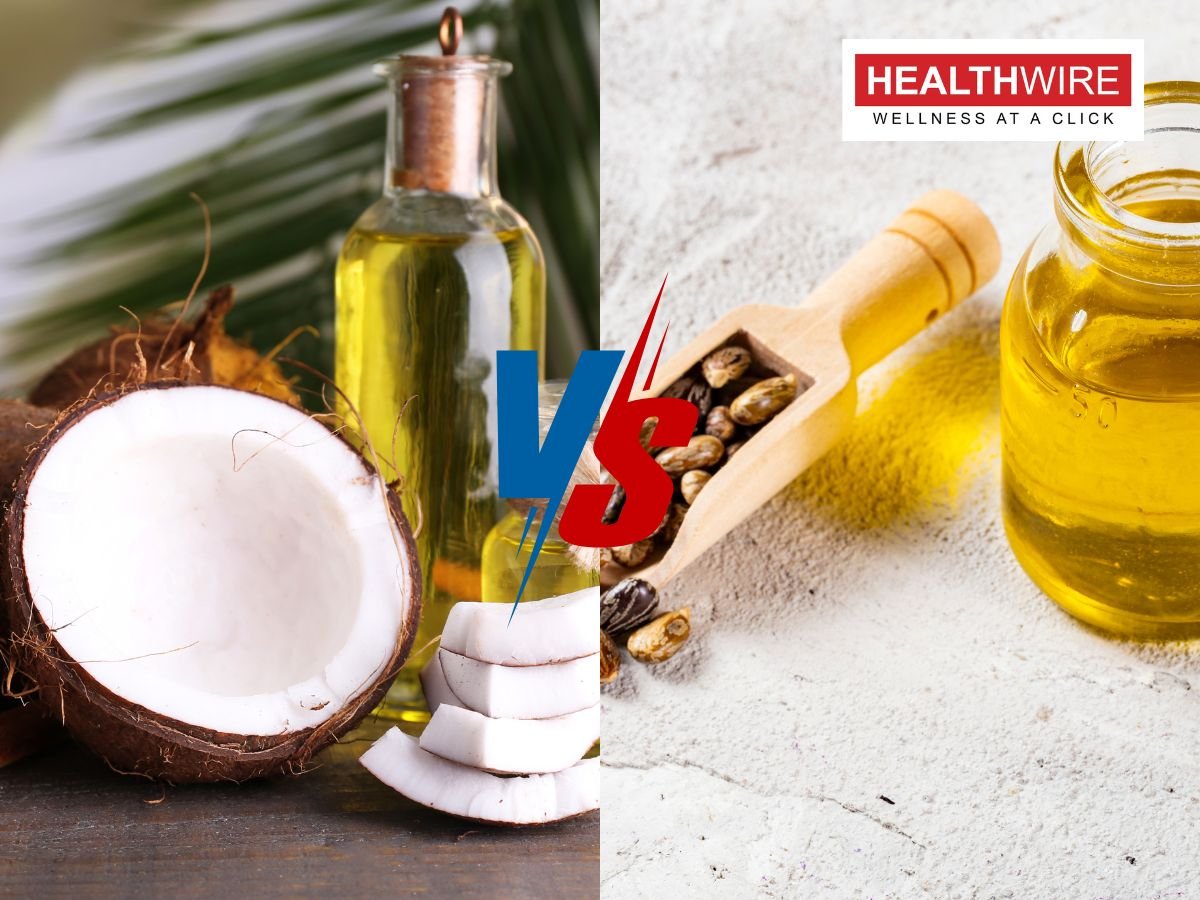
New Delhi, 02 October, 2025: For centuries, natural oils have been at the heart of hair care traditions across cultures. Among the most popular are castor oil and coconut oil, both celebrated for their ability to nourish, strengthen, and protect hair. But when it comes to promoting new hair growth, which oil actually works better?
Dermatologists and trichologists (hair specialists) explain that while both oils have impressive benefits, they differ in their composition, absorption, and impact on hair health. Let’s dive into the science, pros and cons, and how to use each oil effectively.
Castor Oil for Hair Growth
Composition
Castor oil is derived from castor seeds and is rich in ricinoleic acid, a type of fatty acid known for its anti-inflammatory and antimicrobial properties.
Benefits for Hair
- Stimulates the scalp – Ricinoleic acid improves blood circulation, potentially boosting nutrient supply to hair follicles.
- Moisturizes deeply – Its thick consistency coats hair strands, locking in moisture and reducing breakage.
- Fights dandruff – Antifungal properties may help manage dandruff and scalp infections that slow hair growth.
- Adds volume and shine – The oil’s heavy nature makes hair look fuller and glossier.
Drawbacks
- Very thick and sticky, making it hard to spread and wash out.
- May cause scalp buildup if overused.
- Can trigger allergic reactions in sensitive skin types.
Best For
- People with dry scalp, thinning hair, or dandruff issues.
- Those who want to add thickness and strength to hair.
Coconut Oil for Hair Growth
Composition
Coconut oil is primarily composed of medium-chain fatty acids (like lauric acid), which penetrate the hair shaft more effectively than many other oils.
Benefits for Hair
- Deep penetration – Unlike castor oil, coconut oil can enter the hair shaft, reducing protein loss and preventing damage.
- Scalp health – Its antimicrobial properties protect against fungal infections.
- Reduces frizz and split ends – Ideal for keeping hair smooth and manageable.
- Prevents hair loss from breakage – Stronger strands mean less shedding overall.
Drawbacks
- Can make hair greasy if over-applied.
- Some people with sensitive scalps may experience irritation.
- Doesn’t directly stimulate follicles as much as castor oil.
Best For
- People with damaged, frizzy, or brittle hair.
- Those seeking smoother texture and reduced protein loss.
Castor Oil vs Coconut Oil: The Key Differences
| Feature | Castor Oil | Coconut Oil |
|---|---|---|
| Consistency | Thick, sticky | Light, easily absorbed |
| Main Component | Ricinoleic acid | Lauric acid |
| Hair Benefits | Stimulates follicles, fights dandruff, adds thickness | Penetrates shaft, prevents protein loss, reduces breakage |
| Best For | Hair growth boost, dandruff control | Strengthening, frizz reduction |
| Ease of Use | Hard to wash out | Easy to wash out |
Which Oil Is Better for New Hair Growth?
- Castor oil is more effective at stimulating the scalp and may promote new hair growth, especially in those dealing with thinning hair or dandruff-related shedding.
- Coconut oil is better at protecting and strengthening existing hair, preventing breakage and keeping hair healthy in the long run.
Experts often recommend combining the two oils—using castor oil for scalp massage and coconut oil for length and protection—to maximize benefits.
How to Use Castor and Coconut Oil for Best Results
- Scalp Massage
- Warm a mixture of castor and coconut oil.
- Massage into the scalp for 5–10 minutes to boost circulation.
- Leave overnight and wash off in the morning.
- Hair Mask
- Mix castor oil, coconut oil, and aloe vera gel.
- Apply to hair strands and scalp.
- Leave for 30–45 minutes before washing.
- Weekly Routine
- Use once or twice weekly. Overuse can cause buildup.
Expert Tips for Healthy Hair Growth
- Diet matters: Hair health depends on protein, iron, biotin, and omega-3s in your diet.
- Avoid heat styling: Frequent use of dryers or straighteners weakens hair.
- Gentle washing: Use sulfate-free shampoos and avoid overwashing.
- Protect from sun/pollution: Cover your hair or use serums to prevent damage.
Both castor oil and coconut oil are powerful natural remedies for hair care. If your goal is to stimulate new hair growth, castor oil may give you the edge. If you want to strengthen and protect your existing hair, coconut oil is a safer choice.
For most people, a combination of both oils—alongside a healthy diet and proper care—offers the best results. Ultimately, consistency is key. Regular scalp massages, a balanced lifestyle, and gentle hair practices will determine how healthy and fast your hair grows.
So, the winner isn’t one or the other—it’s how you use them together for your unique hair needs.

















Leave a comment