

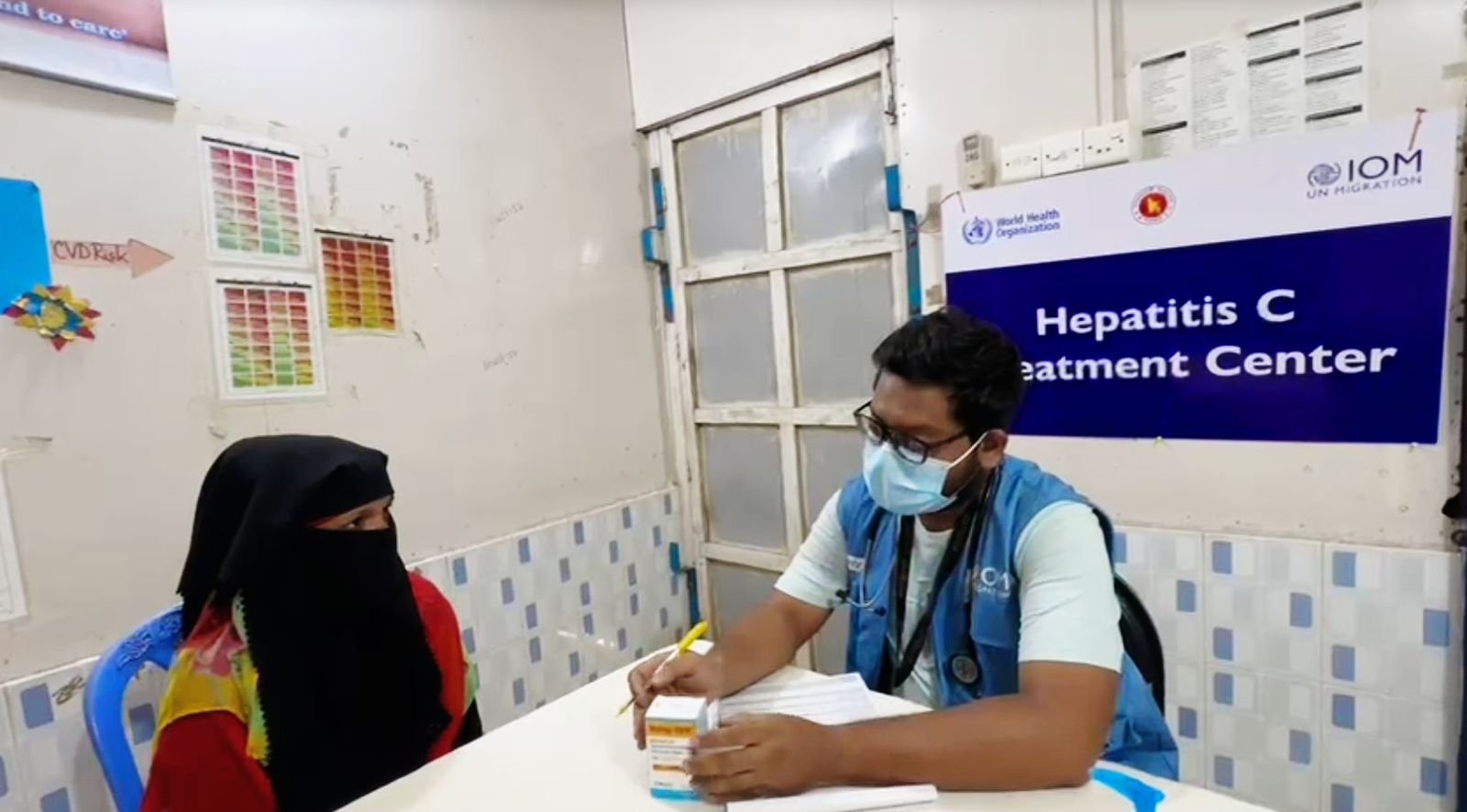
In the Cox’s Bazar camps that hold nearly a million Rohingyas, WHO is seeking to extend screening, testing and treatment for viral Hepatitis B and C, a significant health risk exacerbated by the living conditions and devoid of appropriate response due to shrinking humanitarian aid.
Hepatitis B and Hepatitis C chronic infections can lead to serious consequences such as liver cirrhosis and cancer. The risk of transmission of these viruses during pregnancy, labour and delivery, from an infected mother to her infant, poses a grave threat to the health of infants if prevention and treatment are not provided.
Since the massive influx of Rohingyas in 2017, WHO and health partners have been supporting the Government of Bangladesh for establishing services to address the urgent health needs of this population.
A number of studies since 2019 have shown high prevalence of hepatitis C among the Rohingya population, ranging from 13.2% to 19.6%. The most recent study conducted by Médecins Sans Frontières in 2023 indicated approximately 20% adults had active Hepatitis C infection.
To facilitate early detection and timely treatment of Hepatitis C, on 6 March 2024, WHO, along with the Government of Bangladesh, partner agencies, international non-governmental organisations, and health experts, launched a systematic Hepatitis C surveillance program linked to treatment, screening all adults with a focus on pregnant women.
Between April 26 to May 26, 2024, WHO surveillance information systems – screened 4,486 people with rapid diagnostic tests (RDT) for hepatitis B and C. Of them
3.7% tested positive for Hepatitis B 37% tested positive for Hepatitis C and among them 73.8% had active Hepatitis C infection and needed treatment 1.5% tested positive for both Hepatitis B and Hepatitis C. 83% of those screened were women.
The results of the WHO surveillance highlighted for the first-time substantial Hepatitis C infection among pregnant women with high risk of transmission to their infants.
As part of WHO’s surveillance initiative, over 110 health facilities are providing testing for Hepatitis B and Hepatitis C. Individuals who test positive are referred to 18 designated facilities for detailed investigation and blood sample collection. Their blood samples are sent to WHO-supported IEDCR Field Laboratory in Cox’s Bazar. The coordination of confirmatory testing and treatment takes place through these sites, ensuring systematic data collection and patient follow-up via the WHO Early Warning, Alert, and Response System (EWARS).
WHO has provided 15,000 rapid diagnostic test kits each for Hepatitis B and Hepatitis C to the 110 health facilities. An additional 25,000 RDT kits each for Hepatitis B and Hepatitis C are being procured to enhance screening. 9,000 confirmatory kits have been procured to ensure an accurate identification of hepatitis cases.
To support treatment, WHO has provided drugs for 900 patients diagnosed with Hepatitis C. More drugs to treat 3000 people – healthcare workers and Hepatitis patients – are being procured.
To accelerate an effective response, WHO has also constituted a Technical Task Force for Hepatitis, engaging key humanitarian stakeholders to collectively mobilize resources for further interventions.
Subject to humanitarian aid, WHO proposes to launch, in a phase manner, a mass campaign to screen and treat Rohingyas, including all pregnant women, infants, children and adolescents.
“In the heart of Cox’s Bazar, where resilience meets crisis, we stand united against the scourge of viral hepatitis. Our commitment is unwavering: testing, treatment, and hope for all. Together, we build health, bridge borders, and enhance public health outcomes” – Dr Bardan Jung Rana, WHO Representative to Bangladesh.
The proposed campaign is expected to expand from the current 18 to 51 health sites, ensuring safe testing, sample collection, and transportation to the IEDCR lab for confirmation. WHO has mobilized resources to treat 900 HCV-infected individuals, but additional resources are needed, given the new information on this high burden of disease. Dr Po-Lin Chan, WHO SEARO Regional Adviser on HIV, Hepatitis, and STIs, emphasized the critical need for sustained efforts to combat Hepatitis C in the South-East Asia region, particularly among vulnerable populations like the Rohingya refugees.
“We urge all partners to join forces in this vital initiative to reduce the burden of hepatitis C in the Rohingya camps and beyond,” said Dr Jorge Martinez, Head of WHO Cox’s Bazar Sub Office.
While the immediate focus is on testing, and treating Hepatitis C, WHO’s comprehensive program also contributes to the long-term prevention of cancer. Effective hepatitis B and C interventions for prevention, testing and treatment, including prevention of mother-to-child transmission, will help reduce new infections, disease progression and the risk of developing liver cirrhosis and cancer. Hepatitis C can be cured with a three- month course of highly effective direct acting antiviral medicines. Hepatitis B can be managed with high effective medicines. Hepatitis B vaccination is a well proven and effective intervention to prevent new infections.















Leave a comment