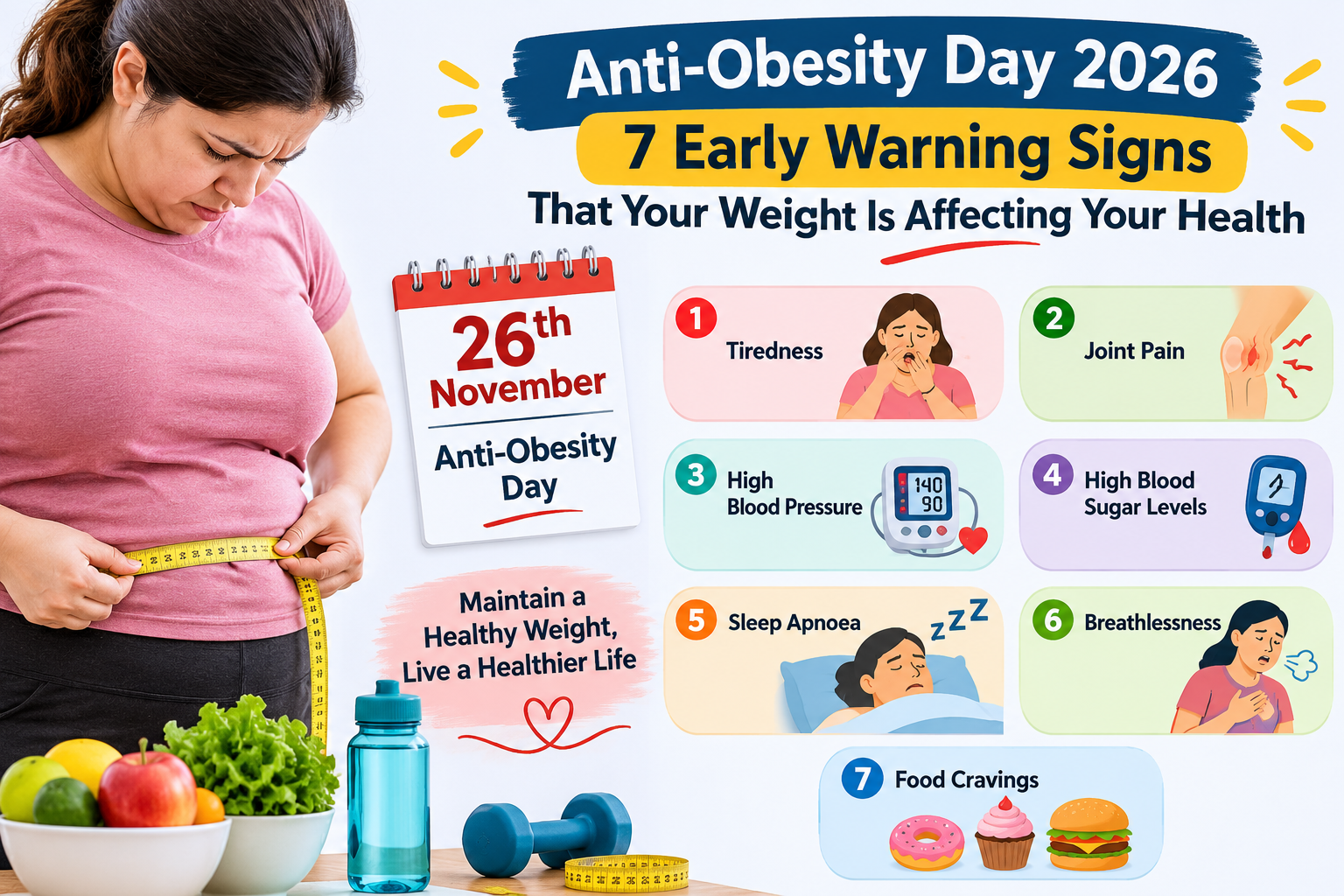
Gaining weight can affect your overall health in many ways. Excess weight may increase the risk of health problems such as diabetes, heart disease, high blood pressure and joint pain. As weight increases, the changes in the body may not be noticeable in the beginning, but gradually, excess weight can affect your overall health.
November 26 is observed as Anti-Obesity Day to raise awareness about obesity and the importance of maintaining a healthy lifestyle. This day also encourages people to recognise the early signs of excess weight that may affect their health and take steps towards better wellbeing.
Here are 7 early warning signs that your weight may be affecting your health:
1. Tiredness
Excess body weight can make you feel tired and low on energy. It may also make everyday activities such as walking, climbing stairs or doing household chores more tiring. If you frequently feel exhausted while performing simple activities, it is important to pay attention to your health.
2. Joint Pain
People with excess body weight may experience joint pain and stiffness. Extra weight puts more pressure on joints such as the knees, hips and ankles. This may increase discomfort, cause stiffness and make movement more difficult.
3. High Blood Pressure
Obesity can increase the risk of high blood pressure. In many cases, high blood pressure does not show noticeable symptoms, which is why regular monitoring is important. Checking your blood pressure regularly can help identify changes early and reduce the risk of health complications.
4. High Blood Sugar Levels
Excess body weight may increase the risk of insulin resistance, which can affect blood sugar levels and increase the risk of developing Type 2 diabetes. Do not ignore signs of high blood sugar, such as tiredness, frequent urination and blurred vision. If you notice these symptoms, consult a doctor.
5. Sleep Apnea
People with obesity may have a higher risk of sleep-related problems, such as sleep apnoea. In this condition, breathing repeatedly stops and starts during sleep. It may affect sleep quality and make you feel tired during the day.
6. Breathlessness
Excess weight may make you feel breathless while performing physical activities such as walking, climbing stairs or playing sports. Additional weight puts more pressure on the body, which may make physical movement and breathing more difficult.
7. Food Cravings
People struggling with weight management may experience cravings for sugary or high-calorie foods, which can make it difficult to follow healthy eating habits. However, food cravings are not necessarily a sign of obesity-related health problems. Other factors, such as stress, sleep and eating habits, may also affect cravings and weight.
Weight management is important for maintaining overall health. It requires consistent lifestyle changes and healthy habits. Start by including balanced meals with fruits, vegetables, whole grains and protein-rich foods in your daily diet. Regular physical activity can also help manage weight, improve overall health, reduce stress and lower the risk of long-term health problems.
Making small and consistent changes in your daily routine can help you work towards a healthier lifestyle.