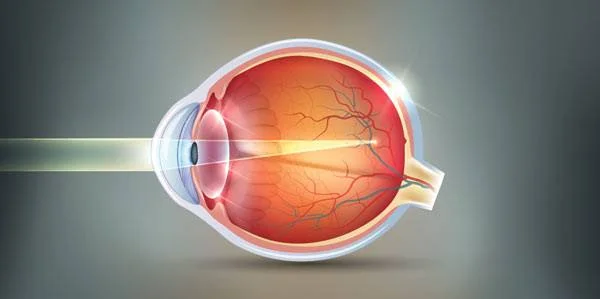
Myopia, commonly known as nearsightedness or short-sightedness, is often considered a routine vision problem that can be corrected with spectacles or contact lenses. However, eye specialists warn that severe or high myopia can involve more than blurred distance vision. In some people, excessive elongation of the eyeball can cause structural changes inside the eye, increasing the risk of serious complications that may lead to permanent vision loss.
High myopia is particularly concerning because it can increase the risk of retinal detachment, glaucoma and myopic macular degeneration. These conditions may damage important structures of the eye and, if not detected and treated promptly, can cause irreversible visual impairment.
With myopia becoming an increasingly important public health concern, understanding the difference between ordinary nearsightedness and high or pathological myopia is essential.
But can myopia actually cause blindness? At what prescription level does it become high myopia? And what warning signs should you never ignore? Here is what eye health experts want you to know.
What Is Myopia And Why Does It Occur?
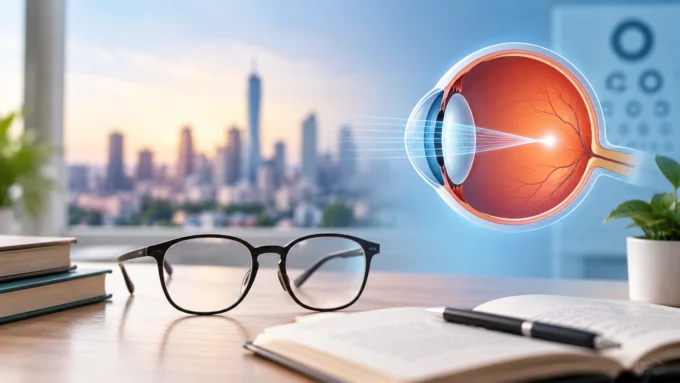
Myopia is a refractive error in which a person can see nearby objects clearly but distant objects appear blurred. It usually occurs when the eyeball is longer than normal or the cornea is too curved, causing incoming light to focus in front of the retina instead of directly on it.
The retina is the light-sensitive layer at the back of the eye that converts light into signals sent to the brain.
Common signs of myopia include:
- Difficulty seeing distant objects clearly.
- Squinting to read road signs or see a classroom board.
- Frequent headaches or eye strain.
- Holding books, phones or screens close to the face.
- Difficulty seeing clearly while driving, particularly at night.
Myopia often develops during childhood and adolescence and may progress as the eyes continue to grow. However, it can also develop or change during adulthood.
READ ALSO: Managing Myopia In Children: Why Early Treatment And Regular Eye Check-ups Matter
What Is High Myopia? At What Prescription Level Does It Become Serious?
High myopia is generally defined as a refractive error of -6.00 dioptres (D) or more in the negative direction. For example, prescriptions of -6.00 D, -8.00 D or -10.00 D fall within this category.
In high myopia, the eyeball is typically longer than normal. This excessive elongation can stretch and thin the retina and other tissues at the back of the eye, increasing the likelihood of structural damage.
However, high myopia and pathological myopia are not exactly the same.
- High myopia: A high degree of nearsightedness, generally -6.00 D or more.
- Pathological myopia: A condition in which excessive eye elongation causes degenerative changes at the back of the eye, potentially affecting vision.
Not everyone with high myopia develops pathological changes, but regular eye examinations are important because the risk of complications increases with greater myopia.
Can Myopia Lead To Permanent Vision Loss?
Yes. While ordinary myopia can generally be corrected with spectacles, contact lenses or refractive surgery, high myopia can increase the risk of eye diseases that may cause irreversible vision loss.
The main concern is that excessive elongation of the eyeball can stretch the retina, affect the macula and make the optic nerve more vulnerable to damage. Here are five major complications associated with high myopia.
1. Retinal Detachment: A Sight-Threatening Emergency
Retinal detachment occurs when the retina separates from the tissue supporting it at the back of the eye. High myopia increases this risk because excessive elongation of the eyeball can stretch and thin the retina, making it more vulnerable to tears or breaks.
If retinal detachment is not treated promptly, it can lead to permanent vision loss.
Warning signs to watch for:
- Sudden appearance of numerous floaters or dark spots.
- Flashes of light in your vision.
- A dark shadow or curtain-like effect across your field of vision.
- Sudden blurred or reduced vision.
2. Myopic Macular Degeneration: Damage To Central Vision
The macula is the central part of the retina responsible for sharp vision. It helps people perform activities such as reading, recognising faces, driving and identifying fine details.
In high myopia, excessive stretching of the eyeball can cause thinning and degeneration of the tissues around the macula. This condition is known as myopic macular degeneration or myopic maculopathy.
In some cases, abnormal blood vessels can develop beneath the retina, resulting in myopic choroidal neovascularisation (mCNV). These blood vessels can leak fluid or blood, damaging the macula and affecting central vision.
READ ALSO: Why Is Your Vision Still Blurry After New Glasses? Experts Explain Hidden Eye Conditions
Warning signs to watch for:
- Blurred central vision.
- Straight lines appearing bent or distorted.
- Difficulty reading small print.
- Dark or blank spots in the centre of your vision.
- Difficulty recognising faces.
3. Glaucoma: Damage To The Optic Nerve
High myopia is associated with an increased risk of open-angle glaucoma, a condition that damages the optic nerve responsible for transmitting visual information from the eye to the brain.
Glaucoma is often associated with increased intraocular pressure, although it can also develop when eye pressure is within the normal range.
In people with high myopia, structural changes in the eye can make the optic nerve more vulnerable to damage. The condition can progress gradually, often without noticeable symptoms in its early stages.
Warning signs to watch for:
- Gradual loss of peripheral or side vision.
- Difficulty noticing objects outside your direct line of sight.
- Reduced visual field.
- Advanced cases may cause significant vision loss.
4. Cataracts: Clouding Of The Eye’s Natural Lens
People with high myopia may have an increased risk of developing cataracts, sometimes at a younger age than people without significant myopia.
A cataract occurs when the natural lens inside the eye becomes cloudy, making it difficult for light to pass through clearly.
Although cataracts are commonly associated with ageing, certain eye conditions, including high myopia, can increase their likelihood.
Warning signs to watch for:
- Blurred or cloudy vision.
- Increased sensitivity to bright lights.
- Difficulty seeing clearly at night.
- Faded or less vibrant colours.
- Frequent changes in spectacle prescription.
5. Myopic Macular Neovascularisation: Abnormal Blood Vessel Growth
Another serious complication of high myopia is myopic macular neovascularisation, also called myopic choroidal neovascularisation.
In this condition, abnormal blood vessels grow beneath the retina near the macula. These vessels can leak blood or fluid, causing swelling and damage to the central vision area.
Although it is associated with myopic macular degeneration, it is important to recognise it as a specific complication because timely treatment can make a difference to visual outcomes.
Warning signs to watch for:
- Sudden distortion of straight lines.
- A dark or blurred spot in central vision.
- Sudden deterioration in reading ability.
- Difficulty recognising faces.
Does Wearing Spectacles Prevent High Myopia From Causing Eye Damage?
No. Spectacles and contact lenses correct the refractive error by helping light focus properly on the retina. However, they do not reverse the excessive elongation of the eyeball or eliminate the structural risks associated with high myopia.
Similarly, LASIK and other refractive surgeries can reduce dependence on spectacles or contact lenses, but they do not shorten the eyeball or reverse existing retinal changes.
This means that even people who have undergone successful vision-correction surgery may continue to face the eye-health risks associated with their previous high myopia.
The important distinction is that correcting eyesight does not necessarily eliminate the risk of eye disease. Regular retinal and optic nerve examinations remain important.
READ ALSO: Follow These Methods To Safeguard The Eye Health Everyday
How Is High Myopia Diagnosed?
High myopia requires a comprehensive eye examination to assess both the degree of refractive error and the health of the retina and optic nerve.
An ophthalmologist may recommend the following tests:
- Refraction test: Determines the degree of nearsightedness and the spectacle prescription required.
- Dilated retinal examination: Allows the doctor to examine the retina and identify thinning, tears or other abnormalities.
- Optical coherence tomography (OCT): Produces detailed images of the retina and macula to identify structural changes.
- Intraocular pressure measurement: Checks the pressure inside the eye to assess glaucoma risk.
- Visual field testing: Evaluates peripheral vision and helps identify possible optic nerve damage.
These investigations help doctors identify complications before significant vision loss occurs.
Can High Myopia Be Prevented From Getting Worse?
Although high myopia cannot always be reversed, certain interventions may help slow myopia progression, particularly in children and adolescents.
Some measures include:
- Regular eye examinations: Monitor changes in the spectacle prescription and eye structure.
- Spend more time outdoors: Encourage children to spend time outside during daylight hours, as outdoor exposure is associated with a lower risk of developing myopia.
- Take breaks during screen use: Follow the 20-20-20 rule, looking at something approximately 20 feet away for 20 seconds after every 20 minutes of near work.
- Discuss myopia-control treatments: Depending on age and clinical assessment, doctors may recommend low-dose atropine eye drops, specialised spectacle lenses or myopia-control contact lenses.
- Avoid ignoring prescription changes: Rapid progression, particularly in children, should be evaluated by an eye specialist.
These measures may help manage myopia progression, but they cannot guarantee that high myopia or its complications will be prevented.
When Should You See An Eye Specialist Immediately?
People with high myopia should not ignore sudden changes in their eyesight. Seek urgent ophthalmic evaluation if you experience:
- Sudden flashes of light.
- A sudden increase in floaters.
- A dark curtain or shadow across your vision.
- Sudden blurred or distorted central vision.
- Sudden loss of vision in one eye.
These symptoms may indicate retinal tears, retinal detachment or other sight-threatening complications.