

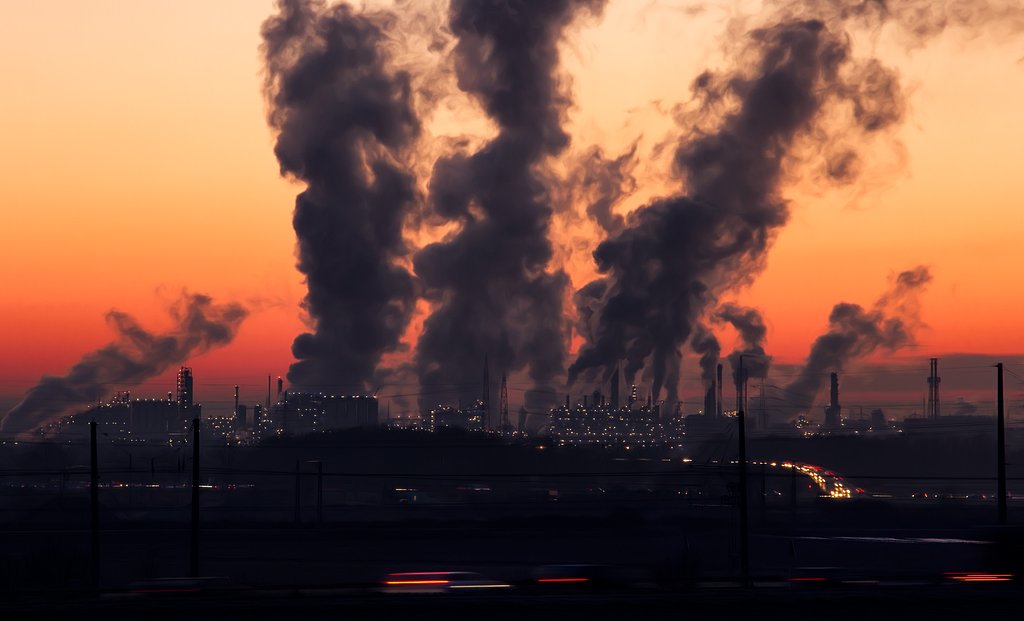
According to a study published in The Lancet Planetary Health journal, air pollution caused by PM2.5 concentrations that exceeded the safe exposure limits set by the World Health Organization (WHO) is responsible for more than 7% of daily deaths in ten major Indian cities.
Data from Ahmedabad, Bengaluru, Chennai, Delhi, Hyderabad, Kolkata, Mumbai, Pune, Shimla, and Varanasi were among the cities whose data was analyzed in the study. It was discovered that on 99.8% of the days, PM2.5 levels—tiny pollutants that can pierce deeply into the bloodstream and lungs—were higher than the WHO’s safe threshold of 15 micrograms per cubic meter.
According to the study, Delhi has the highest percentage of annual and daily deaths linked to PM2.5 air pollution, which is made up of particles with a diameter of 2.5 micrometers or less. The primary sources of these dangerous particles are industrial and automotive emissions.
Roughly 12,000 deaths in the nation’s capital are attributed to air pollution each year, making up an astounding 11.5% of all deaths there.
According to research, there is a direct correlation between daily exposure to PM2.5 pollution in Indian cities and an increased risk of death. It is possible that locally produced pollution is the cause of these deaths.
The study’s startling conclusion was that a two-day increase in PM2.5 concentration of 10 micrograms per cubic meter is correlated with a 1.4% increase in daily mortality. When observations are limited to levels below the Indian air quality standards—which are noticeably less strict than WHO guidelines—this risk factor doubles to 2.7%.
The Indian standard permits 60 micrograms per cubic meter, whereas the WHO recommends a safe exposure limit of 15 micrograms per cubic meter over a 24-hour period.
According to data specific to Delhi, there was a daily mortality increase of 0.31 per cent for every 10 micrograms per cubic meter increase in PM2.5 levels, while Bengaluru experienced a rise of 3.06 per cent.
The researchers’ use of causality models revealed a stronger relationship between daily exposure to PM2.5 and locally produced pollutants, suggesting that local pollutants may play a major role in these deaths.
The study also showed that the causal effects were stronger in cities like Bengaluru, Chennai, and Shimla that had lower overall air pollution levels.
It is the first multi-city time series analysis of daily mortality in India based on short-term exposure to PM2.5. The study examined approximately 36 lakh deaths per day between 2008 and 2019 in ten Indian cities. The study encompassed various cities, namely Ahmedabad, Hyderabad, Kolkata, Pune, Shimla, and Varanasi.
Researchers from the Centre for Chronic Disease Control in New Delhi as well as Banaras Hindu University in Varanasi were part of the multinational team that conducted the study.
Co-author Joel Schwartz of Harvard University emphasized that tighter regulations on air quality “will save tens of thousands of lives per year” by lowering and enforcing limits.
















Leave a comment