


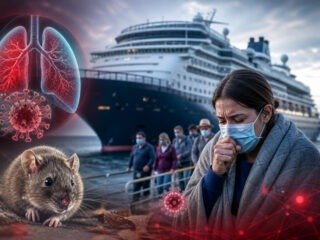
A rare hantavirus outbreak aboard a cruise ship in the South Atlantic has drawn global attention after the World Health Organization said it is investigating the possibility of limited human-to-human transmission—an unusual development for a virus that is typically spread through contact with infected rodents.
According to the WHO, seven confirmed or suspected cases have been identified among passengers and crew aboard the Dutch-flagged vessel. Of these, three people have died, one patient remains critically ill, and three others have reported milder symptoms. The ship, carrying 147 people from 23 countries, is currently moored off the coast of Cabo Verde while health teams continue their investigation.
Why this outbreak is unusual
Hantavirus infections in humans are rare but can be severe. In most cases, the virus spreads through inhalation of particles contaminated by the urine, saliva, or droppings of infected rodents. What has made this outbreak unusual is the WHO’s suspicion that the cluster may involve the Andes virus—one of the few hantavirus strains known to have caused limited person-to-person transmission in previous outbreaks.
Investigators say two of the earliest cases involved a couple who had travelled in Argentina before boarding the ship, raising the possibility that the virus may have been introduced before the voyage began. However, some later cases among close contacts have prompted officials to examine whether rare human-to-human spread may have occurred onboard.
How the cases unfolded
The first passenger developed symptoms in early April, beginning with fever, headache, and mild gastrointestinal illness before rapidly progressing to respiratory distress. He later died onboard. A close contact later became seriously ill and died after medical evacuation to Johannesburg. Another critically ill passenger was also evacuated to South Africa, where laboratory testing confirmed hantavirus infection.
WHO says symptoms among affected passengers have included high fever, stomach complaints, pneumonia, acute respiratory distress syndrome, and shock. Medical teams in Cabo Verde are collecting additional samples from suspected cases still on board.
What is hantavirus?
Hantavirus is a rare viral infection that can cause severe disease in humans. In the Americas, it can lead to hantavirus pulmonary syndrome (HPS), a life-threatening illness that affects the lungs and can rapidly impair breathing. Early symptoms often resemble flu or stomach infection—fever, muscle pain, nausea, vomiting, and fatigue—but severe cases can quickly progress to shortness of breath and respiratory failure.
There is currently no specific antiviral treatment for hantavirus. Early supportive care, oxygen therapy, and intensive monitoring can improve outcomes.
Should the public be worried?
For now, the WHO says the global public health risk remains low. Health authorities have not recommended travel restrictions, but close monitoring and contact tracing are underway, especially for people who may have had close exposure to confirmed cases.
Experts say the biggest concern is not widespread transmission, but understanding whether this cluster represents one of the rare situations in which hantavirus may have spread between humans in a confined setting such as a cruise ship. Further laboratory sequencing is underway to determine the exact strain involved.
Cruise ships are already known for how quickly infections can spread in enclosed environments. While hantavirus is not normally associated with cruise outbreaks, this event has caught the attention of global health agencies because of its rarity and the severity of illness seen in several patients.
For now, health officials continue to stress caution rather than panic. But this outbreak is a reminder that even rare viruses can become serious public health concerns when they emerge in crowded, international travel settings.















Leave a comment