

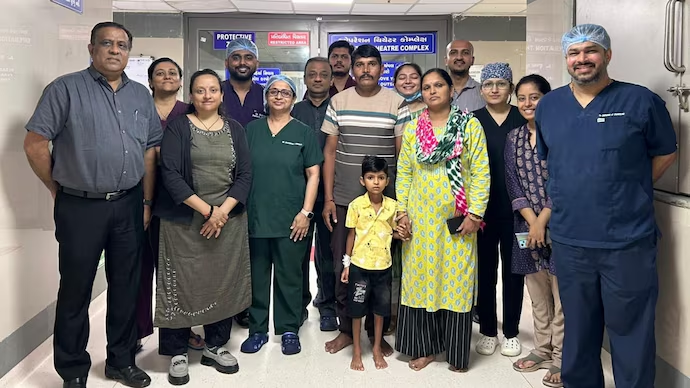
New Delhi, 23 September, 2025: In a rare and complex medical case, doctors at Ahmedabad Civil Hospital successfully removed a trichobezoar—a mass of hair, grass, and a shoelace thread—from the stomach and small intestine of a 7-year-old boy. The child had suffered for two months with severe abdominal pain, repeated vomiting, and noticeable weight loss. After spending around ₹2 lakh at a private hospital with no improvement, his guardians brought him to Ahmedabad, where imaging and endoscopy revealed the unusual mass. Surgeons performed an exploratory laparotomy and removed the obstruction, and post-operative care included a psychiatric evaluation to address the behavioral cause of the ingestion.
This case highlights not only the surgical challenges but also the behavioral, nutritional, and long-term health risks associated with bezoars such as this.
What Exactly Happened
- The child, a 7-year-old from Ratlam, Madhya Pradesh, experienced worsening abdominal pain, repeated vomiting, and weight loss over two months. He had already sought treatment privately but had no relief.
- At Ahmedabad Civil Hospital, doctors performed a CT scan and endoscopy, which showed a trichobezoar—a mass composed of swallowed hair, along with grass and a shoelace thread—in his stomach and part of his small intestine.
- The surgery was led by a senior surgeon. Anesthesia and post-operative care were managed carefully. After removal, the boy was kept off oral intake for six days, and on the seventh day a dye test confirmed the mass was fully cleared.
- Psychological counseling was provided to address any underlying behavioral issues that may have led to the swallowing of non-food items.
What Is a Trichobezoar?
A trichobezoar is a type of bezoar (a foreign body mass trapped in the digestive tract) primarily made up of swallowed hair (from one’s own scalp or from external sources). They sometimes include other non-digestible items such as thread, grass, or vegetable fiber. Bezoars can fall into several categories:
- Trichobezoars – hair
- Phytobezoars – vegetable or fruit fiber
- Lactobezoars – milk curds (in infants)
- Pharmacobezoars – undigested medications
Symptoms often include abdominal pain, vomiting, bloating, weight loss, and sometimes intestinal obstruction. Smaller bezoars may be removed by endoscopy, but larger or more complex cases often require surgery.
How This Could Affect His Health
- Malnutrition and Weight Loss
The presence of a bezoar can interfere with digestion and absorption of nutrients. With ongoing vomiting and an inability to eat properly, children can become severely malnourished, lose weight, and become weakened. - Gastrointestinal Damage
The mass causes pressure, ulceration, irritation, or even perforation in the stomach or intestines. Obstruction can lead to dangerous swelling, bacterial overgrowth, or reduced blood flow to affected tissues. - Dehydration and Electrolyte Imbalance
Frequent vomiting can lead to dehydration. Loss of fluids and electrolytes (sodium, potassium) can impair multiple organ functions and cause further weakness. - Risk of Infection
Stagnant contents around the bezoar (hair, foreign items) can harbor bacteria, possibly leading to infection in the stomach lining or intestines. After surgery, there is also risk of wound infection. - Behavioral / Psychological Issues
Conditions like trichotillomania (hair pulling) and trichophagia (hair eating) may underlie regulation issues, anxiety, or other psychological disorders. If not addressed, there’s risk of recurrence. - Delayed Growth and Development
In children, prolonged periods of poor nutrition and illness may hinder growth—both physical (height, weight) and cognitive. - Post-operative Complications
Recovery from surgery, especially in young children, involves potential complications like scar tissue formation, adhesions (which could cause future bowel obstructions), or delayed healing.
Treatment & Care Path Followed in This Case
- Diagnostic Imaging & Endoscopy to locate the mass.
- Surgical Removal (Exploratory Laparotomy) to physically extract the bezoar, particularly since the mass was large and involved the small intestine.
- Post-Operative Fasting for several days to allow gut healing, followed by a dye test to ensure no residual obstruction or leak.
- Psychiatric Counseling to examine underlying behavioral reasons, and to prevent future recurrence of swallowing non-food items.
Prevention & What Parents Should Be Aware Of
To avoid such dangerous conditions, awareness and early intervention are key. Parents, caretakers, and teachers should watch out for:
- Signs of unexplainable stomach pain, frequent vomiting, weight loss over weeks or months.
- Behavioral symptoms such as hair-pulling, eating hair, eating non-food items like threads, grass etc. These often point to pica or compulsive disorders.
- Ensuring mental health support if emotional distress, anxiety, OCD, or stress are present.
- Encouraging safe habits: keeping threading, string, or cords out of reach; monitoring for ingestion of unusual items.
Medical & Psychological Implications
Because trichobezoars are rare (prevalence estimated around 0.3-0.5% in children), many healthcare providers may not suspect them immediately. This can lead to delays in diagnosis. Early signs can mimic common ailments like gastritis, infection, or food poisoning.
Psychological implications are equally crucial. Conditions like trichophagia often co-exist with mental health stressors; treatment frequently requires a multidisciplinary approach (surgeons, gastroenterologists, psychiatrists, dietitians).
Long-term follow-up is needed to:
- Monitor for re-growth of bezoars.
- Ensure nutritious diet and weight rebound.
- Address behavioral/psych issues.
- Screen for complications if any (scar tissue, issues with digestion).
The successful surgery in Ahmedabad is a reminder of how serious and sometimes life-threatening trichobezoars can be, especially in children. Beyond the physical obstruction, the nutritional, psychological, and long-term complications are real and require attention.
For parents and caregivers, vigilance over behavior, unusual ingestion of non-food items, persistent digestive symptoms, and weight loss are all red flags. Combining prompt medical care with psychological support gives the best chances for recovery and prevents recurrence.















Leave a comment