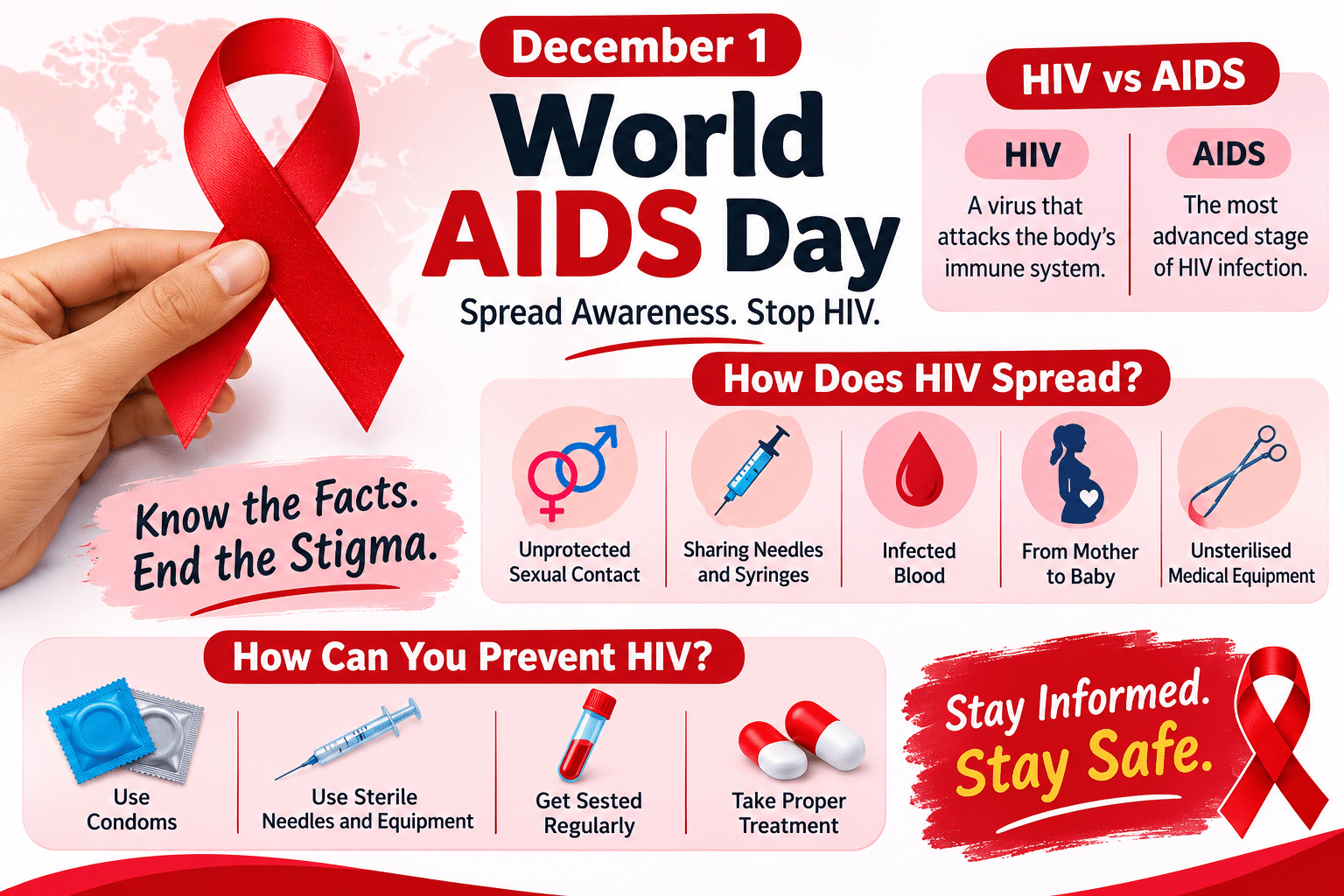
Every year, World AIDS Day is observed on December 1 to spread awareness about HIV and AIDS. This day is important for educating people about how HIV spreads, how it can be prevented and why early testing is important.
Is There Any Difference Between HIV and AIDS?
Yes, HIV and AIDS are different. HIV stands for Human Immunodeficiency Virus, while AIDS stands for Acquired Immunodeficiency Syndrome.
HIV is a virus that attacks the body’s immune system and makes it difficult to fight infections. AIDS is the most advanced stage of HIV infection. However, with proper treatment, a person living with HIV can prevent the infection from progressing to AIDS.
How Does HIV Spread From One Person to Another?
1. Unprotected Sexual Contact: HIV can spread through unprotected vaginal or anal sex with a person who has HIV and is not virally suppressed. Using condoms can help reduce the risk of infection.
2. Sharing Needles and Syringes: Sharing needles or syringes with someone who has HIV can spread the infection. This happens when infected blood enters another person’s body through the needle.
3. Infected Blood: Receiving blood that contains HIV can spread the infection. It is important to ensure that donated blood is properly screened before a blood transfusion.
4. From Mother to Baby: A pregnant woman living with HIV can pass the infection to her baby during pregnancy, childbirth or breastfeeding. However, proper treatment and medical care can greatly reduce the risk of transmission.
5. Unsterilised Medical Equipment: Using needles or surgical instruments that have not been properly sterilised can also spread HIV if they are contaminated with infected blood.
How Can You Prevent HIV?
Taking a few precautions can help reduce the risk of HIV infection. Here are some simple ways to prevent it:
Follow Medical Advice During Pregnancy: Women living with HIV should take proper treatment and follow medical advice to reduce the risk of passing the infection to their babies.
Use Condoms: Always use condoms correctly during sexual activity to reduce the risk of HIV transmission.
Avoid Sharing Needles: Never share needles or syringes. Always use clean and sterile equipment.
Get Tested: Regular HIV testing helps you know your status and seek medical advice if needed.
Check Blood Safety: Make sure donated blood is properly screened before a blood transfusion.
Take Preventive Medicines: Medicines like PrEP can help prevent HIV before possible exposure. PEP can help prevent infection after possible exposure and must be started within 72 hours.
A few simple precautions can help reduce the risk of HIV infection. Always use condoms, use sterile needles and medical equipment, and get tested regularly. It is also important to take proper treatment and follow your doctor’s advice to prevent the infection from spreading.