

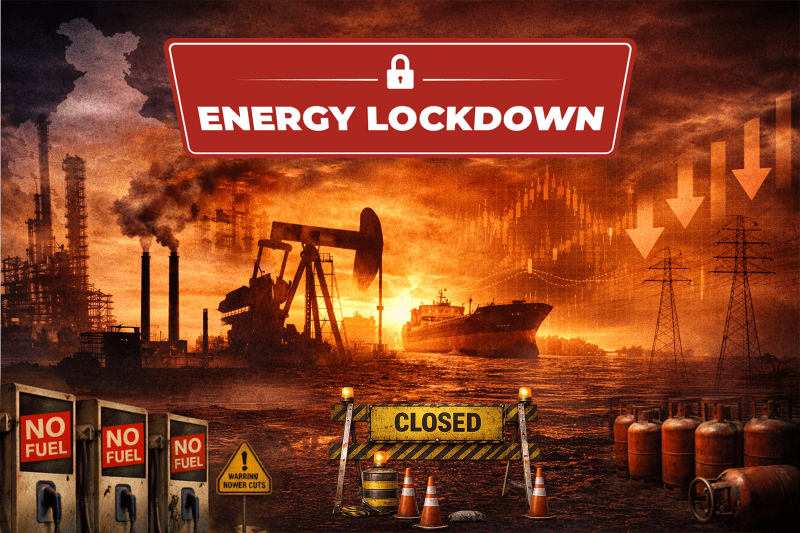
Energy Lockdown In India: The ongoing unrest in West Asia has triggered a massive outrage over several commodities. From fuel price hikes to supply disruptions of LPG and other essential life-saving materials, the world is on the brink of witnessing an ‘Energy Lockdown‘, if this doesn’t get resolved anytime soon. But what is an energy lockdown, and what will happen if that gets imposed in India? Let’s know it all and understand the restrictions that may follow if this get implemented.
What Will Happen If Energy Lockdown is Imposed In India?
With all the current updates about a possible lockdown-like situation pertaining to the sudden shortage of energy resources in the world, experts have raised concerns about how things may change in the upcoming weeks, if the war doesn’t stop now. With global energy markets facing uncertainty, ranging from geopolitical tensions to supply disruptions—the term “energy lockdown” has emerged as one of the most trending search keywords on Google. But what does it actually mean for a country like India? Would it look anything like the COVID-19 lockdown, or would it be a very different, targeted response?
The short answer to this question is — An energy lockdown would not mean shutting down life entirely. Instead, it would involve strategic restrictions designed to reduce fuel and electricity consumption, prioritise essential services, and stabilise supply chains during a crisis situation like fuel shortage induced by the war.
Let’s break down what could realistically happen if India were forced into such a situation.

What Is an Energy Lockdown?
An “energy lockdown” is not like a COVID-19 lockdown that the world witnessed during 2020-2021. This is an official policy term, but a hypothetical emergency response used when a country faces a severe shortage of oil, gas, or electricity. The lockdown people are referring to was implemented during a virus outbreak, mainly to contain the spread of a virus that triggered a pandemic.
In simpler language, an energy lockdown is different from a pandemic lockdown. Here, the goal is not to restrict movement for health reasons, but to cut energy demand quickly and efficiently for better and long-term sustainability.
Now the question here is – What may happen if India implements this?
India, being one of the world’s largest importers of crude oil and natural gas, could face pressure if certain restrictions come into force.
First, the global oil supplies will get disrupted. Secondly, fuel and power prices will spike beyond sustainable levels. And third, domestic power demand will see a massive surge in supply levels (especially when the heatwave season hits India in the coming weeks).
What Are The Key Restrictions That Will Be Imposed Under ‘Energy Lockdown’?
At this time, the implementation of an ‘energy lockdown’ seems inevitable. But what restrictions fall under this? Let’s take a quick look at them:
Fuel Rationing for Vehicles
The first heat will be faced by the fuel sector and those dependent on it. The energy lockdown will limit petrol and diesel usage – this will mainly impact the transportation sector in India. Transportation also includes the distribution of food and drinks, daily transportation, etc. Some of the major restrictions include:
Odd-even rules for all the private cars across the country (what was implemented during pollution control in Delhi)
A special priority access will be given to all the emergency services, public transport, and logistics in the country.
Work-From-Home Mandates
An energy lockdown can also re-introduce work from home mandate that was last implemented to control the COVID-19 surge. Why is this being considered? As per experts, this measure/restriction will help reduce daily commuting and fuel consumption, travel, power, and energy consumption. This will also reintroduce reduced working hours from the office. As per industry experts, this step alone could cut a large portion of urban fuel demand.
Power Cuts and Load Shedding
One of the major causes of concern associated with ‘Energy Lockdown’ is that it can directly lead to electricity or power cut across India. Energy conservation would be critical during a power crisis – which is when many parts will suffer from ‘no electricity’ supply.
Some of the restrictions under this lockdown include:
- Scheduled power cuts in residential areas
- Limited supply hours in non-essential zones
- Rural and semi-urban areas may face longer outages
Air Travel Restrictions
The next restriction that will be implemented if an energy lockdown is imposed is on the air travel. Fuel shortage will cause the biggest imapct on the Aviation industry that totally depends on it. Some measures that may come into force are: reduced number of domestic flights, only essential travel will get the priority, There are possibilities of surge in ticket prices as well.
Energy-Saving Rules at Home
During an energy lockdown, most of the citizens will be asked to follow certain at-home rules, these include: Limited use of air conditioner even during the peak summer days, more use of LED lights or those that run without any sources such as candles. And, in extreme cases, there could even be penalties for excessive consumption.
How Will Energy Lockdown Impact The Healthcare Sector In India?
Although, the measures are different from those which were implemented during the COVID pandemic days, the lockdown is expected to hit the healthcare sector in India as well. In what ways? Let’s discuss them:
If implemented, an energy lockdown could lead to: reduced mobility and travel, higher fuel and electricity costs triggering mental well-being, lifestyle changes (less AC use, fewer outings), increased reliance on digital work and services. However, the good news about everything related to this lockdown is that the essential services such as healthcare, food supply, emergency response—would remain fully operational.
Is India Heading Towards Another Lockdown?
As of now, the information is not about a normal lockdown but an energy lockdown (speculation is rising across the country) due to the sudden scarcity of fuel and other resources. “There is no official indication that India is planning such a move. The term is largely speculative and driven by global energy concerns,” expert confirmed.
So while a full “energy lockdown” may be unlikely, targeted restrictions during a severe crisis are very much possible. Should one be worried about this? While a complete lockdown is still far from happening, experts say that in a world where energy security is becoming as critical as economic stability, such measures—if ever implemented—would be less about panic and more about smart, temporary adaptation.















Leave a comment