Home Latest News ‘Victorian Disease’ Detected at UK Amazon Warehouse: What the Outbreak Means and Why Unions Are Alarmed
Latest News

‘Victorian Disease’ Detected at UK Amazon Warehouse: What the Outbreak Means and Why Unions Are Alarmed

Share
Fungus Aspergillus fumigatus
Share

Amazon has confirmed an outbreak of what is being described as a “Victorian disease” at one of its UK warehouses, prompting strong reactions from workers’ unions that are calling for the facility’s immediate closure. The development has raised serious concerns about workplace hygiene, employee safety, and modern labour conditions in large industrial facilities.

What Is the ‘Victorian Disease’?

The term “Victorian disease” is commonly used to describe illnesses associated with poor sanitation and overcrowded living or working conditions during the Victorian era. In this case, reports indicate the outbreak involves scabies, a contagious skin infestation caused by microscopic mites that spread through close physical contact and shared surfaces.

What Has Amazon Confirmed?

Amazon has acknowledged cases of scabies among workers at the affected UK warehouse. The company has stated that it is working with health authorities, enhancing cleaning protocols, and providing guidance to employees to limit further transmission.

However, unions argue that these measures are insufficient given the contagious nature of the condition and the working environment.

Why Are Unions Demanding Closure?

Workers’ unions claim that continued operations put employees at risk. Their key concerns include:

  • High-density working conditions that make distancing difficult
  • Shared equipment and facilities
  • Risk of rapid person-to-person transmission

Unions are demanding a temporary closure of the warehouse to allow deep cleaning, medical assessment of staff, and a thorough safety review.

How Does Scabies Spread?

Scabies spreads through prolonged skin-to-skin contact and, less commonly, through shared clothing, bedding, or surfaces. Symptoms may take weeks to appear and include:

  • Intense itching, especially at night
  • Red rashes or small blisters
  • Skin sores caused by scratching

Without prompt treatment, outbreaks can spread quickly in crowded environments.

Is This a Public Health Risk?

Health experts say scabies is treatable and not usually dangerous, but outbreaks in workplaces signal serious lapses in hygiene and worker protection. If left unchecked, infections can escalate, affecting productivity and employee wellbeing.

What Should Workers Do?

Employees experiencing symptoms are advised to:

  • Seek medical evaluation immediately
  • Avoid close contact until treated
  • Follow prescribed treatment strictly
  • Report symptoms to workplace health teams

The Bigger Issue

The outbreak has reignited debate around workplace safety standards in large logistics facilities. The use of the term “Victorian disease” underscores concerns that modern workplaces should not be seeing illnesses linked to outdated sanitation issues.

As investigations continue, public health authorities and labour unions are expected to push for stricter safeguards to ensure worker health is not compromised in high-pressure industrial environments.


Share
Written by
Satata Karmakar

Satata Karmakar is a health journalist and Editor of HealthWireMedia.com, with over 12 years of experience in journalism, investigative reporting, newsroom editing and healthcare news. As Editor of HealthWire Media, Satata focuses on delivering accurate, evidence-based and accessible health journalism that helps readers make sense of complex medical and healthcare developments. She specialises in translating medical research, clinical findings, public-health updates and healthcare regulations into clear, engaging stories for healthcare professionals and the wider public. Her areas of coverage include public health, medical research, disease prevention, healthcare policy, health technology, medical education and regulatory developments. She places particular emphasis on verifying health claims through peer-reviewed research, official government notifications, expert interviews and credible institutional sources, including the National Medical Commission (NMC). She is committed to responsible health reporting that prioritises accuracy, context and transparency—especially when covering emerging research, medical breakthroughs, health risks and treatment-related information. Her editorial approach aims to make reliable health information understandable without oversimplifying science or overstating medical claims. Through her work, she seeks to strengthen public understanding of healthcare issues and contribute to informed conversations around health, medicine and policy. Outside the newsroom, Satata enjoys reading and painting, pursuits that continue to inspire her curiosity, creativity and storytelling.

Don't Miss

Bundibugyo Ebola virus
International NewsVirus & DiseaseWHO

From Fever To Organ Failure: How The Bundibugyo Ebola Virus Affects The Body

The Bundibugyo Ebola virus outbreak has raised fresh global health concerns as infections continue to spread across parts of Central and East Africa....

WHO
Health TipsInternational NewsLatest NewsLifestyle & WellnessWHO

WHO Issues First Type 1 Diabetes Guidelines for Adults: 7 Things Patients Need to Know

More than 100 years after the discovery of insulin, millions of people living with type 1 diabetes continue to face challenges in accessing...

Breast Cancer
Health NewsOncology

Mammogram vs Ultrasound vs MRI: Which Breast Cancer Screening Test Is Right for You?

Breast cancer is one of the most common cancers affecting women worldwide, and early detection plays an important role in improving treatment outcomes....

Always Tired? It Could Be Anaemia!
Diet & NutritionHealth NewsHealth TipsLifestyleLifestyle & WellnessWellness

Anaemia in India: Why Iron Deficiency Remains a Concern and 7 Signs You Should Not Ignore

Feeling tired all the time, experiencing frequent dizziness or getting breathless after climbing a few stairs? While these symptoms are often dismissed as...

N95 Mask
Health TipsLatest NewsLifestyle & WellnessWellness

Does Wearing an N95 Mask Protect You From PM2.5 Pollution? Doctors Explain How To Choose And Wear It Correctly

As air pollution continues to affect several Indian cities during winter, wearing a mask has become an important precaution for people stepping outdoors....

Section title

Related Articles
Latest NewsWHO

WHO Releases First-Ever Guidelines For Type 1 Diabetes In Adults: 5 Key Recommendations Explained

The World Health Organization (WHO) has issued its first-ever guidelines for the...

Health NewsLatest NewsLifestyle

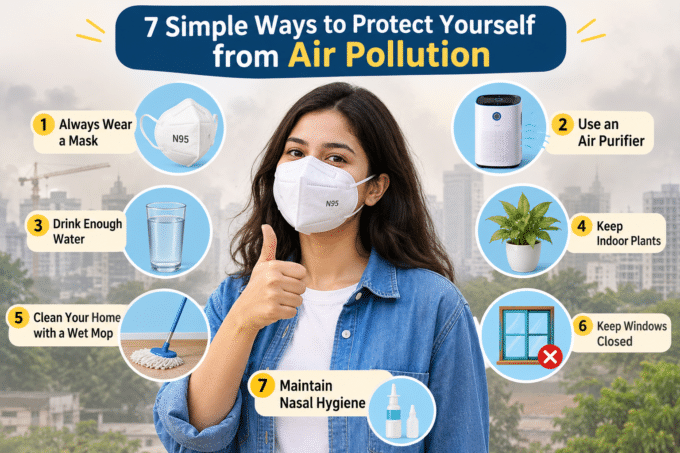
7 Simple Ways to Protect Yourself from Air Pollution

Air pollution has become a major health concern today. Dust from construction...