

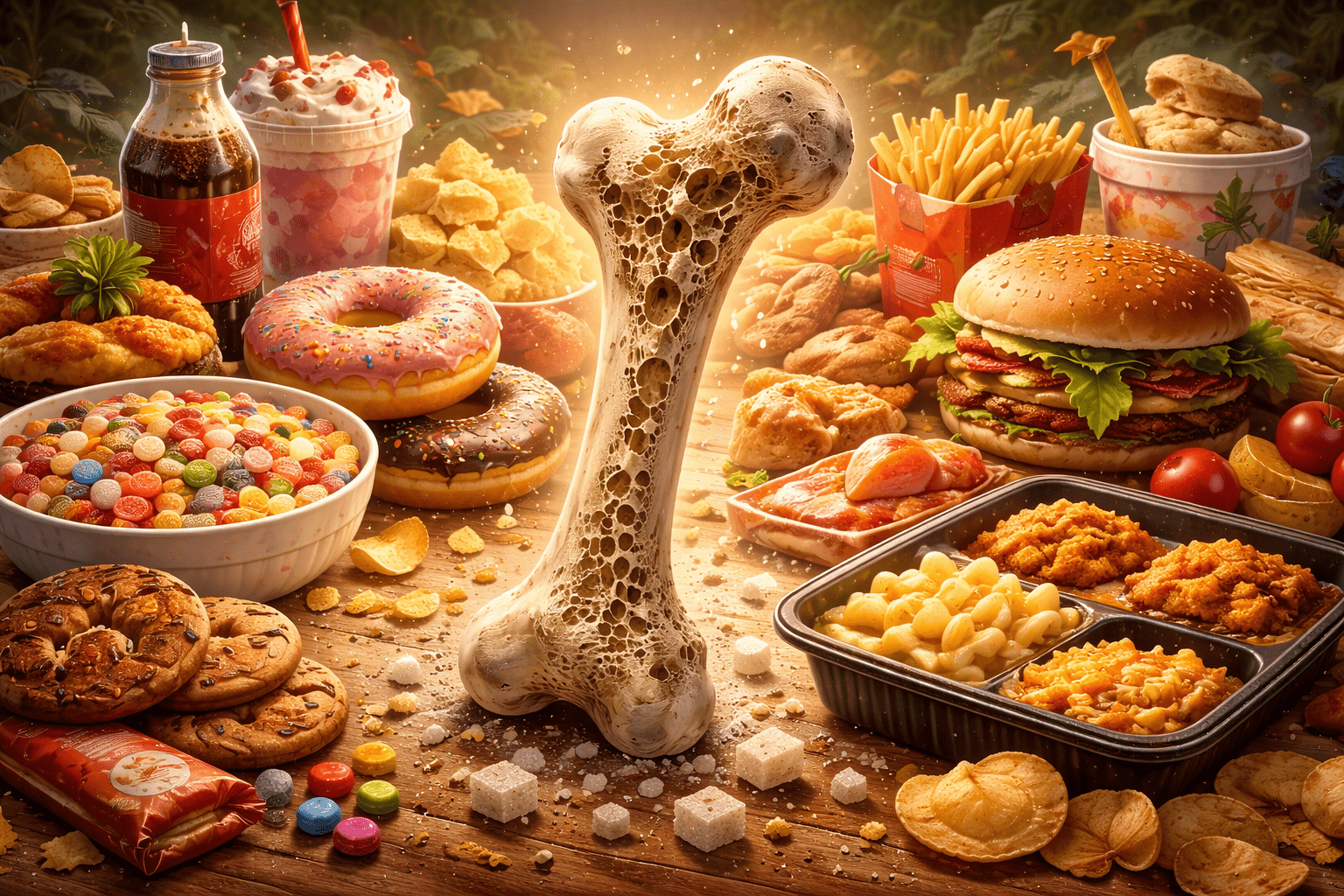
Ultra-processed foods and bone health: Who would have thought that foods meant to support your overall wellbeing could actually pose a risk to your bone health? A recent study published in the British Journal of Nutrition (BJN) revealed that what you eat every day such as ultra-processed foods (UPFs) might be quietly undermining your ability to avoid fractures.
The findings showed that consuming too much of ultra-processed foods (UPFs) is linked to a decline of bone mineral density and high-risk hip fracture. Although these foods have become common in the name of convenience, scientists warn that their effects on general health may be greater than what was originally conceived.
Method of the study
Researchers analysed over 1,60,000 participants of the UK Biobank, who were monitored in terms of their nutrition and the outcomes of their health during a period of over ten years. As per the study, participants consumed approximately eight portions of ultra-processed foods in a day on average. Additionally, with every extra 3.7 servings per day which is equivalent to a frozen meal, sugary drink and snack, the risk of hip fracture increased by 10.5 per cent.
Talking about the new findings, co-corresponding author of the study, Lu Qi, HCA Regents Distinguished Chair and Professor at the Celia Scott Weatherhead School of Public Health and Tropical Medicine at Tulane University, said, “Our study cohort was followed for over 12 years, and we found that high intakes of ultra-processed foods were linked to a reduction in bone mineral density at several sites including key areas of the upper femur and the lumbar spine region. While recent studies have shown that ultra-processed food consumption can affect bone health, this is the first time this relationship has been examined directly in humans.”
Why ultra-processed foods may affect bone health
Scientists assume that there are several reasons that led to this connection. It is important to note that highly processed foods tend to be deficient in vital minerals like calcium, vitamin D and phosphorus which are some key constituents required to have strong bones. At the same time these foods can cause inflammation further contributing to bone loss. Healthcare professionals point out that lifestyle factors may hurt your bone, such as eating high amounts of processed food may decrease your mobility, thereby affecting the amount of mechanical stimulation required to keep bones strong.
Younger Adults Also At Risk
Among the most alarming results of the study is that this condition is not limited only to older adults. The finding showed that low bone density was extremely high among those who were below 65 years and those who were underweight. Additionally individuals who have a lower body mass index (BMI) can be more susceptible to the impact of unhealthy eating habits.
The Centres for Disease Control and Prevention (CDC) notes that even slight changes in the diet, e.g. a greater intake of whole foods, fruits, vegetables and foods rich in calcium can help you in maintaining your bone health.
Disclaimer: The information provided in this article by Healthwire Media is for general informational and educational purposes only. It is not intended to replace professional medical advice, diagnosis, or treatment. While we strive to provide accurate and up-to-date information based on trusted sources such as WHO, Mayo Clinic, and government health guidelines, medical information can change over time. Always consult a qualified doctor or healthcare professional before making any health-related decisions, especially if you have any existing medical conditions or concerns. Do not ignore or delay seeking medical advice based on information you have read on this website. For more details, please read our full Medical Disclaimer page.
- Better Bone Health
- Bone
- Bone Health Diet Risks
- Diet Impact On Bones
- Effects Of Processed Food On Bones
- Food Habits Bone Loss
- Nutrition And Bone Health
- Processed Food Bone Damage
- processed foods
- Side Effects Of Ultra Processed Food
- Study On Ultra-processed Foods
- Ultra-processed Food Risks
- Ultra-processed Foods Bone Health
- Unhealthy Diet Bone Strength















Leave a comment