

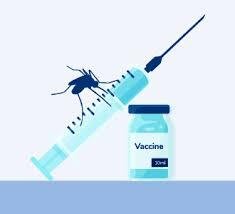
The Qdenga vaccine, also known as TAK-003, was pre-approved by the World Health Organization (WHO) in May and has shown promising results in the fight against dengue. Developed by Japan-based Takeda Pharmaceutical Industries Limited, this vaccine has been reviewed in a comprehensive global study involving more than 20,000 participants. The findings indicate that the Qdenga vaccine has more than 50% efficacy in reducing dengue cases, with lasting effects and a good safety profile.
Global Review Highlights Success
This “first comprehensive global” review analyzed data from 19 studies, making it one of the most extensive evaluations of a dengue vaccine to date. The review included participants from various parts of the world, with 13 of the studies focused on regions in Asia and South America, where dengue is most prevalent.
The study revealed that over 90% of both adults and children who received the two-dose vaccine developed an immune response against all four variants (serotypes) of the dengue-causing DENV virus. This is a significant finding, as dengue has four different serotypes, and immunity against all is crucial for effective prevention.
The Vaccine’s Strong Safety Profile
“Given the results in terms of safety, immunogenicity, and efficacy, the administration of two doses can undoubtedly be a key tool for dengue prevention,” said Maria Elena Flacco from the University of Ferrara, Italy. She is the lead author of the study, which was published in the journal Vaccines.
The Qdenga vaccine is a live-attenuated vaccine, meaning it contains weakened versions of the four DENV serotypes. Despite being a live vaccine, it has shown an excellent safety profile. The study found that the vaccine’s immunogenicity, or its ability to provoke an immune response, was over 90% effective against all four DENV serotypes in both adults and children. This effectiveness was observed in individuals who had no prior exposure to the dengue virus (seronegative) and those who had previously been infected (seropositive).
Single-Dose Effectiveness and Long-Term Safety
The study also explored the effectiveness of a single dose of the vaccine. It found that more than 70% of adults and over 90% of children and adolescents developed antibodies against the virus after just one dose. Although the full two-dose regimen offers more comprehensive protection, these findings suggest that even a single dose could provide significant immunity, especially in regions where access to healthcare is limited.
Additionally, one of the studies included in the review followed a large group of participants for 4.5 years, providing robust evidence of the long-term safety and immunogenicity of the Qdenga vaccine.
Strategic Partnerships to Increase Vaccine Access
In February, Takeda and Hyderabad-based Biological E Limited announced a strategic partnership to accelerate access to the Qdenga vaccine. Although it is not yet approved for use in India, this partnership aims to scale up production and make the vaccine more widely available. Biological E plans to ramp up its manufacturing capacity to produce up to 50 million doses a year, supporting Takeda’s goal of producing 100 million doses annually within the next decade.
The Growing Threat of Dengue
Dengue is a mosquito-borne disease caused by the DENV virus, which spreads to humans through the bite of infected female Aedes aegypti mosquitoes. Symptoms can range from high fever, severe headache, muscle and joint pain, to rashes. In severe cases, dengue can be fatal.
Currently, about half of the world’s population is at risk of dengue. The number of cases has increased dramatically in recent decades, from over 500,000 reported cases in 2000 to 5.2 million in 2019, according to the WHO.
The Role of Climate Change
Climate change is exacerbating the spread of dengue, as warmer temperatures and higher humidity expand the habitat of mosquitoes that carry the virus. As a result, dengue outbreaks are occurring in more countries, including those in Europe and the eastern Mediterranean. While the Qdenga vaccine has shown promising results, its full impact on global dengue prevention is still being evaluated. Currently, dengue prevention relies heavily on controlling the mosquito population, as there is no specific treatment for the disease. The Qdenga vaccine, with its strong safety profile and lasting effects, could be a crucial tool in reducing the global















Leave a comment