

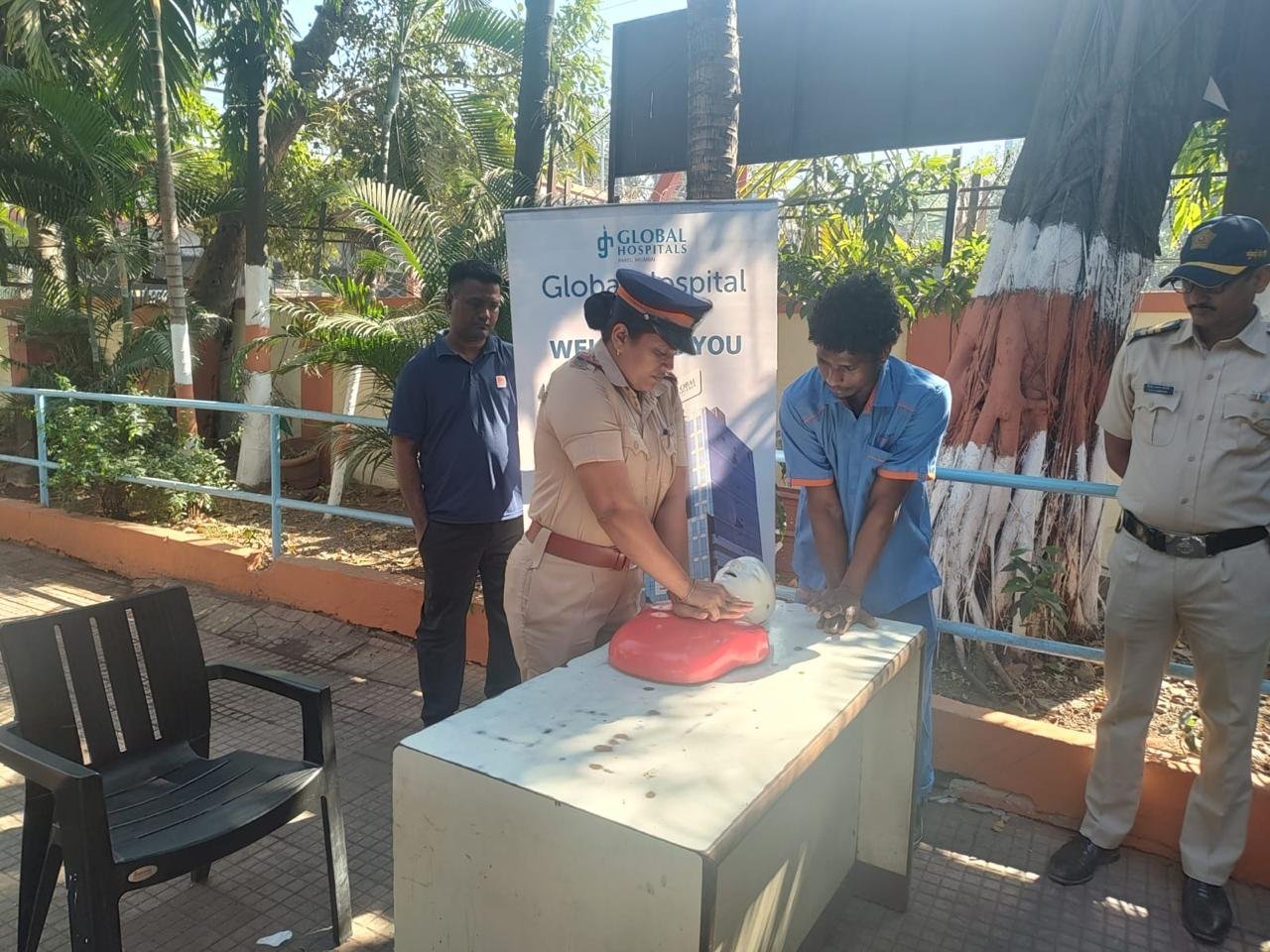
Cardiopulmonary Resuscitation (CPR) stands as a crucial and potentially life-saving technique, merging chest compressions and rescue breaths to revive individuals whose hearts have ceased. Despite its frequent portrayal in movies and TV dramas, the real-world impact of CPR is immense. Acquiring hands-on CPR training endows individuals with the ability to act promptly in emergencies, bridging the gap between life and death.
CPR, an emergency procedure designed to sustain blood circulation and oxygenation when the heart stops, involves chest compressions to maintain blood flow to vital organs and rescue breaths to provide oxygen to the lungs. Organizations like Global Hospital in Mumbai’s Parel are offering CPR sessions, stressing the importance of early intervention and proper technique.
In response to the increasing instances of cardiac emergencies, Global Hospitals in Parel organized a one-hour CPR training session at Matunga Police Station, benefiting around 25 police officials. The objective was to equip them with the skills to handle emergencies and underscore the significance of CPR training.
In cardiac emergencies, time is critical; every minute without CPR reduces the chance of survival by approximately 10%. Rapid initiation of CPR can significantly increase a person’s chances of survival, especially in situations where emergency medical services may take crucial minutes to arrive. Bystanders trained in CPR become the first line of defense in such scenarios.
“Cardiac arrest afflicts a significant portion of the population, and over 90% of those who experience it outside of the hospital tend to lose their precious lives. CPR training during cardiac emergencies is a vital skill that can mean the difference between life and death. It equips individuals with the knowledge and confidence to provide immediate assistance to someone experiencing a sudden cardiac arrest. By learning CPR, one becomes empowered to take decisive action in critical situations, potentially saving the lives of others. Time is of the essence when it comes to assisting in a sudden cardiac arrest, and those trained in CPR are better equipped to act swiftly and decisively. When performed correctly, CPR can double or triple a person’s chance of survival during a sudden cardiac arrest” said Dr Sameer Pagad- Senior Consultant Interventional cardiologist.
Hands-on CPR training transforms ordinary individuals into potential lifesavers, whether at home, in the workplace, or public spaces. This decentralized approach to first response is vital when professional medical help is not immediately available. Communities greatly benefit when a substantial portion of the population is trained in CPR, creating a network capable of responding swiftly to emergencies.
Beyond individual empowerment, widespread CPR knowledge establishes a communal readiness to transform potential tragedies into opportunities for lifesaving intervention. Regardless of age, profession, or background, hands-on CPR training is a universal skill. In a world where emergencies can occur at any time, possessing the ability to perform CPR can be the decisive factor between life and death. Recognizing the significance of this skill and taking the initiative to learn CPR transforms ordinary citizens into extraordinary lifesavers.












Leave a comment