One question I often hear from parents is, “Doctor, we got new spectacles for our child a few months ago, but now the number has increased again. Should we be worried?”
It is natural to feel concerned when your child needs stronger glasses every time you visit the eye clinic. While some changes in eyesight can happen as children grow, a repeatedly increasing spectacle number deserves attention.
It could be a sign of progressing myopia, commonly known as short-sightedness.
Why Does My Child’s Spectacle Number Increase?
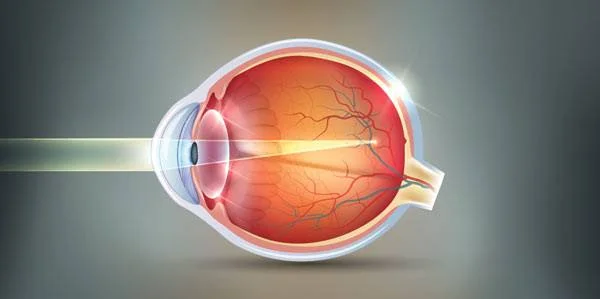
Myopia occurs when a child can see nearby objects clearly but distant objects appear blurred.
In many children, this happens because the eyeball grows longer than usual. As the eye continues to grow, the spectacle power may also increase.
Myopia often develops during childhood and can progress through the school years. Children who develop myopia at a younger age may have a greater chance of developing higher myopia later in life.
What Signs Should Parents Look Out For?
Children do not always realise that their eyesight is changing. Sometimes, their everyday habits tell us that something may be wrong.
Watch out for signs such as:
- Frequently squinting to see distant objects.
- Sitting very close to the television.
- Holding books or mobile devices very close to the face.
- Difficulty seeing the classroom board.
- Complaining of headaches or blurred vision.
- Needing stronger spectacles during successive eye examinations.
If you notice these signs, it is a good idea to arrange an eye examination.
Why Are Regular Eye Check-ups Important?
Simply changing the spectacle number may not be enough. It is equally important to understand how quickly myopia is progressing.
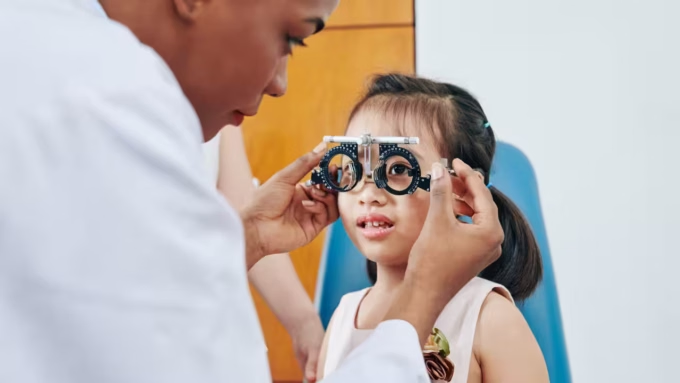
During an eye examination, the ophthalmologist may check the spectacle power, examine the health of the eyes and, where available, measure the length of the eyeball (axial length).
These checks help the doctor monitor changes and decide whether additional myopia management is needed.
Can We Slow Down Myopia Progression?
Yes. Several options may help slow myopia progression in suitable children. Depending on the child’s age and eye condition, the ophthalmologist may recommend:
- Atropine eye drops: Specific concentrations may help slow myopia progression.
- Myopia-control spectacle lenses: Specially designed lenses that aim to slow changes associated with eye growth.
- Specialised contact lenses: Certain lenses may help manage myopia progression in selected children.
- Orthokeratology (Ortho-K): Specially designed overnight lenses that temporarily reshape the front surface of the eye.
Along with these options, encourage outdoor activities, regular breaks during prolonged reading and screen use, and healthy daily habits.
The right treatment is different for every child, so regular follow-ups are important.
An Important Message to Parents
If your child’s spectacle number is increasing, please do not panic, but do not ignore it either.
Never start eye drops, change their concentration, use someone else’s spectacles or stop prescribed treatment on your own. Avoid following unverified advice from friends, relatives or social media.
Every child’s eyes are different. Always consult an ophthalmologist before starting, stopping or changing any treatment.
If your child experiences sudden loss of vision, flashes of light or a sudden increase in floaters, seek urgent eye care.
A Small Step Today Can Make a Difference Tomorrow
As parents, we may not always notice small changes in our children’s eyesight. That is why regular eye examinations are so important.
Early diagnosis, appropriate management and timely follow-ups can help us monitor myopia and take the right steps to protect children’s long-term eye health.
This National Myopia Week 2026 (14–20 November), let us come together under #ActOnMyopia – A Jan Andolan to Protect Children’s Vision and encourage every parent to pay attention to their child’s eyesight.
Because an increasing spectacle number is not something to ignore. The right attention at the right time matters.
Get Your Child’s Eyes Checked Regularly!
#ActOnMyopia | #NationalMyopiaWeek2026
The article is authored by Dr. Manoj Rai Mehta (MBBS, MD, PGDHCM, FICS). He is an ophthalmologist and eye surgeon with over 40 years of experience.