

Delhi Hospital Uses Magnetic Technology to Treat Rare Bile Duct Complication
In a significant breakthrough in innovative, advanced endoscopic gastrointestinal care, doctors at Sir Ganga Ram Hospital, New Delhi, have successfully treated a complex bile duct stricture using a novel Magnetic Technique. The minimally invasive procedure, one of the few of its kind performed in India, offers renewed hope to patients suffering from post-surgical biliary complications.
The liver is the most important part of the body for the digestion of food, as it produces about one litre of bile (the yellow colour you see in the vomitus) daily and stores it in the gallbladder through the cystic duct.
During the time of ingestion of meals 3 to 4 times a day, the gallbladder squeezes and pours the bile into the intestine for emulsification and digestion of food via an 8 cm long tubular structure called the bile duct.
Gall bladder surgery the most frequently performed surgery daily all over the world. Unfortunately, in some cases during surgery, there is an inadvertent injury to the bile duct (the duct draining the bile from the liver to the intestines) as it clipped at the level of the cystic duct during gall bladder removal.
The resultant injury to the bile duct may result in accumulation of bile in the liver, producing repeated attacks of inflammation, pain and collection of pus in the liver, requiring surgical intervention.
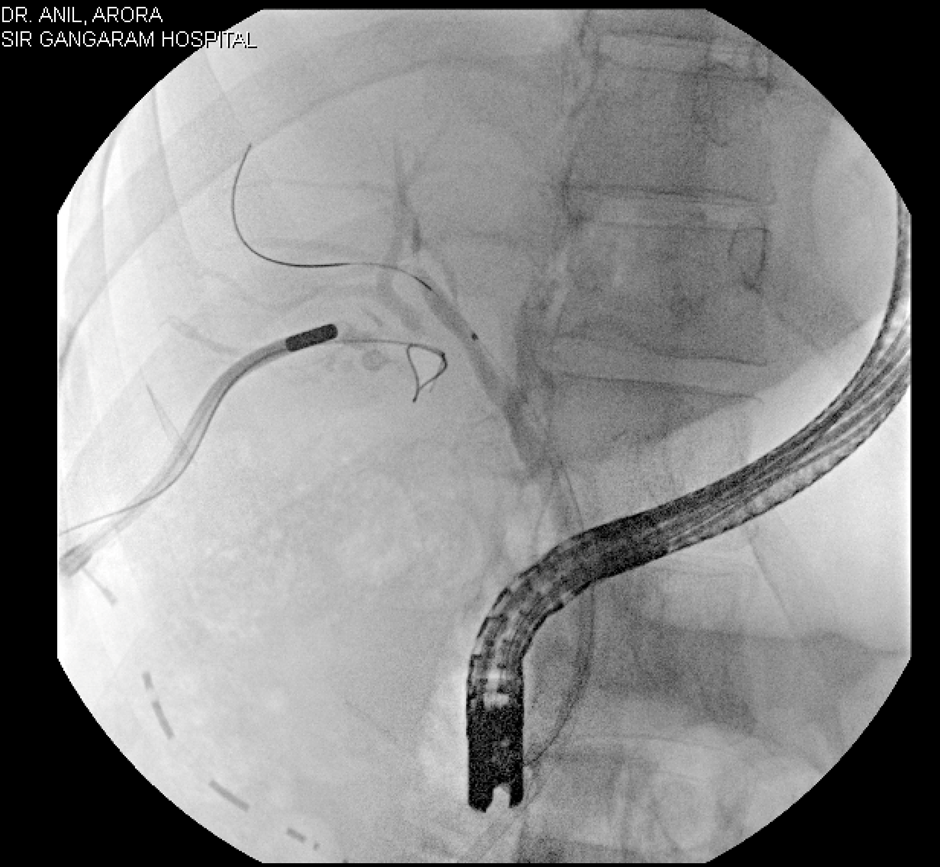
Our patient, a 45-year-old man, had undergone laparoscopic gallbladder removal (cholecystectomy) in 2020. He subsequently developed a bile leak and a severe narrowing of the bile duct. (Figure 1) Over the next two years, multiple ERCPs (Endoscopic Retrograde Cholangiopancreatography) were attempted at different centres without success. Subsequently, he was referred to Sir Ganga Ram Hospital under the care of Prof Anil Arora, Chairman of the Institute of Liver, Gastroenterology, and Pancreatico-Biliary Sciences.
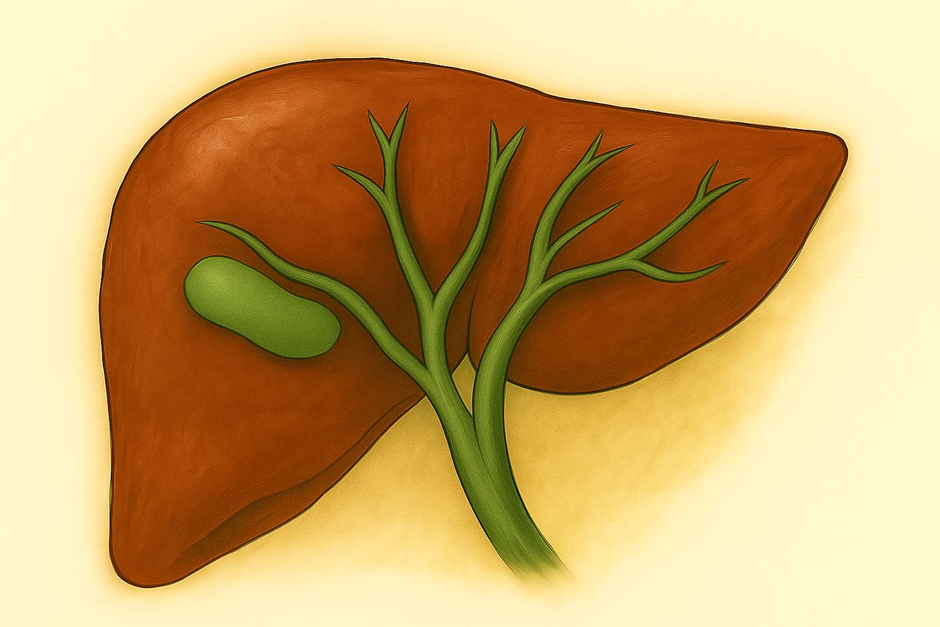
Figure 1 : Figure severe narrowing at injury site with upstream dilated right posterior intrahepatic duct.
The patient evaluated by a multidisciplinary team including Prof. Anil Arora, Dr. Shrihari Anikhindi, Dr. Shivam Khare, Dr. Umang Arora, Dr Raghav Seth and Dr Arun Gupta at Sir Ganga Ram Hospital.
Our team collaborated with Dr. Sanjay Rajput, an advanced endoscopy specialist from Ahmedabad, and Dr. Milan Jolapara, an interventional radiologist also from Ahmedabad, to apply a cutting-edge technique known as Magnetic Attraction Saves a Major Liver Surgery Delhi Hospital Uses Magnetic Technology.
Prof Anil Arora explaining the procedure in detail, said that as the two ends of the injured bile duct separated by a distance of 1.5 centimeters and were not getting bridged by the conventional technique of endoscopic intervention. So it planned to use two magnets at adjacent ends of the disrupted ducts in an effort for the Magnetic Attraction Saves a Major Liver Surgery Delhi Hospital Uses Magnetic Technology force to pull the separated ends together, and reunite them for a smooth passage of the bile from the liver into the intestine.
| 1st MAGNET INSERTED VIA PTBD |
Figure 2 : 1st magnet inserted through percutaneous tract via PTBD

Figure 3 : 2nd magnet then inserted via endoscopy (ERCP). Immediately the 2 magnets attracted towards each other and united to create an anastomosis.
Using specially designed endo-biliary magnets, we were able to create a new passage through the obstructed bile duct without needing a complex, debilitating open surgery,” said Prof. Anil Arora. (Figure 4,5) “This method is minimally invasive and highly effective in cases where conventional therapies for inadvertent bile duct injuries fail.”
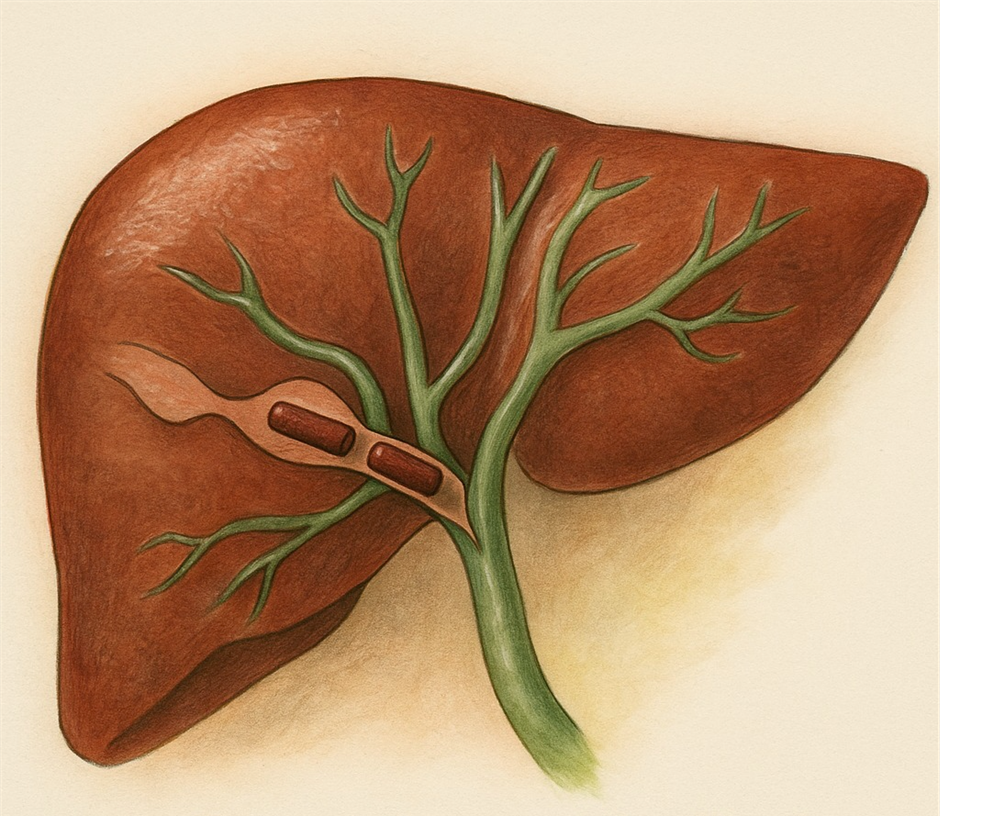
Figure 4 : Figure showing both magnets completely apposed creating an anastomosis. Cholangiogram shows unhindered flow of contrast.
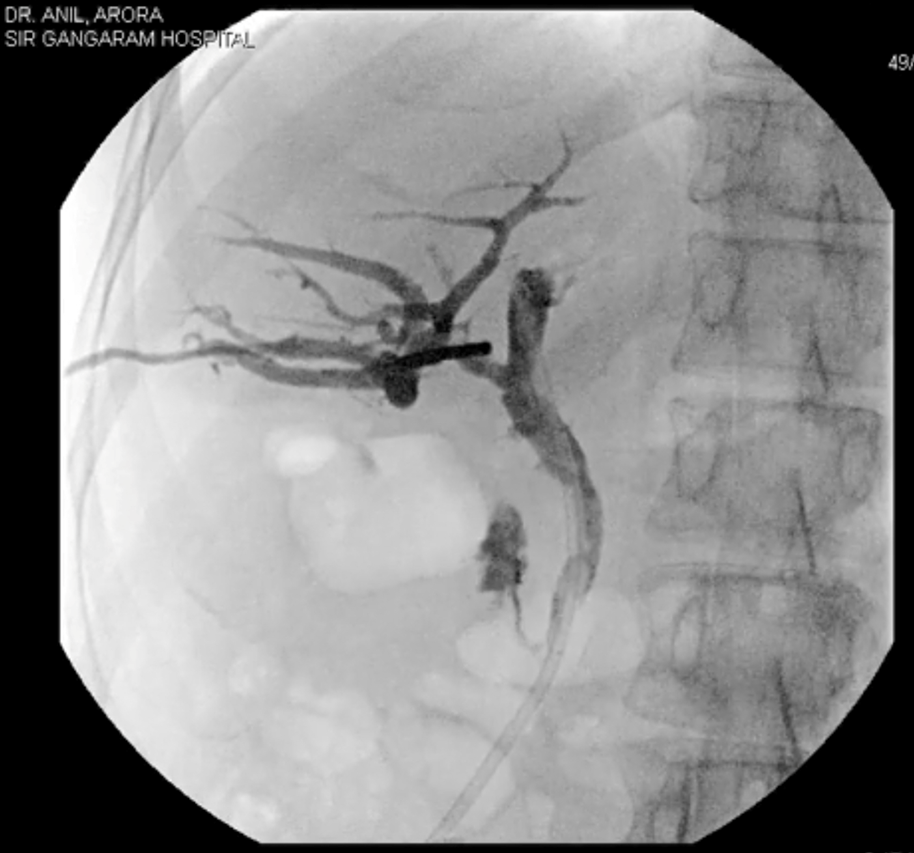
Figure 5 : ERCP showing magnets apposed with creation of new anastomosis
“This is a promising direction for managing benign strictures, especially when other options have exhausted,” said Dr. Sanjay Rajput. “It’s heartening to see such innovation applied in India.”
The patient has since recovered fully and is leading a normal life.
“After years of pain and failed attempts, I’m finally back to normal,” the patient shared. “I can’t thank the doctors enough for giving me a second chance.”
This case not only demonstrates the clinical success of magnet-assisted biliary interventions but also underscores the value of effective and fruitful collaboration between gastroenterologists, endoscopists, and interventional radiologists, bringing advanced and effective solutions to complex medical challenges in India.
This therapy of Magnetic Technology attraction to join the tubular disconnected structures can be useful in treatment of various medical condition which at present require a surgical therapy only.















Leave a comment