

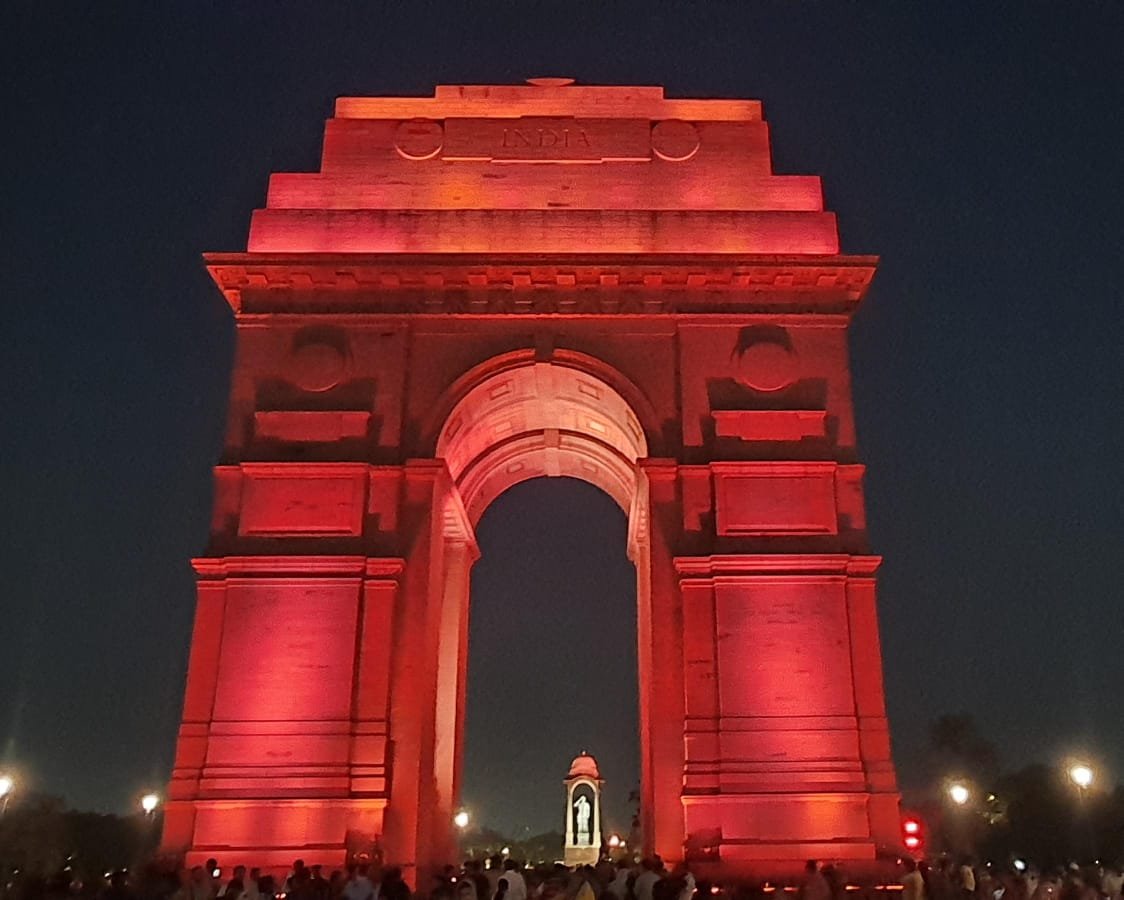
May 8, 2024, marks World Thalassemia Day. The theme of the event this year is “Empowering Lives, Embracing Progress: Equitable and Accessible Thalassemia Treatment for All.”
Thalassemia is a hereditary blood disorder that causes red blood cells, to break down too soon. Have a lifespan of 120 days, but thalassemia causes this to be reduced to roughly 10-20 days, resulting in anemia.
World Thalassemia Day serves as a crucial reminder to raise awareness about the condition, especially considering that over 10,000 children are born with thalassemia each year in India alone. Shockingly, half of these children do not survive past the age of 20 due to poverty and limited access to treatment. Globally, an estimated 100 million people carry the thalassemia genes, emphasizing the urgency of addressing this issue. To tackle this challenge head-on, Sir Ganga Hospital, Thalassemics India, along with the Indian Academy of Pediatrics Delhi, came together on World Thalassemia Day to organize an event at India Gate. The event comprised a morning walkathon followed by an evening ceremony where Dr. DS Rana, Chairman of Sir Ganga Trust Society, served as the Chief Guest, at the historic illuminating the India Gate in red, symbolizing unity with thalassemia patients and the ongoing fight against the condition.
The National Health Systems Resource Center’s Executive Director, Major Gen (Prof) Atul Kotwal, was there, along with doctors and nurses from various Delhi hospitals, to raise awareness on World Thalassemia Day.
While speaking on the occasion Dr. DS Rana, Chairman, Sir Ganga Trust Society also a renowned Nephrologist and Padma Shri Awardee, said that it is important to prevent the disease by identifying the carriers with simple blood test. In the last 20 years, over 55,000 pregnancies have been screened in Sir Ganga Ram Hospital and not a single patient of thalassemia has been born. On the other hand, more than one million Indians suffer from thalassemia and over four million are carriers of the disease.
Dr. Ajay Swaroop Chairman, Sir Ganga Ram Hospital highlighted “Thalassemia is a preventable disease and Sir Ganga Ram Hospital has the proud record of a zero thalassemia birth because of our dedicated unit of thalassemia which has been working over the years with empathy and zeal on this day I congratulate them and salute Sir Ganga Ram Hospital.”
Mr. Deepak Chopra, Thalassemics India President and Mrs. Shobha Tuli, Secretary, Thalassemics India, reiterated the role of prevention and screening for the control of thalassemia in India. They also informed that equitable care be given to each and every thalassemia child born in India. They have been instrumental in getting coal India to give funding for transplantation, bone marrow transplantation for thalassemia patients to the tune of rupees ten lakhs each. There is a dire need for a systematic approach to bring down the number of births due to thalassemia by focusing on area of the country which have high incidents of thalassemia carriers.
Further Speaking Dr. Anupam Sachdeva, Chairperson, Department of pediatrics at Sir Ganga Ram Hospital has mentioned “Thalassemia is a genetic disorder which can be prevented by screening of all the population. We can screen the patient with the help of a simple blood test and make a diagnosis of thalassemia trait by which we can prevent the disease completely. We want that sickle cell mission which was launched last year by the government of India. And also we should have a thalassemia mission so that we can combine both the missions and make it into hemoglobinopathies prevention mission. Sir Ganga Ram Hospital has Bone Marrow transplant center to cure this treatment”. While speaking further Dr. VK Khanna, Senior Consultant Pediatrics, Sir Ganga Ram Hospital mentioned “We are taking care of over 200 Thalassemics who are regularly getting blood in our unit. At the same time we have follow up of nearly 500 thalassemia patients in the outpatient department.”
On this World Thalassemia Day, let us pledge once more to spread the word about thalassemia, offer assistance, and fight for the rights and dignity of those who are affected by the disease. By working together, we can create a society in which everyone has the chance to live a happy and purposeful life, irrespective of their health.











Leave a comment