

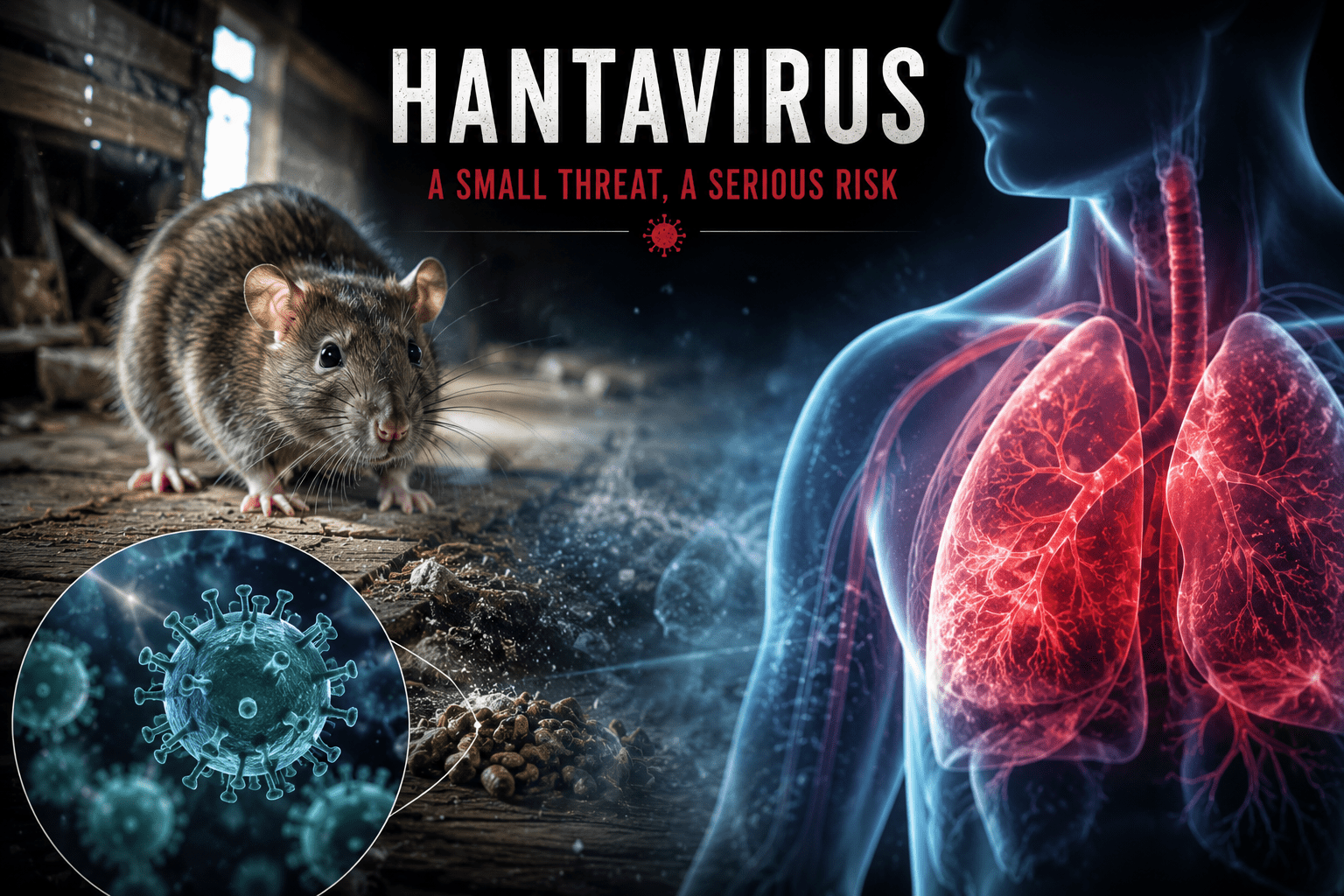
Hantavirus outbreak: Recent headlines around hantavirus have triggered concern, with many people wondering whether this rodent-borne infection could become another Covid-like global health emergency.
According to leading healthcare experts in India, the short answer is no. Hantavirus is not considered another Covid. It spreads differently, behaves differently, and does not currently show the same pattern of rapid human-to-human transmission that made Covid-19 a global pandemic.
Hantavirus refers to a group of viruses mainly carried by infected rodents. Humans can become infected when they come into contact with rodent urine, droppings, or saliva. The virus can also spread when tiny contaminated particles become airborne and are inhaled, especially while cleaning closed spaces such as storerooms, sheds, old houses, or poorly ventilated areas where rodents may have been present.
Why hantavirus is not like Covid
One of the biggest reasons experts are not comparing hantavirus to Covid is the way the infection spreads.
Covid-19 spread efficiently from person to person through respiratory droplets and close contact, which allowed it to move rapidly across communities and countries. Hantavirus, on the other hand, is mainly linked to exposure to infected rodents and contaminated environments.
Indian infectious disease experts say that routine human-to-human transmission is not the defining feature of hantavirus infections. This sharply limits the outbreak potential when compared with Covid-19.
That said, experts also point out that hantavirus should not be dismissed as harmless. Some forms of hantavirus infection can become severe and may affect the lungs or kidneys, making early awareness important.
What symptoms should people watch for?
Early symptoms of hantavirus can appear similar to many other viral illnesses, which is one reason the infection can be overlooked in its initial stages.
Common early signs may include fever, fatigue, muscle aches, headaches, and nausea. In some patients, symptoms may progress over the next few days and can lead to cough, breathing difficulty, chest tightness, or abdominal discomfort.
Doctors say the concern rises when breathing problems begin, because certain hantavirus infections can rapidly affect the lungs. This is why people with recent rodent exposure should not ignore flu-like symptoms that worsen quickly.
Should India be worried?
Government of India says no. Public health experts agree. The government, led by the Indian Council of Medical Research (ICMR) and the National Centre for Disease Control (NCDC), closely monitors hantavirus activity. Health officials have confirmed that the isolated cases, involving Indian nationals who were crew members on the cruise ship, are the only reported cases. The viruses pose no immediate public health threat to India, and there is no evidence of community transmission.
Director of the ICMR’s National Institute of Virology, Dr Naveen Kumar, said the cases appear to be isolated and pose no immediate public health threat to India. Kumar told PTI there is no evidence of community spread as of now.
Dr K Srinath Reddy, eminent public health expert and chancellor, PHFI University of Public Health Sciences; Dr Balram Bhargav, former DG, ICMR; and Dr Lalit Kant, former head, division of epidemiology and communicable diseases at ICMR, agree that there is, so far, NO risk for India.
How to reduce the risk of hantavirus infection
Prevention mainly depends on reducing exposure to rodents and contaminated dust.
People should avoid sweeping or vacuuming rodent droppings directly, as this can push contaminated particles into the air. Instead, experts advise using gloves, opening windows for ventilation, and disinfecting affected surfaces before cleaning.
Keeping food sealed, disposing of garbage properly, closing holes or cracks in walls, and controlling rodent infestation can significantly lower the risk of exposure.Hantavirus is not another Covid, and experts do not currently see signs of a Covid-like pandemic threat.
But the virus is still medically important because it can cause serious illness in some cases. The right approach is awareness without alarm. Knowing how hantavirus spreads, recognising symptoms early, and taking rodent-control precautions can go a long way in protecting health. Panic is unnecessary, but informed caution remains the smarter response.












Leave a comment