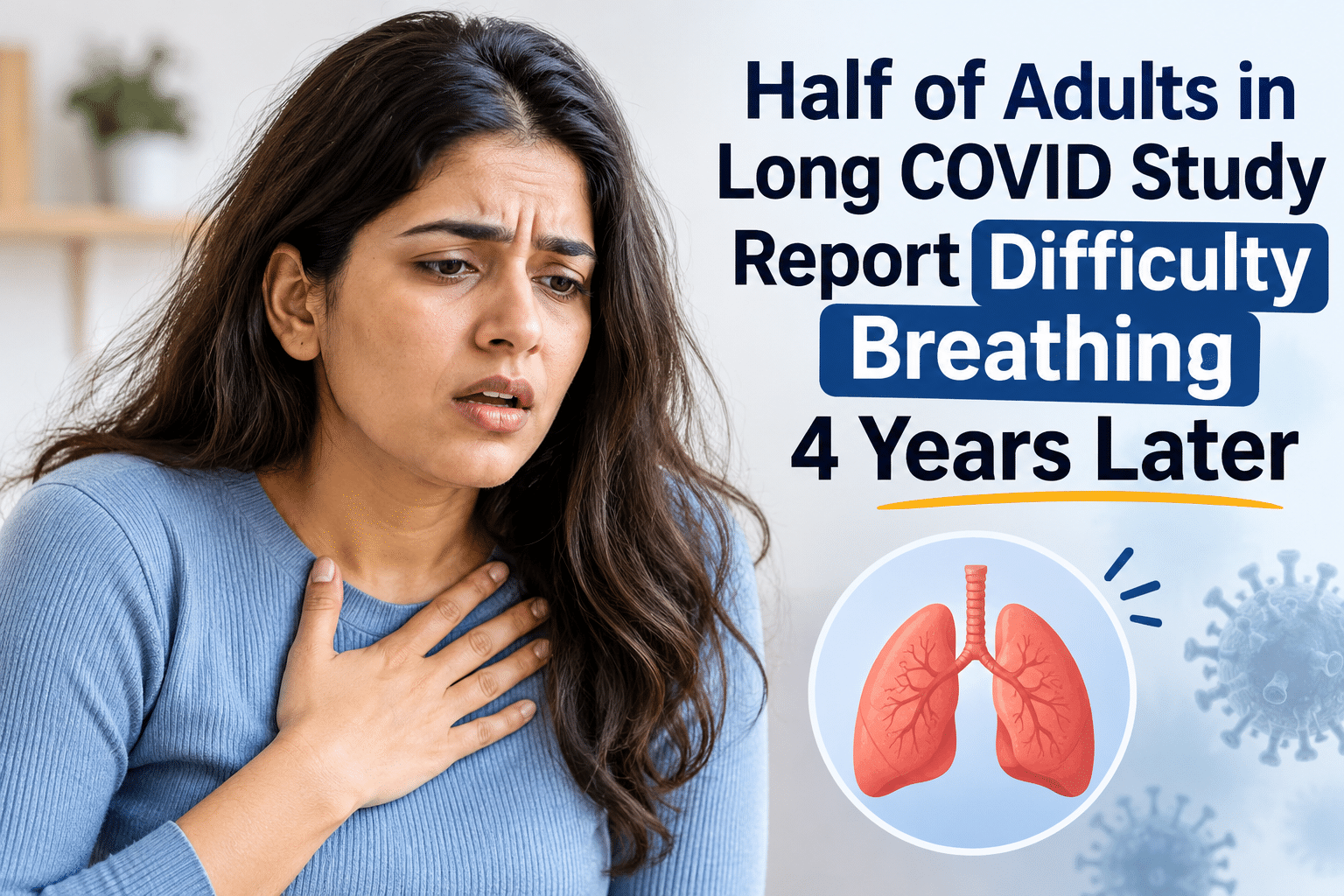
Most people have recovered from covid -19 but there are some people in India who are still experiencing the symptoms for months or even years which is affecting their daily activities. After taking covid vaccine , people still facing covid infection on respiratory health. A recent study has highlighted nearly half of the adults reporting difficulty in breathing.
Breathlessness can affect the day to day activities such as walking climbing, exercising. There are common symptoms which people also are facing shortness of breath, fatigue, muscle pain and chest discomfort. The duration of the symptoms is different from one person to another person.
There are a number of reasons why someone can continue to have breathlessness long after they’ve had COVID-19. It could be that the infection itself has caused inflammation or damage to the lungs and that’s affecting their ability to breathe. It could be changes in the respiratory muscles. They may simply have been less active than normal during the illness. There could be a number of other contributory factors as well.
Long COVID can sometimes affect the body’s tolerance to exertion, so people may find themselves breathless and exhausted doing things that previously required no effort at all. That said, ongoing breathlessness can have several different aetiologies, and it doesn’t follow that every case of breathlessness post-COVID is due to lung damage.
When should you seek medical attention?
A doctor may recommend appropriate investigations (lung function tests etc) depending on the symptoms and history. Treatment and rehabilitation may also be indicated to help with breathing, stamina and general functioning. A person emotional well- being can get affected with ongoing breathlessness. Due to this, people get worried or anxious during the activities.
Can recovery take time?
Recovery from Long COVID is very variable. Some people will go on to make a full recovery, others will require ongoing medical care and rehabilitation. In some cases healthcare professionals will recommend breathing exercises, supervised physio, plenty of rest and a slow return to physical activity. The findings serve as a reminder that the impact of COVID-19 can go on long after the initial infection. Being aware of the possibility of long term symptoms, getting the right medical advice and support at the right time can make a real difference to how people go on to manage their recovery and their quality of life.
People should not ignore these symptoms, and they should seek guidance from their doctor on how to gradually return to daily activities. In some cases, people may need to avoid strenuous physical activities and take adequate rest. Always consult a doctor if you experience worsening breathing difficulties. Keep track of your symptoms and discuss them with your healthcare professional, as this can help you manage long COVID more effectively. Maintaining a balanced routine, getting sufficient sleep and following medical advice can also support recovery and improve overall well-being.