


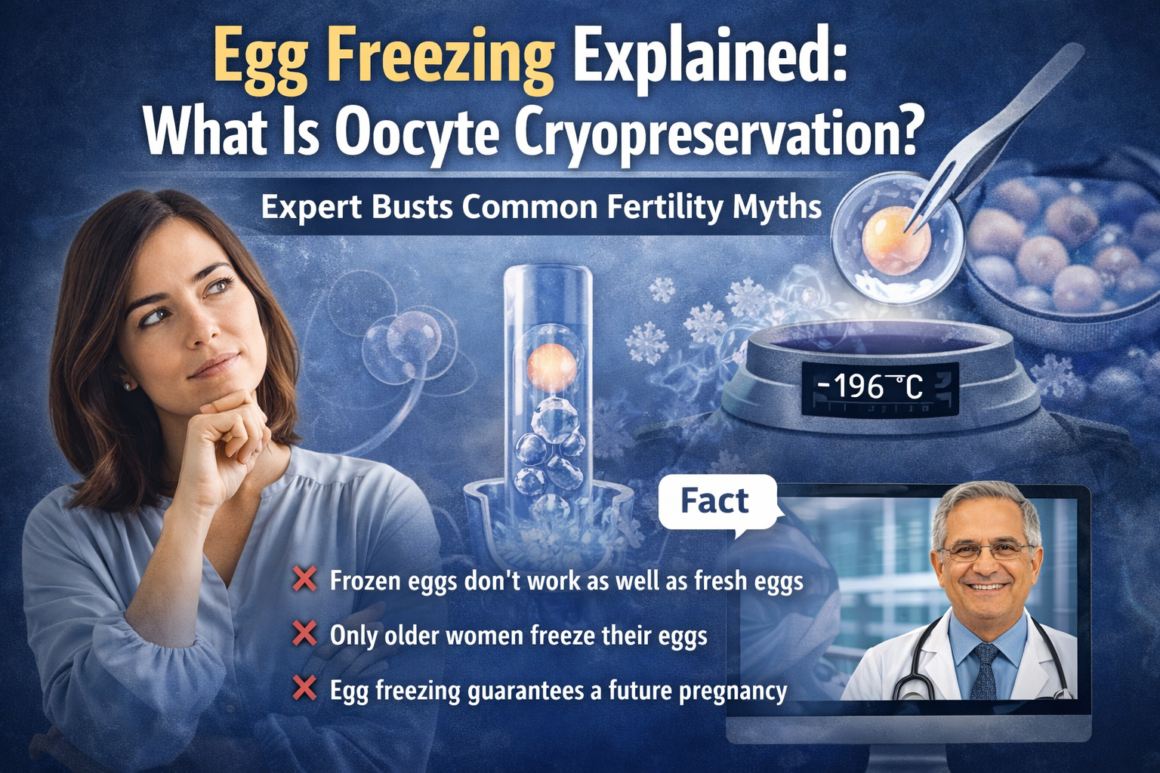
Egg freezing, medically known as oocyte cryopreservation, is an advanced fertility preservation technique that allows women to store their eggs for future use. Most of the women are now thinking about egg freezing. Some choose it early. Some consider it later. There are different reasons. For some, marriage is delayed. For others, a career is a priority. Many want the option to become a parent when they feel ready. But even today, there are many myths. These often confuse people. It’s time to dispel the air of confusion around these fertility myths.
Myth 1: Egg freezing is only for people getting cancer treatment
Dr Mahesh Koregol, National Strategy Group Director and Senior Clinical Director, Nova IVF Fertility, Koramangala, Bengaluru, says, “This was true in the beginning. It started as a way to protect fertility for patients getting chemotherapy. Now, many choose to freeze their eggs for other reasons. They may want children later. They may not feel ready right now. It’s a step taken before fertility starts to decline. Even those with no medical concerns are exploring this option as part of long-term planning.”
READ MORE: Silent Infections During Pregnancy: The Hidden Threat That Can Harm Your Baby Without Warning
Myth 2: Freezing eggs means a baby is guaranteed
Egg freezing protects fertility potential. But it’s not a promise. Success depends on several things. These include the age when the eggs are frozen, how many are retrieved, and how they grow later. Freezing before age 35 can give better results. But every case is different. The process improves chances, but it does not remove the natural variability of reproduction.
Myth 3: The procedure is painful or unsafe
With hormonal injections, 1012 days are administered. Then there is the egg retrieval. It is accomplished in about 20 minutes, usually under light sedation. After one or two days, most women are fine. The side effects tend to be minimal. There are not many big risks. With technology, it is much safer now. Clear instructions are also given by clinics, and recovery in most cases is easy.
READ MORE: Diabetes During Pregnancy May Raise Infection Risk in Babies, New Study Warns
Myth 4: Only married women do this
This is no more the case. A lot of unmarried women freeze eggs. It is not about being married or not; the decision depends on the person. It is set according to the desire of living and not the dictations of the society. With egg freezing, there is more time and room to plan. It allows people to flow in a process without hastening to make decisions that they are not prepared to make.
Myth 5: It’s too expensive for most people
The cost can seem high. But some workplaces now cover fertility options through employee benefits. Also, some women compare it with future IVF costs. For them, it feels like a smart decision. It’s not just about money—it’s about peace of mind. Thinking ahead often saves not just costs but emotional energy later on.
Fertility science is changing. The way people talk about it needs to change, too. For a long time, becoming a parent has been linked to age or marriage. But egg freezing gives women the chance to take a different path. It offers time. It offers choice. It’s not a shortcut—it’s a real, medical option. And the only way to make it less confusing is to clear up the myths and talk about it honestly.












Leave a comment