

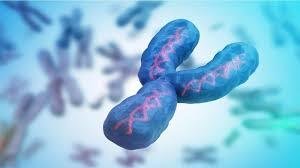
In humans and other mammals, the sex of a baby is determined by the presence of a Y chromosome. While females have two X chromosomes, males have one X and one Y chromosome. Despite being smaller and having far fewer genes than the X chromosome—about 55 compared to 900—the Y chromosome is crucial. Its primary job is to trigger the development of male characteristics, particularly by initiating the formation of the testis in an embryo.
This process begins around the 12th week of pregnancy. The Y chromosome’s master gene, called SRY (Sex-determining Region Y), activates a series of genetic steps that eventually lead to the formation of male reproductive organs. A key player in this process is another gene called SOX9, which is essential for male development in all vertebrates, not just humans.
Why Is the Y Chromosome Shrinking or Facing Extinction?
The Y chromosome wasn’t always so small. It used to be just like any other chromosome, but over millions of years, it has lost most of its genes. This is because the Y chromosome, unlike the X chromosome, doesn’t get a chance to mix and match genes with another chromosome during reproduction. Over time, this has led to a loss of genes and a shrinking chromosome.
Scientists have differing opinions on how long the Y chromosome will last. Some say it could vanish in just a few thousand years, while others believe it might survive for millions more. The possibility of its disappearance raises concerns about the future of male reproduction.
The Decline of the Y Chromosome
Most mammals, including humans, share a similar X and Y chromosome structure. However, this setup can cause problems because of the unequal number of genes between males and females. Interestingly, some animals, like Australia’s platypus, have completely different sex chromosomes, which look more like those of birds. This suggests that the X and Y chromosomes in mammals were once regular chromosomes that have since evolved.
Over the last 166 million years, since humans and platypuses diverged on the evolutionary tree, the Y chromosome in humans has shrunk dramatically. From having around 900 genes, it now contains just about 55. If this trend continues, the Y chromosome could disappear within the next 11 million years. This has sparked a debate among scientists: Will the Y chromosome vanish completely, or will it somehow stabilize?
Are There Any Cases Where Males Have Survived Without a Y Chromosome?
The potential loss of the Y chromosome is alarming, but there is some good news. Two groups of rodents—the mole voles from Eastern Europe and the spiny rats from Japan—have already lost their Y chromosome. Surprisingly, these rodents are not only surviving but thriving. In these species, both males and females have only X chromosomes, with the Y chromosome and the crucial SRY gene completely gone.
A research team led by Dr. Asato Kuroiwa from Hokkaido University studied the spiny rats and found something remarkable. They discovered that most of the genes from the Y chromosome had moved to other chromosomes, but the SRY gene was missing. Instead, they found a small duplication near the SOX9 gene on chromosome 3 in male spiny rats. This duplication appears to have taken over the role of the SRY gene, effectively creating a new way for male sex determination without the Y chromosome.
Is It Possible for Men to Reproduce Without a Y Chromosome in the Future?
The idea that the Y chromosome could disappear in humans raises many questions, particularly about reproduction. In mammals, including humans, sperm is necessary for reproduction, so men are essential for the continuation of our species. But if the Y chromosome were to vanish, how would male reproduction work?
What Does the Future Hold for Humanity?
The disappearance of the Y chromosome might not spell the end of humanity, but it could lead to significant changes in how we reproduce and even how our species is structured. If new sex-determination systems evolve in different parts of the world, we could see the emergence of distinct human species, each with its own unique way of determining male and female sex.
In a scenario where someone visits Earth in 11 million years, they might not find humans as we know them today. Instead, they might encounter several different human species, each with its own set of sex chromosomes. While this is just a possibility, it highlights the incredible adaptability of life and the ongoing evolution of our species.
















Leave a comment