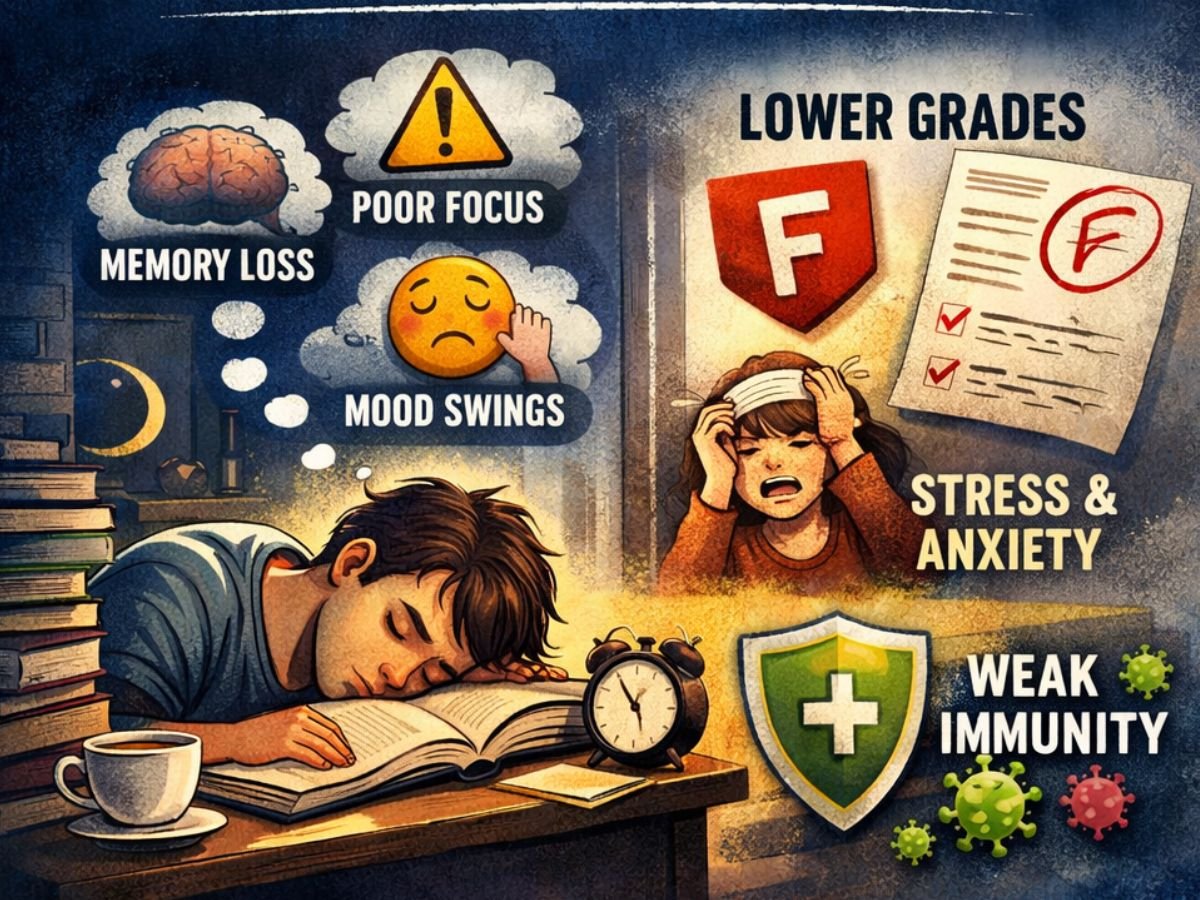
For many students, exams come with a familiar routine: late-night coffee, endless revision notes, and the belief that sacrificing sleep is the only way to succeed. Pulling an all-nighter has almost become a badge of honour in academic culture.
But the truth is far less heroic — and far more harmful.
Sleep deprivation doesn’t just make students feel tired. It directly affects the brain’s ability to concentrate, manage emotions, and retain information. In fact, studying all night may actually reduce academic performance rather than improve it.
Let’s understand why.
The Myth of the All-Nighter
Students often assume that more hours awake equals more learning. But the brain doesn’t work like a machine that can run endlessly without rest.
Sleep is not “wasted time.” It is when the brain processes what you studied during the day, strengthens memory, and resets focus for the next morning.
Skipping sleep may give you extra hours with your books, but it takes away the brainpower you need to actually perform well.
How Poor Sleep Affects Concentration
One of the first things sleep deprivation damages is attention span.
When students don’t get enough rest:
- The brain struggles to stay alert
- Focus becomes inconsistent
- Simple mistakes increase
- Problem-solving slows down
Research shows that even one night of poor sleep can impair concentration as much as being mildly intoxicated. That means a sleep-deprived student may read the same paragraph repeatedly without understanding it.
During exams, this can lead to:
- Misreading questions
- Forgetting steps in calculations
- Difficulty recalling answers
In short, less sleep equals less sharpness.
Sleep Loss Weakens Memory and Learning
Studying is not only about absorbing information — it’s about remembering it at the right moment.
Sleep plays a key role in memory consolidation, the process where the brain stores learned material into long-term memory.
Without enough sleep:
- Facts remain scattered in short-term memory
- Recall becomes harder during exams
- Learning feels incomplete
That’s why students often experience “blanking out” in exam halls after pulling an all-nighter.
Your brain may have read the notes, but it never got the chance to properly store them.
Mood Swings, Stress, and Anxiety Increase
Sleep deprivation doesn’t only affect academics — it deeply affects emotional health.
Lack of sleep makes the brain’s emotional control centre more reactive. Students become:
- Irritable
- Easily overwhelmed
- More anxious
- Less motivated
During exams, this emotional instability can lead to panic, self-doubt, and even burnout.
A tired brain interprets stress as bigger than it really is, making exam pressure feel unbearable.
Poor Sleep Lowers Academic Performance
Ironically, the very thing students sacrifice sleep for — better marks — often suffers the most.
Studies consistently show that students who sleep 7–9 hours perform better than those who stay up late cramming.
Sleep-deprived students are more likely to experience:
- Slower thinking
- Reduced creativity
- Poor decision-making
- Lower exam scores
Academic success depends more on brain efficiency than on extra hours of exhausted studying.
Physical Health Takes a Hit Too
Exam-time sleep deprivation doesn’t just affect the mind — it affects the body.
Chronic lack of sleep can cause:
- Weakened immunity (more frequent illness)
- Headaches and fatigue
- Digestive issues
- Hormonal imbalance
- Increased risk of long-term health problems
Students may notice they fall sick right after exams — often because their bodies were running on stress instead of rest.
Better Alternatives to All-Night Studying
Instead of sacrificing sleep, students can improve results through healthier strategies:
1. Study in Short, Focused Sessions
The brain learns better in chunks than in marathon sessions.
2. Revise Earlier, Not Later
Spaced repetition works far better than last-minute cramming.
3. Prioritise Sleep Before Exam Day
Even one good night’s sleep improves memory recall and focus.
4. Avoid Screens Before Bed
Blue light from phones delays melatonin, making sleep harder.
5. Use Active Recall Techniques
Practice questions and self-testing are more effective than rereading notes. Exams may feel like a race against time, but sacrificing sleep is not the shortcut students think it is.
Sleep deprivation harms concentration, worsens mood, weakens memory, and ultimately lowers academic performance. Instead of studying all night, students should view sleep as part of their preparation — not the enemy of success.
Because the best exam strategy isn’t staying awake longer. It’s making sure your brain is fully awake when it matters most.