

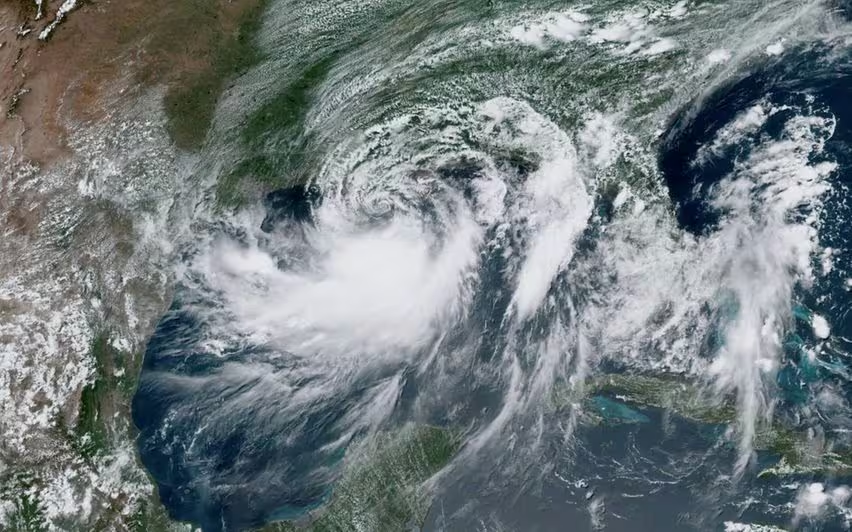
New Delhi, 27 October, 2025: Cyclone Montha, forming over the central Bay of Bengal, is steadily intensifying and is expected to make landfall between Machilipatnam and Kalingapatnam, near Kakinada, on the evening or night of October 28.
The India Meteorological Department (IMD) has placed almost the entire coastal belt of Andhra Pradesh on high alert, warning of extremely heavy rainfall and gusty winds as the cyclone nears.
A total of 23 out of 26 districts have been placed under red and orange alerts, indicating a potential for severe weather conditions over the next 48 hours. Authorities have begun large-scale preparedness efforts to minimize the cyclone’s impact.
What the Alerts Mean
- Red Alert: Signals a severe weather situation requiring immediate action. Extremely heavy rainfall (more than 20 cm in 24 hours) and strong winds are expected.
- Orange Alert: Indicates heavy to very heavy rainfall and the need for preparedness and caution.
Under these alerts, residents are advised to stay indoors, avoid travel to coastal areas, and follow all safety instructions from local authorities.
Districts on High Alert
The IMD has placed the following regions under red alert:
SPSR Nellore, Prakasam, Bapatla, Krishna, West Godavari, Dr. B.R. Ambedkar Konaseema, and Kakinada.
An orange alert has been issued for adjoining districts, including Guntur, East Godavari, NTR, Anakapalli, and Visakhapatnam, where heavy rainfall and strong winds are also expected.
Expected Impact and Forecast
Meteorologists predict that the system will intensify into a severe cyclonic storm before making landfall.
Wind speeds are expected to reach 90–100 km/h, with gusts touching 110 km/h during landfall.
As the cyclone approaches, very heavy rainfall is expected across coastal Andhra Pradesh, with isolated extremely heavy showers likely in low-lying and coastal zones. Neighboring states such as Odisha and Tamil Nadu may also experience heavy rains and rough sea conditions.
Preparedness Measures Underway
The Andhra Pradesh government has placed all districts on alert, directing district collectors and police officials to activate emergency control rooms and prepare for possible evacuations. Relief camps have been set up in vulnerable areas, and food, water, and medical supplies have been stocked in advance.
All leaves for disaster management, police, and revenue department officials have been canceled to ensure round-the-clock monitoring.
Teams from the National Disaster Response Force (NDRF) and State Disaster Response Force (SDRF) have been deployed in sensitive districts, along with boats, generators, and emergency communication systems.
Shelters and cyclone relief centers have been readied along the coastal belt to accommodate evacuees from low-lying regions.
The state government has also advised fishermen to suspend fishing activities in the Bay of Bengal until further notice, as sea conditions are expected to remain rough to very rough.
Schools Closed, Power and Transport Precautions
In anticipation of the cyclone’s landfall, the state has announced the closure of schools and colleges in vulnerable coastal districts for at least two days.
Power utilities have been directed to ensure uninterrupted electricity supply to hospitals and emergency centers while preparing for temporary shutdowns in high-risk areas to prevent electrical hazards.
Public transport services, including inter-district buses and trains, are being closely monitored. Authorities have advised residents to avoid non-essential travel during the cyclone period.
What Residents Should Do
Authorities have urged citizens in affected areas to follow safety precautions strictly. Key recommendations include:
- Stay Indoors: Avoid venturing out during heavy winds or rain.
- Secure Loose Items: Fasten roofs, windows, and outdoor objects that could become airborne.
- Avoid Coastal Areas: Stay away from beaches, rivers, and other low-lying zones.
- Prepare Emergency Kits: Keep torches, batteries, clean water, dry food, and first-aid supplies ready.
- Follow Official Updates: Track IMD bulletins and local administration advisories.
- Evacuate if Advised: Cooperate with authorities and move to designated shelters promptly.
Residents have also been advised to switch off electrical connections during heavy rain and avoid standing under trees or near power lines.
Potential Risks
Meteorological data suggests the possibility of storm surges up to 1–1.5 meters in coastal regions at the time of landfall, potentially inundating low-lying areas.
There is also a risk of flooding, waterlogging, and damage to standing crops such as paddy and coconut plantations in delta regions.
Strong winds may uproot trees, damage thatched and weak structures, and disrupt power and communication networks in the immediate aftermath of the cyclone.
Authorities have also warned of possible landslides in hilly areas due to continuous rainfall.
Why Cyclone Montha Formed
Cyclone Montha originated as a low-pressure system over the central Bay of Bengal earlier this week, gradually intensifying due to warm sea surface temperatures and favorable wind patterns.
Meteorologists note that this is part of a broader trend in the Bay of Bengal’s increasing cyclone frequency and intensity, driven by changing climate patterns.
With each year, post-monsoon cyclones are forming closer to the coast and gaining strength more rapidly.
Post-Landfall Forecast
After landfall, Cyclone Montha is likely to move inland across north-coastal Andhra Pradesh and southern Odisha, gradually weakening into a deep depression.
However, it is expected to continue bringing moderate to heavy rainfall across interior districts for the next 24–36 hours.
Farmers have been advised to harvest mature crops early and store them safely to prevent damage from prolonged rains.
Government Coordination and Relief Planning
The state disaster management authority is coordinating with central agencies and defense forces to ensure swift response capabilities.
Helicopters, rescue boats, and emergency communication vehicles have been stationed at strategic locations to reach affected areas quickly once the cyclone passes.
Hospitals across coastal districts have been placed on alert, with emergency wards and backup generators ready for operation.
Medical teams, ambulances, and veterinary staff have also been deployed to cyclone-prone areas.
Relief materials — including tarpaulins, food packets, blankets, and drinking water — are being pre-positioned in community shelters. The government has also arranged mobile kitchens to provide cooked meals if power outages occur.
Appeal to the Public
Authorities have appealed to the public to remain calm but vigilant. Rumor-mongering and the spread of misinformation on social media have been strongly discouraged.
Residents are urged to rely only on official updates from the IMD, disaster management authorities, and local administration channels.
The public is reminded that early evacuation and preparedness are key to zero casualty goals during cyclones.
Citizens have been asked to help elderly and disabled neighbors reach safe shelters if evacuation orders are issued.
Broader Climate Context
Meteorologists note that the Bay of Bengal has become a hotspot for severe cyclonic systems due to rising ocean temperatures.
In recent years, cyclones such as Titli, Fani, and Gulab have highlighted how vulnerable eastern India remains to intense tropical storms.
Climate experts emphasize that urban planning, improved drainage systems, and coastal vegetation belts will be crucial in minimizing future cyclone impacts.
Long-term investments in early warning systems and sustainable coastal infrastructure are seen as the best defense against the growing frequency of such disasters.
Preparedness Is the Best Protection
As Cyclone Montha moves closer to the Andhra Pradesh coast, all agencies are on high alert to ensure safety and minimize damage. The IMD continues to monitor the system closely, issuing updated forecasts every six hours.
While the storm’s impact may vary across regions, proactive preparation, responsible behavior, and community cooperation remain the most effective ways to stay safe.
With coordinated efforts between government authorities and citizens, Andhra Pradesh hopes to achieve zero loss of life and minimal damage when Cyclone Montha makes landfall.
















Leave a comment