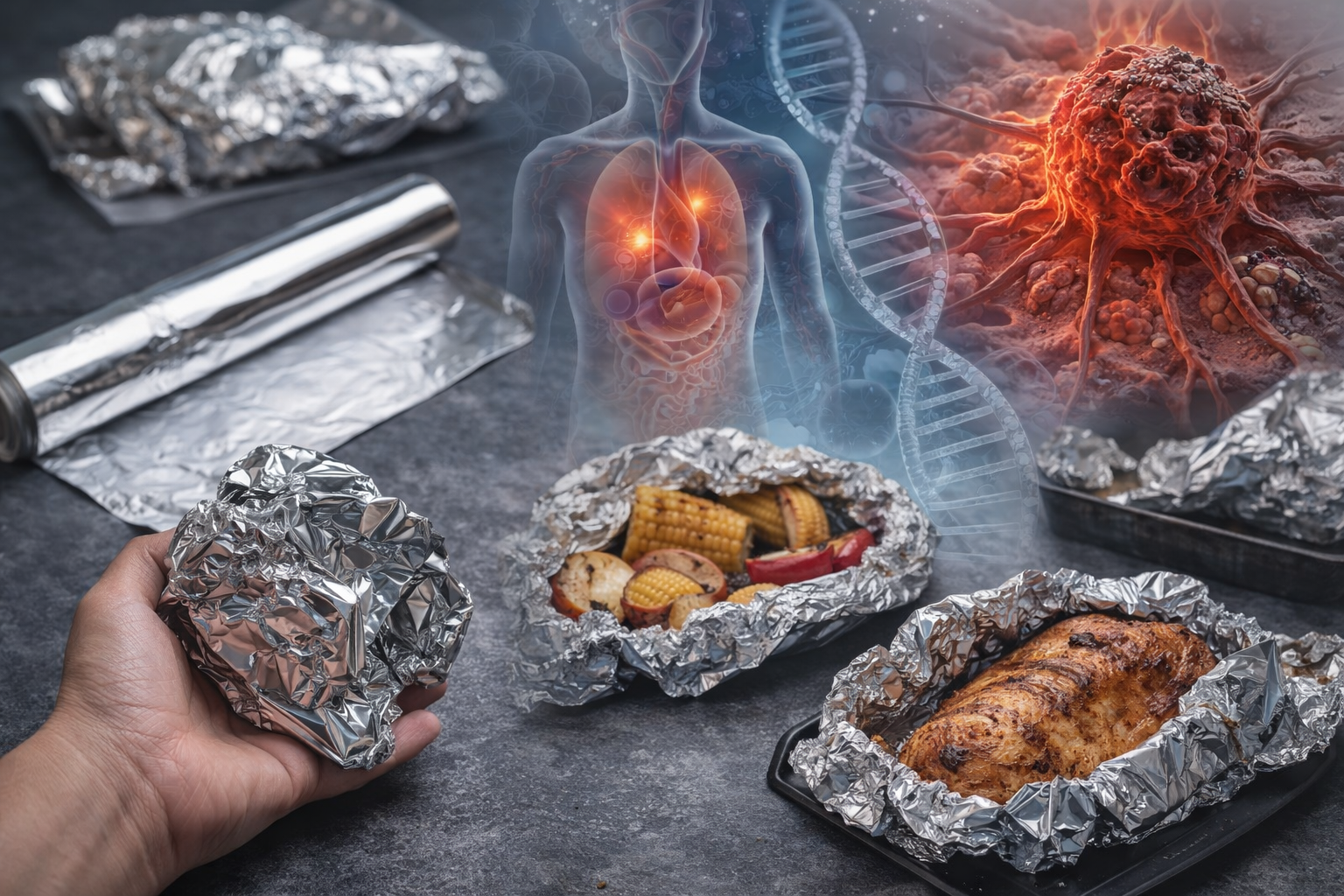
Most kitchens have aluminium foils. It is used in wrapping leftovers and also in lining baking trays, as well as in cooking and food storage. However, in the last couple of years, there have been some apprehensions that are posted on the internet questioning whether the aluminium foil may lead to cancer. Then are these allegations true? Here’s what the research actually indicates on the risks of exposure to aluminium and the cancer risk.
Aluminium Foil On Food? Harmful Impacts On Health?
Aluminium foil is composed of fine sheets of aluminium metal. Small quantities of aluminium can be drained into food when it is used in food preparation, particularly at high temperatures. It occurs more frequently when there is the preparation of acidic or spicy food, such as tomatoes, food containing citrus or vinegar.
The National Institute Of Health says, “The occurrence of aluminum ions in food and especially secondary food contamination with aluminum represents a risk for consumers also since elements such as zinc, magnesium, and iron are important for organisms, and no scientific studies have indicated that aluminium plays an important role for a living organism”.
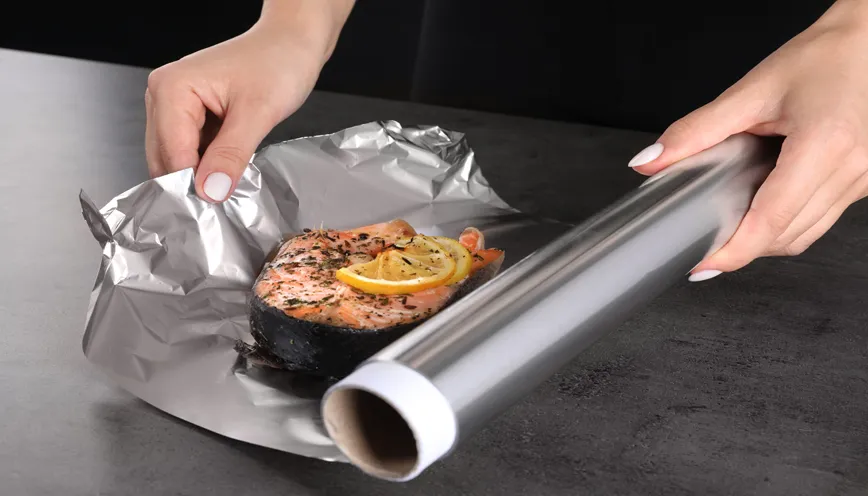
At the moment, there is no serious scientific evidence confirming that the use of aluminium foil leads to cancer.
- The use of aluminium foil as a cooking cover has not been classified as a carcinogen by major health organisations such as World Health Organisation WHO and other food safety organizations.
- The majority of studies that have been conducted on aluminium exposure have been based on other possible health outcomes, including neurological outcomes.
- Even there, evidence is inconclusive and is not directly connected to serious diseases such as cancer with the use of aluminium foil.
- Cancer is usually caused by complex factors including heredity, lifestyle smoking habits and dietary habits and environmental toxins, and continuous exposure to known carcinogens.
- Aluminium foil that is used in normal cooking has not been found to be among them.
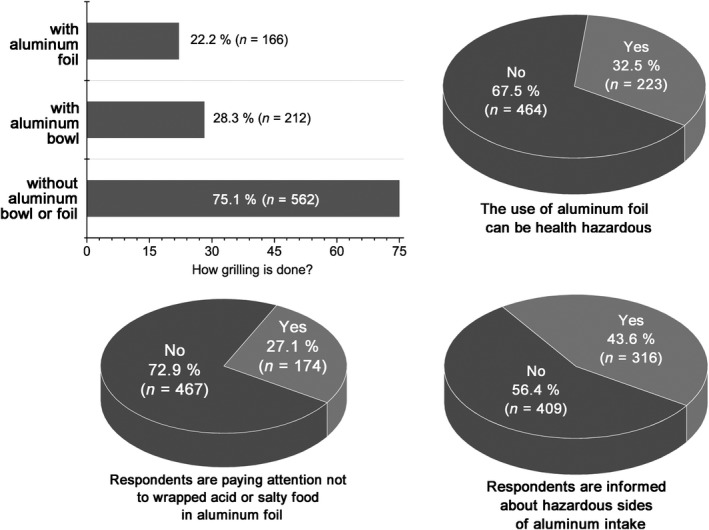
Source: NIH
When Should You Be Careful And Who Is At Higher Risk?
Scientists have established a reasonable amount of aluminium that should be consumed per week. Even the small quantities of foil that can leak out during cooking are usually significantly below toxic amounts to the majority. As a matter of fact, we experience aluminium with food, water, drugs, antacids and even with the natural source in soil.
If you are using aluminium foil, here’s what you need to take care of
- It is not advisable to cook highly acidic foodstuffs in foil over extended periods.
- Hot, acidic food should not be stored using aluminium foil for long periods.
- Where possible, use substitutes such as parchment paper, glass containers or stainless steel cookware.
- The steps taken are more on minimising unnecessary exposure than on the prevention of cancer.
People who are exposed to higher risks are:
- Children are more prone to a higher risk as they absorb more aluminium than adults.
- Reduced Kidney Function can also lead to the accumulation of aluminium.
- Workers who are exposed to more aluminium can handle and breathe in aluminum more, which again puts them to more danger.
According to the existing scientific findings, the use of aluminium foil to cook does not have a proven association with a higher risk of cancer. Global health authorities consider that levels of aluminium to which one is exposed to when using normal kitchen utensils are safe however just to keep yourself safe you should see if swapping between various cooking materials can provide some reassurance.
Disclaimer: Dear readers, this article provides general information and advice only. It is not at all professional medical advice. Therefore, always consult your doctor or a healthcare specialist for more information. Healthwiremedia.com does not claim responsibility for this information.