

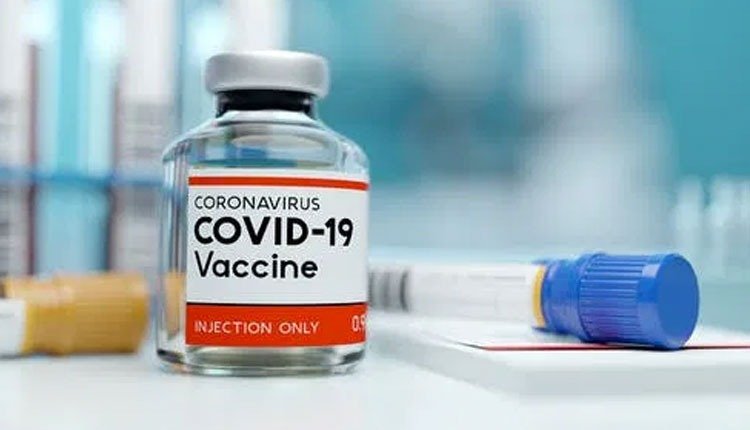
It’ll most likely be several months until the Covid-19 vaccine is available to most Indians. But once it is, how long will it take for life to get back to pre-pandemic normal?
Do health experts have an idea of roughly how many people in India need to get the vaccine in order to for there to be “herd immunity”?
India is the largest buyer of Covid-19 vaccines in the world with 1.6 billion doses, according to a global analysis. Some estimates suggest it is enough to cover 800 million people, or 60 per cent of its population. It is considered to be enough to develop herd immunity in India’.
India has purchased 500 million doses of the Oxford University-AstraZeneca vaccine candidate, one billion from the US company Novavax and 100 million doses of the Sputnik V candidate from Russia’s Gamaleya Research Institute, according to the US-based Duke University Global Health Innovation Center.
The Launch and Scale Speedometer’ analysis, which is updated every two weeks, shows India has confirmed 1.6 billion doses of three vaccines as of 30 November while the US and the EU have purchased doses of six candidates.
According to the analysis, India is the top Covid-19 vaccine buyer followed by the European Union which has confirmed 1.58 billion doses, and the US, the worst affected country so far, which has managed to purchase just over a billion doses.
In November, Union Health Minister Harsh Vardhan said 400-500 million doses of Covid-19 vaccines were estimated to be made available for 250 to 300 million (25 crores to 30 crores) people in India by July-August 2021.
All the vaccines ‘pre-booked’ by India are manufactured by Indian companies — Oxford-AstraZeneca and Novavax by Serum Institute of India (SII) in Pune and Sputnik V by Dr. Reddy’s Lab in Hyderabad.
India’s domestic vaccine candidate by Bharat Biotech also entered Phase 3 clinical trials this week.
“Bharat Biotech and Zydus-Cadila would also add about 400 million doses annually. In brief, the numbers appear reasonable over 2021 and 2022,” said Jameel.
“We can expect the first 250 million to be vaccinated in 2021; the remaining in the following years. The problem will not be vaccine doses, but the ability to deliver them,” Jameel explained.
He noted that 1.6 billion doses would cover 800 million people or 60 per cent of India’s population. This, the virologist said, should be enough to develop herd immunity, a form of indirect protection from infectious disease that occurs when a sufficient percentage of a population has become immune to infection.
The first 500 million doses, the virologist said, are likely to go to 250 million people in the group that includes frontline workers, healthcare workers, sanitation, emergency services, and security services. This group also includes the elderly above 65 and patients with comorbidities.
“There is currently no particularly reliable estimate of the percentage of community coverage needed to be vaccinated in order to reach the point of ‘herd immunity’. The reliability of models being used for these estimations is far from clear”, Immunologist Satyajit Rath said.
“Since all the vaccine candidates that are being discussed as purchased have two-dose vaccine regimens, the current number for India would vaccinate, at best, 80 crore (800 million) people. This, of course, does not account for logistical losses, which can be substantial,” Rath, from the National Institute of Immunology (NII) in New Delhi, told a news agency.
“Also, this seems to imply that Covid-19 vaccination is a one-time exercise. But it is not clear how long the vaccine-mediated protection will last, and therefore it is not clear when repeat vaccination will be needed, and how that will be delivered,” he added.
Flagging some uncertainties about the COVID dose purchases, Rath said he is ? curious? about the “confirmed” purchase by India.
“Have these been paid for or at least committed to at a given price, are these acquisitions through the COVAX program or independent of it, and most of all, of course, what is the delivery schedule agreed to in this acquisition, etc.”
Rath also noted that it is difficult to predict how many will be immunized, and when.
“The next set of uncertainties I have is whether there are credible and well-worked out plans in India to match these delivery schedules with downstream transport, uptake and actual vaccination, plans for multi-stage transport, multi-point cold storage, provision of injection accessories…, the recording-keeping needed and most of all, the skilled personnel to administer the injections.”
In Rath’s view, a certain sector of healthcare workers will likely be immunized in the next few months, as well as a certain proportion of ‘first responder’ people at high occupational risk of infection. Beyond that, we are simply whistling in the wind at this stage, he said.












Leave a comment