Home COVID 19 Govt Asks People To Use Same Mobile Number For Both First And Second Covid Jabs, Here’s Why
COVID 19Latest NewsSpotlight

Govt Asks People To Use Same Mobile Number For Both First And Second Covid Jabs, Here’s Why

Share
The Co-WIN has successfully served as the digital backbone for India's Covid vaccination programme, the ministry said in a statement.
Share

“Important Notice: Ensuring Second Dose Scheduling with Same Mobile Number for COVID-19 Vaccination”

The government has said that after receiving the first Covid vaccine shot, a beneficiary needs to book a slot or avail of the second dose with the same mobile number used at the time of the first dose for both doses to be tagged to the same beneficiary.

“Clarification on Second Dose Scheduling and Co-WIN Glitches: Health Ministry Statement”

In case a beneficiary uses a separate mobile number for the second dose and schedules a vaccination, it will automatically be recognised as first dose for the beneficiary, the health ministry said, amid some media reports claiming that technical glitches in Co-WIN have resulted in two first dose certificates being issued to 2.5 lakh beneficiaries in Pune.

The Co-WIN has successfully served as the digital backbone for India’s Covid vaccination programme, the ministry said in a statement.

It has enabled the administration of over 190 crore doses of Covid vaccination for over 100 crore residents of the country who are registered on the platform, it said.

Such scale has been achieved without a single day of down-time, the ministry said.

An individual only needs to provide their mobile number for registration, along with minimal inputs in name, age (year of birth) and gender for scheduling an appointment for vaccination or availing a vaccine at walk-in.

As proof of identity, an option to choose from nine photo identity proofs has been accorded.

“However, it must be noted that after receiving the first dose of vaccination, a beneficiary needs to schedule for or avail the second dose of the same vaccine with the same mobile number used at the time of first dose of vaccination. This is the only mechanism for both the first and second dose details to be tagged to the same beneficiary,” the statement said. “In case a beneficiary uses a separate mobile number for the second dose and schedules a vaccination, it will automatically be recognised as a first dose for the beneficiary. Furthermore, the same identity proof is not allowed to be used across two different mobile numbers,” it said.

There is a provision for scenarios where an individual may have provided two different identity proofs under the same mobile number registered.

If the name, age and gender matches as per the photo ID proofs submitted by the beneficiary, CoWIN prompts for merging the two first dose certificates to give a single fully vaccinated certificate for both the doses, the statement said. The assumption that the system must recognise the two first dose certificates of a beneficiary registered with two different mobile numbers and photo ID proofs, is “preposterous”, it said.

“With a country of a billion plus, there may be hundreds of thousands of individuals with the same name, age, and gender. If such a service was provided, we would be left chasing our own tail, praying another individual with the same name, age and gender didn’t exist in the country,” the ministry said.

“Hence, calling a manual data-entry error a technical glitch is a baseless argument,” it said. There could be a scenario where a beneficiary gets their first dose of vaccination along with their spouse or parent, under the other person’s mobile number and their driving license, and the same beneficiary gets their second dose individually under their own mobile number with their PAN card, the statement said.

It should come as no surprise that the beneficiary would end up with two different first dose certificates, as the system would rightfully recognise these as two different individuals, it said.

“Ensuring Accuracy and Resolution: CoWIN’s Grievance Management and Certificate Merge Features”

Additionally, while such a manual data-entry error may have occurred, the CoWIN system is not ignorant to such possibilities and provides a robust grievance management system, the statement said. Always open to public feedback, CoWIN has built a feature called ‘Raise an Issue’ on the online portal. Eight issues that were commonly observed and widespread have been incorporated for individuals to digitally rectify, with a provision at CSCs and a helpline to call upon, it said. Similarly, any individual could also merge their two first dose certificates with ease, provided there is a match in name, age and gender and the two registered accounts are known to the individual, the statement said.

CoWIN is a versatile platform which has scaled up for the entire population of the country at a record speed, it said.

“It is rather disappointing to see a human error being characterised as a ‘technical glitch’ to discredit the competence of the team maintaining this digital public good day and night,” the statement added.


Read More: Ayushman Bharat Digital Mission Aims to Revolutionize Healthcare

Share

Leave a comment

Leave a Reply

Your email address will not be published. Required fields are marked *

Don't Miss

Air Pollution
Health News

Delhi Chokes Under Toxic Air: Schools Shut, Offices Go Work From Home — How to Stay Safe

New Delhi, 23 December, 2025: Delhi once again finds itself gasping for breath as air pollution levels surge to hazardous levels, pushing authorities...

Colorectal cancer
Latest News

Cervical Cancer Awareness Month 2026: Screening Tips Every Woman Should Know

Cervical cancer is one of the most preventable forms of cancer, yet it remains a leading cause of cancer-related deaths among women globally....

Bird Flu
Latest News

Bird Flu Alert: How to Protect Yourself Without Panicking

Bird flu, also known as avian influenza, is a viral infection primarily affecting birds but capable of infecting humans in rare cases. The...

Latest News

Why Walking 30 Minutes a Day Can Add Years to Your Life

Walking for just 30 minutes a day is one of the simplest yet most effective ways to improve overall health, enhance longevity, and...

Latest News

5 Common Foods That Are Slowly Damaging Your Liver

The liver is one of the most vital organs in the body, responsible for detoxification, metabolizing nutrients, and regulating essential biochemical processes, and...

Section title

Related Articles
Cancer
Latest News

Immunotherapy vs Chemotherapy: Which Cancer Treatment Works Better?

Cancer treatment has evolved rapidly over the past few decades, offering patients...

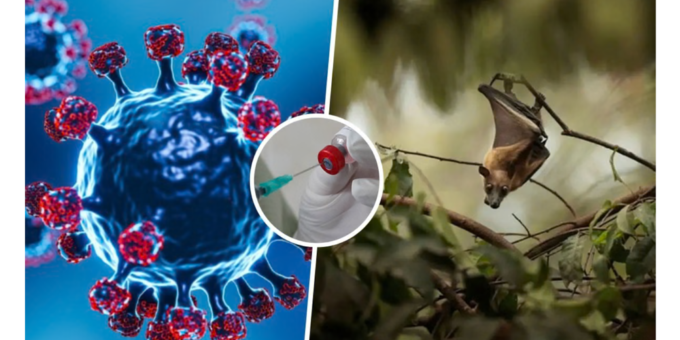
The Nipah virus is considered one of the deadliest zoonotic infections globally, not because it spreads rapidly like influenza or COVID-19, but because of its extremely high fatality rate, rapid progression, and severe brain involvement. Medical experts warn that once symptoms escalate, the disease can turn fatal within days. According to available data, the case fatality rate of Nipah virus ranges between 50 and 75 per cent, placing it among the most lethal viral infections known to humans. In this explainer, Dr Dip Narayan Mukherjee, Consultant – Microbiology and Infectious Diseases, CK Birla Hospitals, CMRI, sheds light on why the virus is so dangerous and difficult to control. Why Is the Nipah Virus So Deadly? According to Dr Mukherjee, Nipah’s lethality lies in a combination of delayed symptom recognition, aggressive disease progression, and early involvement of the brain. “Nipah virus often begins with very non-specific symptoms, which makes early detection difficult. By the time it is clinically suspected, the virus may have already affected the brain,” he explains. Early Symptoms Often Go Unnoticed One of the biggest challenges in controlling Nipah virus is that its initial symptoms closely resemble common viral illnesses, leading to delays in diagnosis and isolation. Early symptoms include: Fever Headache Cough Muscle pain General weakness “These symptoms are easily mistaken for flu, viral fever, or respiratory infections,” says Dr Mukherjee. “This delay gives the virus time to progress silently.” Severe Brain Infection Drives High Mortality The most dangerous aspect of Nipah virus infection is its neurological involvement. The virus frequently causes encephalitis, or inflammation of the brain, which significantly increases the risk of death. Neurological symptoms may include: Seizures Confusion and altered consciousness Extreme drowsiness Coma “Once the central nervous system is involved, the disease becomes very difficult to manage,” Dr Mukherjee notes. “At this stage, treatment is largely supportive because there is no specific antiviral therapy available.” This lack of targeted treatment options makes early detection critical. Human-to-Human Transmission Raises Risk While Nipah virus is primarily transmitted from fruit bats, it can also spread from person to person, particularly in healthcare settings. Dr Mukherjee points out that: Caregivers and healthcare workers are at higher risk Exposure to high viral loads can worsen outcomes Inadequate infection control increases transmission risk “Strict adherence to infection control practices is essential. Even a small lapse can result in secondary infections,” he says. Zoonotic Nature Makes Exposure Hard to Predict Nipah virus is transmitted from fruit bats, either directly or through intermediate hosts such as pigs. This zoonotic pattern makes outbreaks unpredictable, especially in regions where humans, animals, and wildlife interact closely. Adding to the challenge: There is no approved vaccine Treatment options remain limited Isolation protocols must be strictly enforced What Can Reduce Nipah Fatalities? According to experts, early action remains the most effective defence against Nipah virus. Key measures include: Early isolation of suspected cases Strict use of personal protective equipment (PPE) Rapid escalation and referral to specialised centres Strong hospital infection control protocols “The earlier the virus is identified and contained, the better the chances of preventing severe disease and fatalities,” Dr Mukherjee emphasises. The Bottom Line Nipah virus continues to be a serious public health threat because of its high fatality rate, neurological complications, and lack of targeted treatment. Its ability to masquerade as a mild illness in the early stages makes vigilance crucial. Health experts stress that awareness, early suspicion, and strict infection control are currently the most powerful tools to reduce deaths linked to this deadly virus. As Dr Mukherjee concludes, “With Nipah, time is the most critical factor. Early recognition can save lives.”
Latest News

Why Nipah Virus Has a High Fatality Rate: Factors Affecting Disease Severity

The Nipah virus is widely regarded as one of the deadliest zoonotic...

Latest News

Stroke Risk in India: Symptoms and Urgent Action Steps

Stroke is a leading cause of death and disability in India, yet...

Latest News

Silent Struggle: Over 15 Million Indians Live with Epilepsy, Experts Stress Early Diagnosis and Care

Epilepsy, a neurological disorder that causes recurrent seizures, affects more than 15...

×