

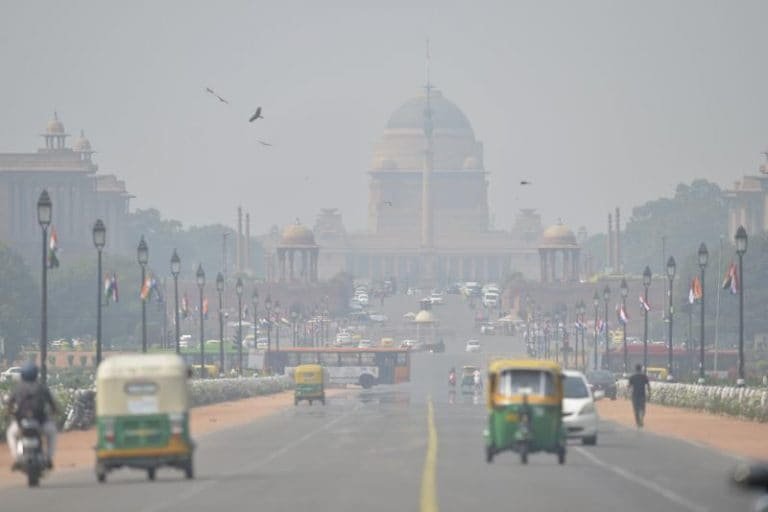
For the first time in thirteen years, the Aam Aadmi Party government in Delhi increased the cost of Pollution Under Control (PUC) certificates on Thursday.
The updated costs for pollution under control (PUC) certificates are Rs 110 for larger vehicles and four-wheelers that run on gasoline, CNG, or LPG, and Rs 80 for two- and three-wheelers.
Furthermore, a fee of Rs 140 is charged for pollution checks on vehicles powered by diesel.
“We have decided to revise the rates in response to the Delhi Petrol Dealers Association’s long-pending demands and to keep up with the rising costs of pollution checking services,” stated State Transport Minister Kailash Gahlot.
“We remain committed to maintaining Delhi’s air quality and making sure that all vehicles meet the necessary pollution standards,” he continued.
Every vehicle must have a current Pollution Under Control (PUC) certificate within a year of the date of registration, per the Central Motor Vehicles Rules (1989).
More than 85% of the vehicles operating in the city without Pollution Under Control (PUC) certificates are two-wheelers, according to data from the transport department. There are currently over 97 lakh registered vehicles in Delhi, made up of 69.8 lakh two-wheelers and 27.8 lakh cars. Unbelievably, about 22 lakh cars do not have the necessary PUC certificates.
Over 85% of the city’s vehicles without Pollution Under Control (PUC) certificates are two-wheelers, according to data from the transport department. As per Business Today, Delhi currently has 9.7 million registered vehicles, consisting of 2.78 million cars and 6.98 million two-wheelers.
Approximately 2.2 million cars in the city do not have the required PUC certificates, which is concerning.
Air pollution-related deaths
Concerning results about the state of the air in ten major Indian cities have been reported in the Lancet Planetary Health study.
The study stated, “We obtained daily counts of all-cause mortality from the death registries of ten municipal corporations in India, covering each of the five climate zone classifications: Ahmedabad, Bangalore, Chennai, Delhi, Hyderabad, Kolkata, Mumbai, Pune, Shimla, and Varanasi.”
The study found that daily exposure to PM2.5 is associated with 7.2% of all deaths in India.
The study found that Delhi has the highest percentage of annual and daily deaths caused by PM2.5 air pollution, which is made up of particles with a diameter of 2.5 micrometers or less. The main sources of this pollution are industry and vehicle emissions.
















Leave a comment