

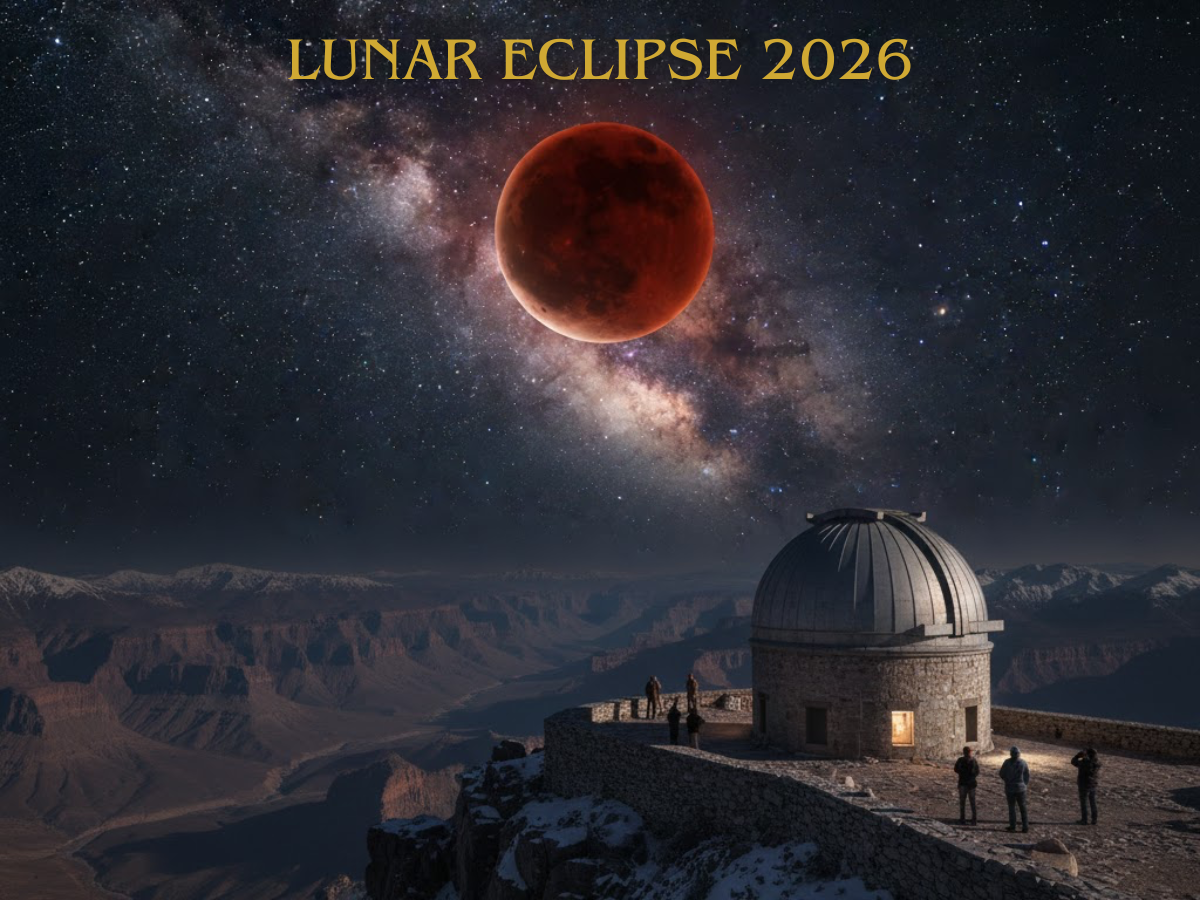
Lunar Eclipse 2026: A lunar eclipse occurs when the Sun, Moon, and Earth align perfectly, such that the blue planet positions itself between the Moon and the Sun. This celestial event is set to grace the universe later this week in March 2026. Marking the first lunar eclipse of 2026, it falls 20 days after the solar eclipse on February 17.
This lunar eclipse is especially auspicious as it will be visible largely from major parts of the world. Falling just days after the Chinese Lunar New Year 2026 which marked the beginning of the ‘Year of the Fire Horse’, the lunar eclipse will cover the entire Moon with its dark umbra shadow.
Lunar Eclipse 2026: Date And Time
The total lunar eclipse will occur on March 3, 2026.
- Eclipse begins: 03:20 PM IST
- Moonrise in India: 06:26 PM IST
- Maximum eclipse: 06:33 PM to 06:40 PM IST
- Eclipse ends: 06:47 PM IST
Only the final phase will be visible in India, lasting roughly 20 minutes after moonrise.
Common Lunar Eclipse Food Myths and the Facts Behind Them
Here are some common “Lunar Eclipse Food Myths” debunked:
1. Avoid Eating During a Lunar Eclipse
One of the most widely believed myths is that eating during a lunar eclipse can cause health issues. Some cultures hold that food consumed during the eclipse will be “tainted” or “contaminated” by cosmic energy, leading to digestive problems, food poisoning, or other illnesses.
Fact:
There is no scientific basis for this belief. The lunar eclipse is a natural astronomical event that has no direct impact on the safety or nutritional value of food. Food safety is determined by factors such as proper preparation, storage, and hygiene, not by celestial events. While it’s essential to practice good food handling at all times, there is no reason to believe that eating during an eclipse is harmful.
2. Food Will Taste Bad During a Lunar Eclipse
Another common myth suggests that food prepared or eaten during a lunar eclipse will taste unpleasant or be rendered inedible. This belief is often tied to the idea that the eclipse’s energy interferes with the food’s flavour or quality.
Fact:
Taste is primarily influenced by factors such as ingredients, preparation, and personal preferences. The eclipse itself has no effect on the chemical properties of food. If food tastes off during an eclipse, it’s likely due to factors such as improper cooking, poor ingredient quality, or distractions during meal preparation—not the celestial event. Enjoying your meals during a lunar eclipse is no different from eating on any other day.
3. Certain Foods Should Be Avoided During a Lunar Eclipse
In many cultures, there is a belief that certain foods should be avoided during the lunar eclipse. For example, spicy or sour foods are often considered “unlucky” or disruptive to the body’s energy. Additionally, some traditions advise against consuming meat or other “heavy” foods during this time.
Fact:
There is no scientific evidence to support the idea that certain foods should be avoided during a lunar eclipse. While it’s always a good practice to consume foods that are nourishing and balanced for overall health, the eclipse itself does not influence the digestibility, safety, or impact of any food. Whether you enjoy spicy foods or prefer a hearty meal, there is no need to restrict your diet during this event. Your body will process food in the same way as on any other day.
4. Eating Sweet Foods Will Protect Against Negative Energies
Conversely, some myths suggest that consuming sweet foods, such as fruits or desserts, during a lunar eclipse can help protect against bad luck or negative energies associated with the event. This idea implies that sweet foods have a protective or balancing effect on the body during the eclipse.
Fact:
While it’s certainly enjoyable to indulge in sweet treats, there is no scientific evidence linking the consumption of sugary foods with protection against cosmic energies or misfortune. Sweet foods may provide comfort or pleasure, but their perceived “protective” properties are purely symbolic and not scientifically proven. If a sweet snack helps you relax during the eclipse, feel free to indulge—but it won’t shield you from negative energy. The real “protection” comes from maintaining a balanced, mindful approach to nutrition and well-being.
5. Moon Milk and Other Special Lunar Foods
In some spiritual and wellness circles, moon milk—a warm beverage typically made with milk, honey, and spices like turmeric, cinnamon, and nutmeg—is consumed during a lunar eclipse to harness its calming, transformative properties. This beverage is thought to promote relaxation and tranquillity, making it a popular choice for those seeking to connect with the eclipse’s energy.
Fact:
While moon milk may have calming effects due to ingredients like milk and spices, there is no scientific evidence that consuming this or similar foods during a lunar eclipse has any special properties. The soothing effects of warm milk and spices like turmeric and cinnamon are well-documented and can promote relaxation, but they are not unique to the lunar eclipse. If you find that moon milk or other comforting foods help you unwind, it’s perfectly fine to enjoy them. However, these benefits are not linked to the eclipse itself but rather to the inherent properties of the ingredients.
Maintaining Healthy Eating Habits During a Lunar Eclipse
Given the abundance of myths surrounding lunar eclipses and food consumption, it’s important to approach the event with a balanced and evidence-based perspective. Here are some practical tips for maintaining healthy eating habits during the eclipse:
1. Stick to Your Regular Routine
There’s no need to change your diet or eating habits because of the eclipse. Stick to your regular routine of consuming a balanced diet that includes a variety of fruits, vegetables, whole grains, lean proteins, and healthy fats. A well-rounded diet is crucial for overall health and will continue to support your body’s needs during the eclipse, just as it does every other day.
2. Mind Your Portions
Even if you’re tempted to indulge in extra treats or foods associated with the eclipse, it’s important to be mindful of portion sizes. Overeating or excessive consumption of any type of food, sweet or savoury, can lead to discomfort or digestive issues. Moderation is key to maintaining optimal health.
3. Enjoy Foods That Bring You Comfort
If you enjoy foods that have a comforting or calming effect—like a warm bowl of soup, a cup of herbal tea, or a small piece of chocolate—feel free to indulge. The lunar eclipse is a great opportunity to enjoy foods that make you feel relaxed and content, but keep in mind that these foods don’t have any inherent powers to influence the eclipse or your health.
4. Stay Hydrated
It’s easy to forget to drink enough water when you’re caught up in the excitement of a lunar eclipse. However, staying hydrated is just as important during this time as it is at any other time. Make sure to drink plenty of water throughout the day to keep your body functioning optimally.
5. Focus on Mindfulness and Reflection
If you feel drawn to mark the eclipse with a special ritual, consider using the time for personal reflection, meditation, or mindfulness practices. These activities can help promote emotional and mental well-being, offering a more meaningful connection to the eclipse than any dietary changes could.
Health Tips You Need To Follow
- Dietary Choices: Opt for light, easily digestible vegetarian food. Avoid eating heavy meals during the peak hours of the eclipse.
- Hydration: Keep yourself hydrated with water, coconut water, or herbal teas, specifically with ginger or turmeric to boost immunity.
- Nutrient Boost: Include Tulsi (holy basil) or turmeric in food, as they are believed to possess anti-inflammatory properties.
- Medication: Continue all prescribed medications and supplements; do not skip them due to traditional myths.
- Post-Eclipse Care: Some traditions suggest bathing after the eclipse ends to cleanse and rejuvenate.
Mental and Emotional Well-being
- Avoid Stress: Contrary to myths, eclipses do not directly cause physical illness, but they can be a source of stress. Practice meditation, deep breathing, or listening to calm music to stay relaxed.
- Rest: Take time to rest and avoid, or limit, intense physical exertion or high-stress activities during the phenomenon.
While lunar eclipses are awe-inspiring events, the myths surrounding food consumption during these times are largely based on superstition rather than scientific fact. There’s no need to avoid eating, restrict specific foods, or consume particular items for protection or spiritual purposes. Instead, continue with your regular, balanced diet, mindful eating practices, and enjoy the moment in a way that feels meaningful to you. With these facts in mind, you can embrace the lunar eclipse as a beautiful natural event—without feeling the need to change your eating habits based on myths.













Leave a comment