

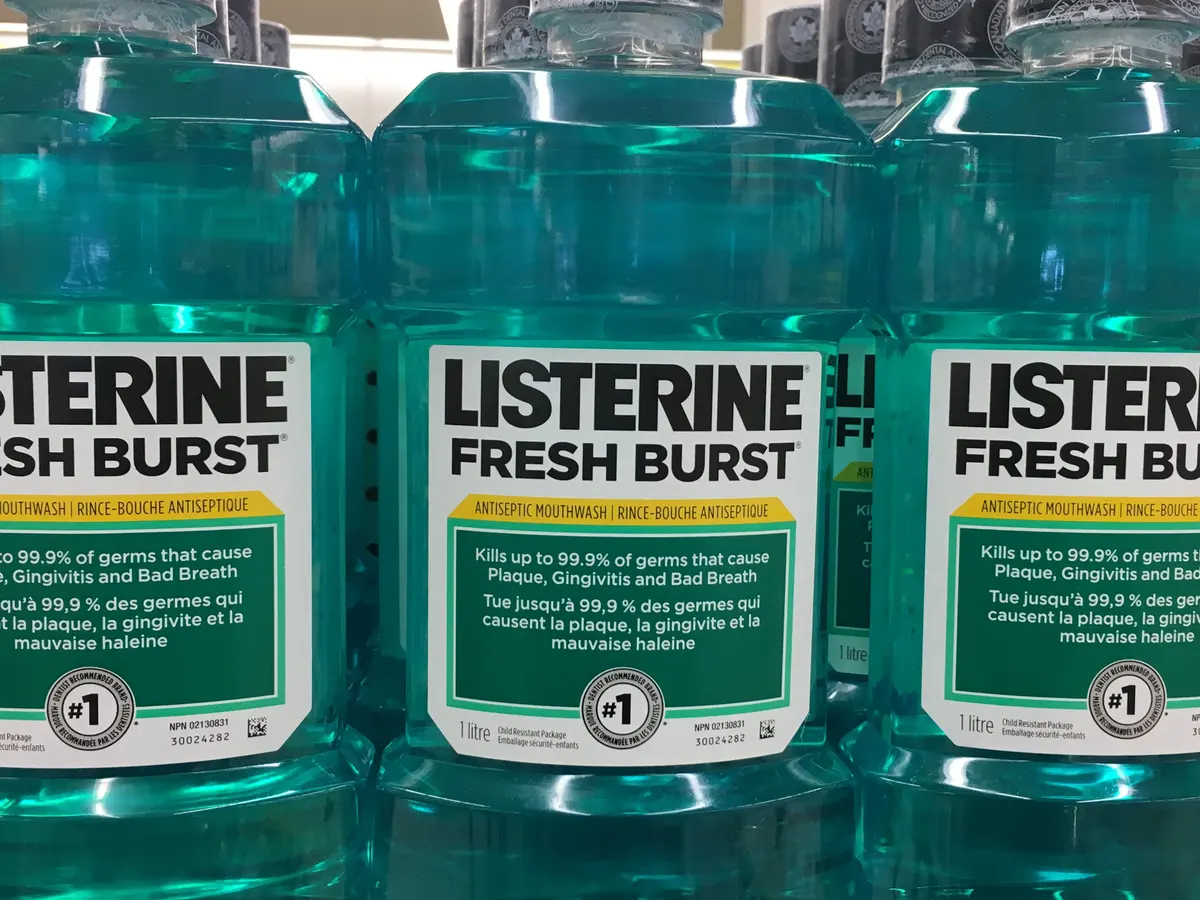
Are you using Listerine mouthwash to manage your oral health? You must take a step back and read this article before planning to continue doing so! As per a recent claim by a study, using Listerine Cool Mint mouthwash every day could increase the risk of developing esophageal and colorectal cancer a new scientific study has claimed. This disturbing revelation has steered a dialogue among medical experts and common users. Let’s understand how these two are connected and how you can avoid the risk.
According to the scientist, using Listerine Cool Mint mouthwash every day could increase the risk of developing oesophagal and colorectal cancer.
After three months of daily mouthwash use, two species of bacteria were more prevalent, Boffins from the Institute of Tropical Medicine in Antwerp, Belgium, found.
The bacteria-Fusobacterium nucleatum and Streptococcus anginosus – which have both been linked to cancer were more abundant in the mouth after daily usage.
Insights from The Study
The study indicates that Listerine’s active elements, such as eucalyptol, menthol, and thymol, can upset the balance of mouth bacteria. More poignantly, these components were seen to encourage the propagation of Fusobacterium nucleatum—a bacterial type correlated with escalated colorectal cancer risk. It’s a meaningful insight for individuals using Listerine daily as a part of their oral hygiene regimen.
Making Sense of The Listerine-Cancer Connection
Fusobacterium nucleatum, a commonplace oral bacterium, usually poses no harm in minimal amounts. However, its proliferation has been connected to numerous health problems, notably colorectal cancer. The study indicates that the oral microbiome imbalance due to Listerine’s daily usage might foster an environment favorable for the growth of Fusobacterium nucleatum, hence potentially raising cancer threats.
While the experiment only included Listerine, Professor Kenyon stressed that similar levels of bacteria would likely be found using other alcohol-based mouthwashes.
These insights have substantial repercussions on routine oral health practices. While mouthwash usage for breath freshening and bacteria extermination is common, it’s crucial to contemplate the prospective effects of its daily use on the overall equilibrium of mouth bacteria. Medical professionals are now urging people to carefully choose their products and think about their long-run implications such as habitual Listerine usage.
















Leave a comment