Home Latest News FICCI Pledges Support To Government To Help Minimize The Impact Of COVID-19 In India
Latest News

FICCI Pledges Support To Government To Help Minimize The Impact Of COVID-19 In India

Share
Share

In the wake of COVID- 19 pandemic, FICCI has been actively engaging with the government to develop a strategy to handle COVID-19, be it screening of suspected cases, preparedness of private labs for testing or identifying isolation beds or buildings for treatment. A strategy paper has been submitted to Ministry of Health & Family Welfare, GoI.

Praising government’s proactive actions to contain the epidemic, Dr Sangita Reddy, President, FICCI, said, “As the country tightens its watch to delay going into Community Transmission Stage (Stage 3), widespread awareness on personal hygiene, respiratory etiquettes and social distancing and preparing our health system to limit community transmission will be very crucial in the strategy. During several consultations with the Union Health Minister, Health Secretary and NITI Aayog, the private healthcare sector has assured its full support to the government and sharing best practices from across country and globe. A four-pronged strategy on creating mass awareness, testing, training and treatment with private sector partnership is the need of the hour.”

Sensing the criticality of generating mass awareness, FICCI has taken the lead in developing IEC material for hospitals and industry and circulated in early February. It has also reached out to media and entertainment sector to create celebrity videos with appropriate messaging. As WHO declared COVID- 19 as a pandemic, a comprehensive guide for organizations to prepare for COVID- 19 situation has been prepared and circulated widely.

“Appropriate strategy for testing of suspect cases is the most crucial decision that the government needs to take. Union Ministry of Health and Family Welfare’s and ICMR’s move to allow private diagnostic labs to test for COVID-19 is a welcome step. While FICCI has collated a comprehensive list of private laboratories that can adhere to the ICMR SOPs, it has also recommended innovative concepts like drive-through sample collection units,” said Dr Reddy.

On scaling up treatment for COVID- 19, while private hospitals have come forward to allocate dedicated beds, FICCI recommends hospitals with facilities to provide COVID wards with separate entries to reduce risks to other patients should be permitted. Dedicated COVID hospitals being set up in Maharashtra, Karnataka and Fever Clinics by private sector is the way forward. Home healthcare providers can help in setting up Temporary Community Isolation Centers and Transition Care Centers to facilitate out of hospital care. Tele-consultation needs to leverage immediately to treat COVID -19 patients. There is also a need to develop a tech-enabled system for mapping existing resources in the country, including hospital beds and essential lab and medical equipment supply.

“States with robust healthcare systems have exhibited effective response to the outbreak. Kerala effectively deployed its system used to track the contacts of infected persons, a basic public health strategy that was perfected during the Nipah outbreak. However, awareness and preparedness across all states is not at the same level, like the east and north-east region may need additional support. FICCI has urged WHO to help strengthen the dialogue in the east and north-east region through their field offices and engagements with the State governments,” added Dr Reddy

Assuring Hon’ble Prime Minister Shri Narendra Modi to extend its fullest cooperation through its vast base of 4.5 lakh industry and trade members for his clarion call to observe “Janata Curfew” on March 22 to deal with the Coronavirus, ASSOCHAM today said it would reach out to its rank and file to give top priority to crucial societal and economic issues flagged by the Prime Minister.

” We in the ASSOCHAM through all our trade and industry associations and individual corporate members would actively give the ground level feedback about the impact of the Covid-19 virus to the Economic Response Task Force constituted under the leadership of Finance Minister Mrs Nirmala Sitharaman,” said ASSOCHAM Secretary General Mr Deepak Sood.

He said since the world is fighting an unprecedented health challenge, ” it is imperative that the economic response including the impact and the solutions be reaching the government in a matter of days to enable quick decisions to reduce the human and economic cost of the pandemic”.

The chamber would also impress upon its members to be considerate towards those employees who are not able to make to the offices and ensure that no economic hardship is caused to their families.

Mr Sood expressed the hope that the people would be re-assured by the Prime Minister’s assertion that there is no shortage of essential commodities including the foodgrains, milk and vegetables and citizens should refrain from any panic buying”. The Indian agro and industrial economy has a great inherent strength to ensure adequate supply of essentials, including the medicines to deal with the health emergency.

The ASSOCHAM also joins the Prime Minister in thanking those sections of the society, like doctors, nurses, transport and logistics staff, media and security agencies for rising up to the challenge. The nation would remain indebted for their contribution.


Share

Leave a comment

Leave a Reply

Your email address will not be published. Required fields are marked *

Don't Miss

WHO
Press Release

WHO South-East Asia Regional Office building inaugurated

The newly constructed building of the World Health Organization South-East Asia Regional Office in New Delhi, was today inaugurated by the Honourable Prime...

Air Pollution
Health News

Delhi Chokes Under Toxic Air: Schools Shut, Offices Go Work From Home — How to Stay Safe

New Delhi, 23 December, 2025: Delhi once again finds itself gasping for breath as air pollution levels surge to hazardous levels, pushing authorities...

Colorectal cancer
Latest News

Cervical Cancer Awareness Month 2026: Screening Tips Every Woman Should Know

Cervical cancer is one of the most preventable forms of cancer, yet it remains a leading cause of cancer-related deaths among women globally....

Bird Flu
Latest News

Bird Flu Alert: How to Protect Yourself Without Panicking

Bird flu, also known as avian influenza, is a viral infection primarily affecting birds but capable of infecting humans in rare cases. The...

Latest News

Why Walking 30 Minutes a Day Can Add Years to Your Life

Walking for just 30 minutes a day is one of the simplest yet most effective ways to improve overall health, enhance longevity, and...

Section title

Related Articles
COVID
Latest News

Long COVID May Be Triggering Alzheimer’s-Like Changes in the Brain: New Study

A new study suggests that Long COVID—the lingering post-infection condition experienced by...

Cancer
Latest News

Immunotherapy vs Chemotherapy: Which Cancer Treatment Works Better?

Cancer treatment has evolved rapidly over the past few decades, offering patients...

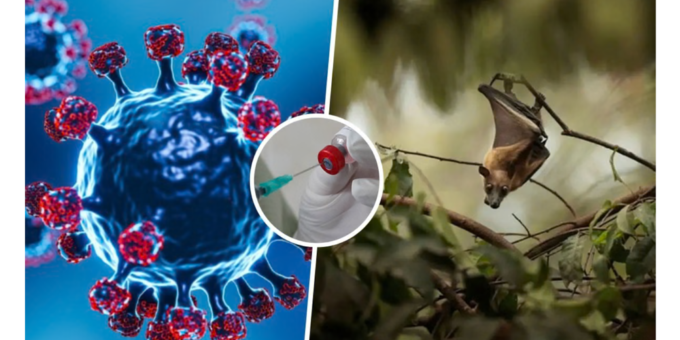
The Nipah virus is considered one of the deadliest zoonotic infections globally, not because it spreads rapidly like influenza or COVID-19, but because of its extremely high fatality rate, rapid progression, and severe brain involvement. Medical experts warn that once symptoms escalate, the disease can turn fatal within days. According to available data, the case fatality rate of Nipah virus ranges between 50 and 75 per cent, placing it among the most lethal viral infections known to humans. In this explainer, Dr Dip Narayan Mukherjee, Consultant – Microbiology and Infectious Diseases, CK Birla Hospitals, CMRI, sheds light on why the virus is so dangerous and difficult to control. Why Is the Nipah Virus So Deadly? According to Dr Mukherjee, Nipah’s lethality lies in a combination of delayed symptom recognition, aggressive disease progression, and early involvement of the brain. “Nipah virus often begins with very non-specific symptoms, which makes early detection difficult. By the time it is clinically suspected, the virus may have already affected the brain,” he explains. Early Symptoms Often Go Unnoticed One of the biggest challenges in controlling Nipah virus is that its initial symptoms closely resemble common viral illnesses, leading to delays in diagnosis and isolation. Early symptoms include: Fever Headache Cough Muscle pain General weakness “These symptoms are easily mistaken for flu, viral fever, or respiratory infections,” says Dr Mukherjee. “This delay gives the virus time to progress silently.” Severe Brain Infection Drives High Mortality The most dangerous aspect of Nipah virus infection is its neurological involvement. The virus frequently causes encephalitis, or inflammation of the brain, which significantly increases the risk of death. Neurological symptoms may include: Seizures Confusion and altered consciousness Extreme drowsiness Coma “Once the central nervous system is involved, the disease becomes very difficult to manage,” Dr Mukherjee notes. “At this stage, treatment is largely supportive because there is no specific antiviral therapy available.” This lack of targeted treatment options makes early detection critical. Human-to-Human Transmission Raises Risk While Nipah virus is primarily transmitted from fruit bats, it can also spread from person to person, particularly in healthcare settings. Dr Mukherjee points out that: Caregivers and healthcare workers are at higher risk Exposure to high viral loads can worsen outcomes Inadequate infection control increases transmission risk “Strict adherence to infection control practices is essential. Even a small lapse can result in secondary infections,” he says. Zoonotic Nature Makes Exposure Hard to Predict Nipah virus is transmitted from fruit bats, either directly or through intermediate hosts such as pigs. This zoonotic pattern makes outbreaks unpredictable, especially in regions where humans, animals, and wildlife interact closely. Adding to the challenge: There is no approved vaccine Treatment options remain limited Isolation protocols must be strictly enforced What Can Reduce Nipah Fatalities? According to experts, early action remains the most effective defence against Nipah virus. Key measures include: Early isolation of suspected cases Strict use of personal protective equipment (PPE) Rapid escalation and referral to specialised centres Strong hospital infection control protocols “The earlier the virus is identified and contained, the better the chances of preventing severe disease and fatalities,” Dr Mukherjee emphasises. The Bottom Line Nipah virus continues to be a serious public health threat because of its high fatality rate, neurological complications, and lack of targeted treatment. Its ability to masquerade as a mild illness in the early stages makes vigilance crucial. Health experts stress that awareness, early suspicion, and strict infection control are currently the most powerful tools to reduce deaths linked to this deadly virus. As Dr Mukherjee concludes, “With Nipah, time is the most critical factor. Early recognition can save lives.”
Latest News

Why Nipah Virus Has a High Fatality Rate: Factors Affecting Disease Severity

The Nipah virus is widely regarded as one of the deadliest zoonotic...

Latest News

Stroke Risk in India: Symptoms and Urgent Action Steps

Stroke is a leading cause of death and disability in India, yet...

×