

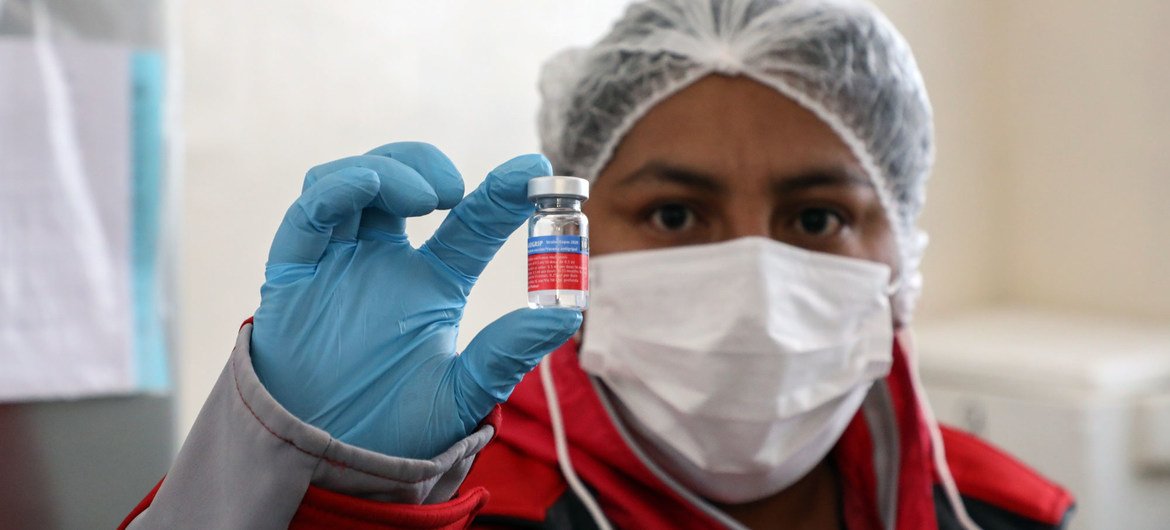
Despite the ongoing global response to COVID-19, the world cannot lose sight of the significant public health risk posed by influenza, which affects every country every year and takes its own deadly toll, World Health Organization (WHO) Director General, Tedros Adhanom Ghebreyesus, has said.
“As we enter the southern hemisphere influenza season…we must ensure influenza remains a top priority”, the agency chief said during his media briefing on Monday. “Co-circulation of COVID-19 and influenza can worsen the impact on health systems that are already overwhelmed.”
Globally, more than 7.8 million cases of COVID-19 and more than 430,000 deaths caused by the virus have been reported to WHO to date, he said. More than 100,000 cases have been reported each day for the last two weeks – almost 75 per cent of them from 10 countries in the Americas and South Asia.
“Countries must stay alert to the possibility of resurgence,” he said. Just last week, China reported a new cluster of cases in Beijing after more than 50 days without a single case in the city. With more than 100 cases now confirmed, the origin and extent of the outbreak are being investigated.
‘Highly Functional’ System
At the same time, he said more than 500 million people are vaccinated against flu each year, based on recommendations made by WHO on the composition of flu vaccines. To know which viruses are circulating, WHO relies on information reported by 125 countries through the Global Influenza Surveillance and Reporting System, which the agency uses to make recommendations for the composition of flu vaccines.
“The infrastructure, people, skills and experience built up through [this system], WHO Collaborating Centres and National Influenza Centres have been the foundation for detecting COVID-19”, Tedros explained. However, the system – in place since 1952 – is experiencing significant challenges, with flu surveillance either suspended or declining in many countries, and a “sharp” decline seen in the sharing of flu information and viruses, due to the COVID-19 pandemic.
Dramatic fall in flu testing
Compared with the last three years, there has been a dramatic decrease in the number of specimens tested for influenza globally, Tedros said, along with a 62 per cent drop in virus shipments to WHO Collaborating Centres and a 94 per cent fall in the number of flu viruses with genetic sequence data uploaded to the Surveillance and Response database.
“These decreases due to a combination of issues, including the repurposing of staff and supplies, overburdened laboratories and transport restrictions”, he said. The disruptions could lead to the loss of capacities for detecting and reporting new influenza viruses with pandemic potential.
Tedros pointed to WHO guidance on how to integrate surveillance for COVID-19 into routine influenza surveillance as an efficient a way to track the two respiratory illnesses. “This is not only cost-effective”, he said. “It’s also essential for protecting the world against the next flu season.”
Wenqing Zhang, Director of WHO’s Global Influenza Programme, agreed that there will always be competing disease priorities or threats. “But influenza is always there”, she said. “This is really a very solid and highly functional foundation…to monitor influenza.”
Every COVID-19 case must be tracked
More broadly, Maria Van Kerkhove, technical lead on COVID-19, fielded questions on safely handling protests taking place in many countries. It is important to consider whether the area is one of active virus transmission and whether there are ways to keep people physically distanced. If someone falls ill, a system must be in place to quickly detect and monitor any subsequent cases.
“Any opportunity where people are in crowded places and the virus is present, and appropriate proper measures are not in place, the virus can transmit”, she clarified. “Every single case of COVID-19 is significant and must be followed up and cared for appropriately.”
New clusters, always a concern
To that point, Dr. Michael Ryan, Executive Director of WHO’s Health Emergencies Programme, said the emergence of new clusters always raises a concern, especially when the driver is not recognized. WHO recommends taking immediate measures that involve investigating thoroughly, testing, isolating and quarantining contacts. These efforts have led to virus containment, whether related to religious communities, markets, migrant dormitories or other settings.
Beijing is a dynamic and connected city, he added, and the level of concern is reflected in the response of Chinese authorities to the latest outbreak, in the capital. A WHO team based in Beijing, led by country representative and supported by epidemiologists permanently embedded there, are working with China’s Center for Disease Control and Prevention. WHO may supplement its country office in the coming days as the investigation develops.
As to the risks of air travel, he said WHO is advising the International Civil Aviation Organization (ICAO) and the International Air Transport Association and will issue considerations for travellers in the coming days. “There is no zero risk in any environment,” he stressed. If someone falls ill, the ability to track anyone who has been on the plane is essential. “We need to make the air travel experience as safe as possible.”














Leave a comment