


Parkinson’s is one of the diseases that has been known to be a movement disorder whose progression starts deep in a certain section of the brain. The substantia nigra is a small, yet very important part of the human brain on which scientists have been working for decades. It is the region in which dopamine-producing cells slowly degenerate, resulting in shaking, rigidity, and movement.
An emerging study is now indicating that Parkinson’s disease actually can start in those parts of the brain that we have not paid much attention. Rather than beginning with the dopamine system alone, the original changes might have happened in other circuit areas of sleep, smell, mood, and even the gut brain connection. This paradigm shift may completely alter the manner in which we make diagnoses, treatment, and even prevention of Parkinson’s disease.
Where Parkinson’s Disease Begins Rethink?
The cells that produce dopamine degrade. To move smoothly and in a well coordinated manner, dopamine is necessary. The death of those neurons results in motor symptoms.However, here is the catch, motor symptoms have, in most cases, appeared before the researcher can even notice, it is calculated that over 50-60 per cent of the dopamine neurons could be gone. This is to say that the disease process must have begun several years and even decades ago.
Rather, the initial changes may start in:
- The lower brainstem
- The olfactory bulb is connected with smell
- The enteric nervous system of the gut
- Brain parts that control sleep
This concept goes in line with one of the most famous trends in Parkinsonism that is non motor symptoms tend to emerge much earlier than tremors or rigidity.The prediagnosis can be years before the onset of the disease itself with loss of smell, chronic constipation, REM sleep behavior disorder, anxiety, and depression.
The Role Of Alpha-Synuclein
Alpha-synuclein is a protein that is at the heart of Parkinson disease. It helps in the regulation of the release of neurotransmitters in healthy brains. However, in Parkinson, the protein fails to fold correctly and is aggregated together into toxic plaques called Lewy bodies.During decades, scientists had seen the Lewy bodies in the substantia nigra and believed that this was where it started causing problems. Alpha-synuclein pathology in other areas is demonstrated by newer imaging and post-mortem much earlier.
Other scientists suggest a spreading model.
According to The National Institute Of Health, “The genetic link of SNCA to PD in 1997 led investigators to rapidly develop appropriate antibodies against α-synuclein and use them in histopathological sections of PD patients. α-Synuclein turned out to be robustly expressed within Lewy bodies LBs, and, in particular, in the “halo” of the inclusions”
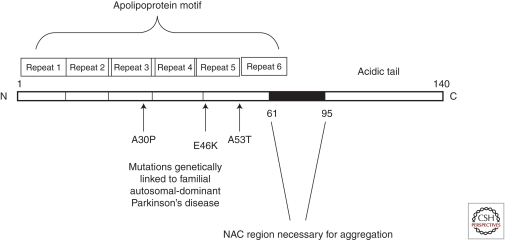
Source: NIH
The Gut Brain Linkage: Can Parkinson’s Begin In The Digestive System?
Perhaps one of the most fascinating theories is the one that postulates that Parkinson’s disease can start in the gut.
The gut has its own enteric nervous system, which is in constant communication with the brain through the vagus nerve.The deposition of alpha-synuclein in the intestine has been discovered by researchers years before the motor symptoms appear.One of the first non-motor symptoms of Parkinson’s is chronic constipation.

Source: NIH
Ignored Static Brain Areas And Non-motor Symptoms In Early Development
Another region that is receiving interest is the brainstem, especially areas related to sleep and levels of autonomic control.
REM sleep behaviour disorder RBD has a close relationship with subsequent diagnosis of Parkinsonism. The fact that the normal muscle paralysis is not activated at all during REM sleep results in people physically enacting their dreams. It has been discovered that a large proportion of people with RBD ultimately develop Parkinson’s or other related conditions.
Likewise, mood disorders such as anxiety and depression are a common part of motor symptoms. They can represent the early impairment of serotonin and norepinephrine systems, which are not the focus of the traditional studies on Parkinson.
The Reason Why This Change in Perception is Important
Coming to alter our understanding of the place of Parkinson’s would not only be confined to some academic discussion but also would have practical consequences.
Earlier Diagnosis
Provided we can find a set of trustworthy biomarkers in non-motor areas, such as gut tissue or even sleep testing, we can possibly be able to diagnose Parkinson’s years before the motor symptoms appear.
Early detection could allow:
- Neuroprotective therapies
- Lifestyle interventions
- Faster enrollment of clinical trials.
Nowadays, diagnosis is usually made when a significant neuronal loss has occurred. Preferential treatment at earlier stages can alter the results.
New Treatment Targets
The majority of the existing therapies are aimed at replacing dopamine, such as levodopa. These therapies are no longer effective in preventing disease progression, although they are effective in treating symptoms.
In case of the onset of Parkinson’s outside the substantia nigra, some of the new treatment options may be:
- Directing at alpha-synuclein aggregation.
- Regulating the gut microbiome.
- Reducing inflammation
- Safeguarding neurons of the brainstem.
This is a wider perspective that can decelerate or even halt development.
Personalized Medicine
No two cases of Parkinson’s may necessarily begin at the same point. Other researchers now suggest alternative subtypes:
- Brain first Parkinson’s
- Body first Parkinson’s

Source : NIH
Pathology can begin in the gut and proceed upwards in case of body first. In brain first cases, activity can initiate directly to the olfactory bulb or other parts of the brain. The knowledge of these differences may result in individualised treatment practices.
Contribution Of Environmental And Genetic Factors
In case Parkinson’s can start attacking other parts of the body that are ignored, how is the first damage caused? Scientists are looking into a number of possibilities:
Environmental Toxins
It has been known that pesticides and heavy metal exposure can increase the risk of Parkinson. The substances may activate alphasynuclein misfolding in the peripheral tissues.
Inflammation
Persistent inflammation of the gut or the brain could provide circumstances that facilitate protein aggregation.
Genetics
Some genetic mutations are risk factors of Parkinson. The majority of cases are, however, sporadic and thus it is possible that environmental and lifestyle factors are a major cause.Genes and environment interaction may be in charge of the place and manner of disease origin.
Obstacles And Continuous Dilemmas
Although the new findings are strong, a lot of questions are raised like Does Parkinson always begin in the substantia nigra, or in all cases?, Can we reliably observe early changes of alpha-synuclein in living persons? And what is the initial event of misfolding?
Studies are in progress and massive longitudinal research is helping researchers to trace the pathogenesis of the disease in its first stages.
Parkinson’s Research Has Undergone A Paradigm Shift
The assumption that Parkinson’s disease can begin in the neglected parts of the brain is a significant change in paradigm.
Rather than perceiving Parkinson’s as a late stage dopamine deficiency disorder, we can start to think of it as a neurodegenerative process, which progresses gradually over decades as a whole body process.
It is a wider based view that promotes more comprehensive care and intervention earlier. It also confirms that patients who have years of unaccounted symptoms are diagnosed beforehand. Loss of smell, chronic constipation, sleep disturbances and mood changes. These are not accidental complaints but they can be signs of warning.
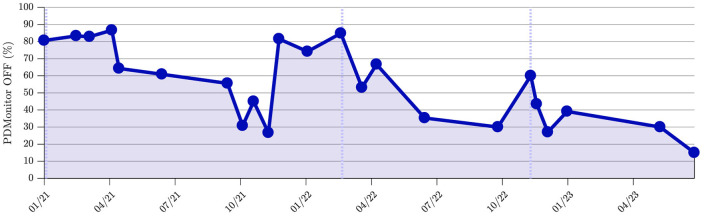
Source : NIH
Implication Of Parkinson’s On Patients And Families
To those affected with Parkinson’s or who are at risk of this ailment, this research that is currently changing gives them hope and a complication. On the one hand, it implies that we can be closer to discovering the disease earlier than ever before. Conversely, it reminds us of the extent to which we should learn. Future research establishes that Parkinson’s starts in neglected regions of the brain, or even not in the brain at all, which may yield groundbreaking prevention approaches.
Smell test or sleep analysis of high risk people.
- The gut health of neurological care.
- Prevention of loss of dopamine neurons at an early stage.
- These opportunities are no longer science fiction but are working areas of research.
The possibility of Parkinson’s disease beginning in brain regions that we did not consider, creating decades of traditional wisdom.
When we look beyond the substantia nigra, what researchers are finding is a much more nuanced and intricate image of Parkinson’s disease, which, to start with, gains ground very quietly, progresses very slowly, and impacts much more than just movement.
With further research that comes with the first steps of the disease, the hope is evident, and the sooner it is detected, the more chances of a treatment eventually becoming a prevention. We cannot always start where we thought in the case of Parkinson’s. However, through the new areas of search, science is helping us find answers that patients have long been in need of.














Leave a comment