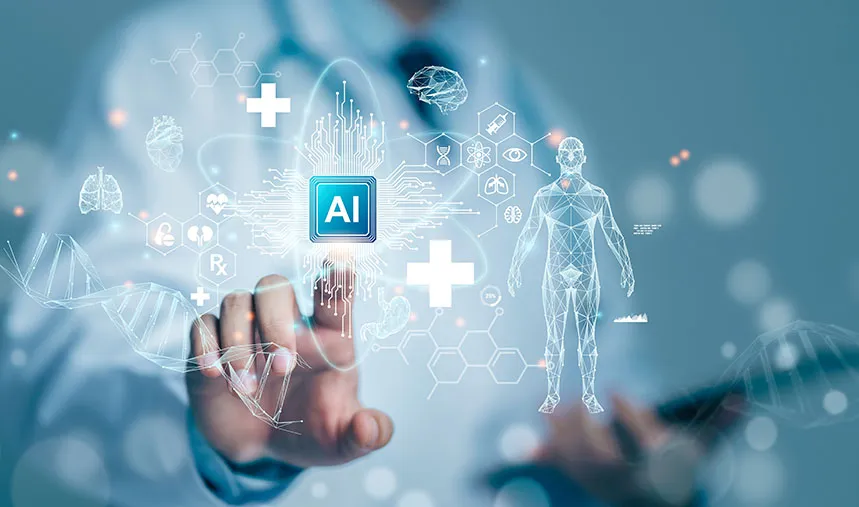
Artificial intelligence (AI) is rapidly transforming healthcare, reshaping how diseases are detected, diagnosed, and treated. From analysing medical images to predicting disease risk and personalising treatment plans, AI-driven tools are helping doctors make faster and more accurate decisions. While the technology is still evolving, experts agree that AI has the potential to significantly improve healthcare outcomes and efficiency.
What AI in Healthcare Really Means
In healthcare, AI refers to computer systems that can analyse large volumes of medical data and learn patterns to assist clinical decision-making. These systems use technologies such as machine learning, deep learning, and natural language processing.
AI does not replace doctors. Instead, it acts as a support tool—helping clinicians interpret data, reduce errors, and focus more on patient care rather than administrative tasks.
Transforming Medical Diagnosis
One of the most impactful uses of AI is in medical diagnostics. AI algorithms can analyse X-rays, CT scans, MRIs, and pathology slides with remarkable speed and accuracy. In some cases, these systems can detect abnormalities that are difficult for the human eye to identify in early stages.
AI is also being used to identify early signs of conditions such as cancer, heart disease, diabetic complications, and neurological disorders. Early detection allows doctors to begin treatment sooner, improving survival rates and reducing healthcare costs.
Personalising Treatment and Care Plans
AI is playing a growing role in personalised medicine. By analysing a patient’s medical history, genetic data, lifestyle factors, and treatment responses, AI systems can help doctors tailor therapies to individual needs.
This approach is particularly valuable in cancer treatment, where AI can help determine which therapies are likely to be most effective while minimising side effects. AI-driven decision support tools also help doctors adjust medications and dosages more accurately for chronic conditions.
Improving Hospital Efficiency and Patient Care
Beyond diagnosis and treatment, AI is improving hospital operations. Predictive analytics can help hospitals manage patient flow, reduce waiting times, and optimise resource use.
AI-powered tools are also being used for remote patient monitoring, virtual health assistants, and automated documentation. These technologies reduce administrative burden on healthcare professionals, allowing them to spend more time with patients and improve care quality.
Expanding Access to Healthcare
In countries with large and diverse populations, AI has the potential to bridge gaps in healthcare access. Telemedicine platforms combined with AI-based triage and screening tools can bring basic healthcare services to underserved and remote areas.
AI can assist frontline health workers by offering decision support, enabling early referrals and timely interventions even where specialist doctors are not available.
Ethical and Regulatory Challenges
Despite its promise, AI in healthcare raises important ethical and regulatory questions. Data privacy, algorithm bias, and transparency are key concerns. AI systems must be trained on diverse and high-quality data to avoid reinforcing existing healthcare inequalities.
Experts stress the need for strong regulatory frameworks, clear accountability, and ongoing human oversight to ensure AI is used safely and responsibly.
The Future of AI in Healthcare
As technology advances, AI is expected to become an integral part of healthcare systems worldwide. When combined with skilled medical professionals, robust data protection, and patient trust, AI can help deliver faster, more accurate, and more equitable healthcare.
Rather than replacing human expertise, AI’s greatest strength lies in enhancing it—supporting doctors in making better decisions and ultimately improving patient outcomes.